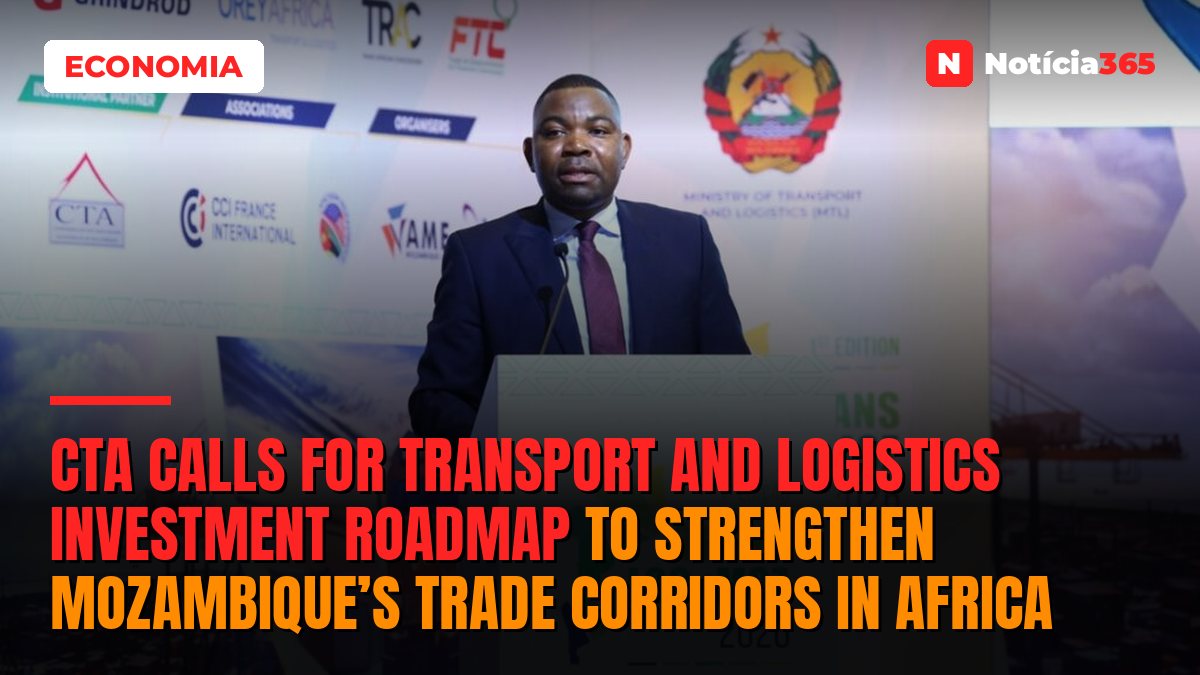
- Mozambican businesspeople are calling for a Transport and Logistics Investment Roadmap through to 2030, with priority projects and cost-reduction targets, to strengthen the competitiveness of national corridors in African trade.
Mozambican businesspeople on Wednesday called for the creation of a Transport and Logistics Investment Roadmap through to 2030, with priority projects and cost-reduction targets, to strengthen the competitiveness of national corridors in African trade.
“With a portfolio of priority projects, identification of the main bottlenecks and commitments to cross-border integration,” said Onório Manuel, vice-president of Mozambique’s Confederation of Economic Associations (CTA), advocating the creation of this Transport and Logistics Investment Roadmap 2026–2030.
He was speaking in Maputo during the first Mozambique Transport and Logistics Investment Forum and Exhibition (TRANS-LOG MOZ), which brings together representatives from several Southern African countries. He added that the roadmap should include targets for reducing logistics costs and mechanisms for monitoring investments and their implementation.
According to Onório Manuel, modernising the sector requires substantial investment at a time when public financing capacity remains limited. It is therefore “essential to create conditions to attract private capital and development financing, with sustainable business models and risks appropriately distributed”.
The business leader identified investment opportunities in logistics terminals, grain storage, cold chains, port equipment, rail transport, maintenance, digital tracking and specialised services.
“To investors, we need to present projects with identified demand, feasibility studies, capital requirements and clear operating models. We need fewer announced projects and more projects prepared for financing and implementation,” he said.
CTA also advocated the effective integration of the Maputo, Beira and Nacala corridors with the region’s inland markets through stronger rail, road and border connections.
Among the priorities identified by businesspeople were also the development of dry ports, inland terminals, storage systems and distribution platforms, as well as the simplification of border procedures and the digitalisation of logistics services.
Businesspeople also called for greater use of maritime cabotage as a complementary alternative to road transport and for stronger integration of national companies into supply chains involving supply, maintenance, engineering, technology and service provision.
“We must turn corridors and ports into genuine drivers of industrialisation in our countries. It is no longer acceptable for these infrastructures to serve merely as transit routes for raw materials and entry points for manufactured goods from abroad,” Onório Manuel said.
According to the CTA vice-president, Mozambique is well positioned to consolidate its position as one of Southern Africa’s main commercial gateways, but this objective depends on improving operational efficiency, regional integration and reducing the costs associated with trade.
“The competitiveness of a corridor is measured not only by the capacity of its port, but by the cost, time and predictability with which goods reach their final destination. A railway with available capacity does not solve the problem if there is a lack of equipment on the other side of the border,” he said.
The official added that port efficiency also depends on reducing the time goods spend at terminals and streamlining customs procedures.