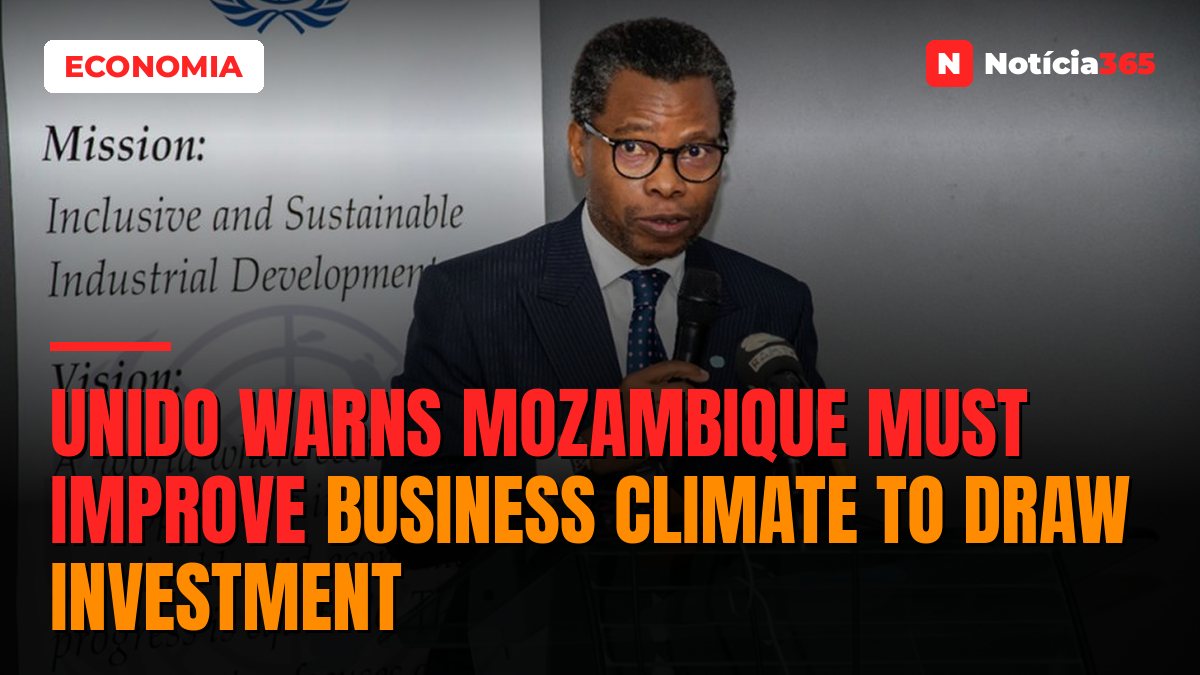

Mozambique must improve its business environment and logistics infrastructure to attract investment and transform its transport corridors into industrial development hubs, UNIDO representative Jaime Comiche said on Thursday, 5 June, in Maputo.
Comiche was speaking at the inaugural edition of the Mozambique Transport and Logistics Investment Forum and Exhibition (TRANS-LOG MOZ 2026), where he identified the obstacles limiting corridor competitiveness and their contribution to the country's industrialisation.
"One of the major constraints we face in promoting industrialisation is the business environment, the infrastructure, and also finding niche opportunities that help accelerate that industrialisation," he said.

According to Comiche, logistics corridors offer conditions to attract foreign direct investment and host industrial parks and special economic zones, leveraging existing infrastructure. Realising that potential, however, requires improvements to the logistics network, particularly roads.
"Mozambique's logistics infrastructure, especially roads, is well below the average for countries in sub-Saharan Africa," he said.
Modernising infrastructure and creating conditions favourable to investment are essential to making logistics corridors more competitive.
Compatible Systems and Conditions to Attract Investors
Beyond infrastructure quality, the UNIDO representative stressed the need to integrate the systems used by different operators, facilitating communication and the functioning of the corridors.
"It is also important to ensure that all systems operating along the corridor are compatible, interoperable, and meet international standards," he added.
On the business environment, Comiche underlined that the difficulties faced by investors and economic operators affect the attractiveness of Mozambique's corridors. He called for the removal of obstacles that undermine business activity and investor confidence.
"As long as we do not reverse this perception and this reality — which has already been mentioned in various ways by those who spoke before me — we will not have attractive and successful corridors," he warned.
In his view, improving these conditions could attract manufacturing companies and logistics operators, enabling corridors to play a broader role in industrial development. The goal also includes facilitating companies' integration into global value chains and capitalising on opportunities under the African Continental Free Trade Area, reinforcing Mozambique's participation in trade in processed goods.
Comiche's remarks were made during the panel session "Logistics Hubs and Dry Ports: Transforming Corridors into Trade", moderated by Yara Mutola, executive director of the Mozambique-Netherlands Chamber of Commerce.
Other panellists included Luís Manuel da Fonseca Nunes, governor of Luanda province; Sandra Roque, UN-Habitat representative; Geoffrey White, executive director of Agility Logistics Parks Africa; Ozi Honwana, general operations manager at Grindrod; and Júlio Maineque, operations manager at Orey Africa.
TRANS-LOG MOZ 2026 concluded on Thursday after two days of discussions in Maputo. The event brought together government officials from Southern African countries, investors, financial institutions, and economic operators to discuss infrastructure financing, logistics corridor modernisation, transport cost reduction, and regional trade integration.
Source: Diário Económico
Original article: https://www.diarioeconomico.co.mz/2026/11/05/negocios/infra-estruturas/trans-log-moz-2026-unido-alerta-que-mocambique-precisa-de-melhorar-ambiente-de-negocios-para-atrair-investimento/