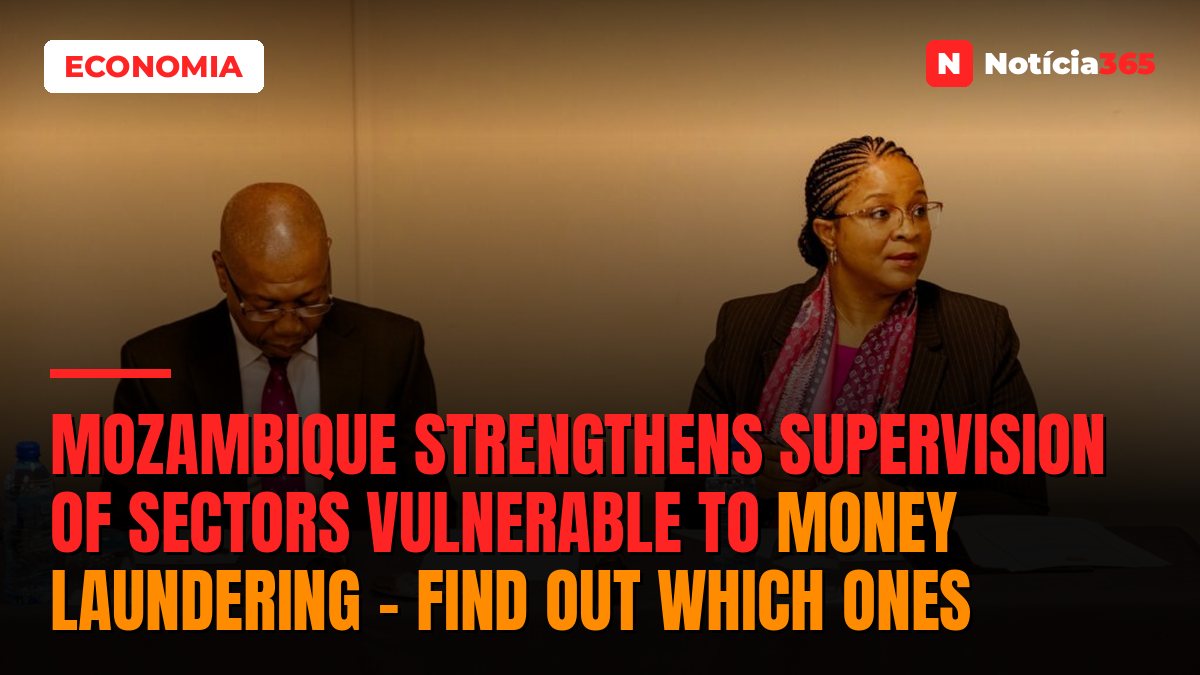
Mozambique intends to strengthen the supervision of non-financial sectors vulnerable to money laundering, such as real estate, casinos and the motor vehicle trade, in order to avoid returning to the Financial Action Task Force (FATF) grey list, it was announced yesterday.
The measure was announced by the Financial Intelligence Office of Mozambique (GIFiM) during the opening of a regional workshop on risk-based supervision of designated non-financial activities and professions, which is taking place in Maputo over one week, with the participation of representatives and supervisors from countries in Southern and Eastern Africa and the support of experts from the FATF and the World Bank.
On the occasion, the permanent secretary of the Ministry of Finance, Albertina Fruquia, said that stronger oversight was necessary because, as banking systems consolidate their defence mechanisms, criminal networks seek to exploit vulnerabilities in other sectors of the economy.
“Sectors such as real estate, casinos, the trade in precious stones and metals, and the legal services provided by lawyers, auditors and accountants are therefore becoming front lines in our defence strategy,” she explained.
The meeting aims to build the capacity of regulators and supervisors to identify higher-risk sectors, services, products, customers and entities, concentrating supervisory resources on them and replacing random approaches with risk-based supervision.
According to the director of GIFiM’s Central Services for Studies and Cooperation, Alberto Cangela Júnior, representatives from 22 countries in the region are taking part in the workshop.
Designated non-financial activities and professions include casinos, real estate agencies, lawyers, auditors, accountants and motor vehicle traders, sectors considered vulnerable to being used for money laundering and terrorist financing.
“Previously, supervision was carried out randomly; now there is a need to conduct risk assessments and identify the entities that pose a high risk,” Cangela Júnior said, adding that the training includes theoretical and practical components and will allow participants to share experiences among the countries taking part.
In Mozambique, GIFiM already supervises the real estate and motor vehicle buying and selling sectors for the purposes of preventing and combating money laundering, as they do not have their own sector-specific supervisory body in this area.
Alberto Cangela Júnior said the country is seeking to consolidate the progress made since it was removed from the FATF grey list in October 2025, after three years under enhanced monitoring.
Mozambique will be assessed again in 2030, in a process that begins in 2028. “By then, we must have all the mechanisms in place, so that the 2030 assessment can take place with the country achieving a high level of compliance and we do not run the risk of returning to the grey list,” he said.
Cangela added that the Mozambican Bar Association, as the sector’s supervisor, should strengthen its capacity to understand the risks associated with legal services and identify activities with greater exposure to money laundering.
In a report released in October, GIFiM warned of weaknesses in controls in the real estate sector, including failures to report suspicious transactions and limitations in coordination between entities.
Of the 851 real estate entities identified as active in 2025, only 234 were registered with the organisation.
The report also identified suspected investment of funds from illicit sources in the real estate sector amounting to 5,006 million meticais (€78.2 million), between January 2021 and November 2025.
GIFiM recommended closer monitoring of transactions, stronger risk-based supervision and improved information-sharing between authorities.