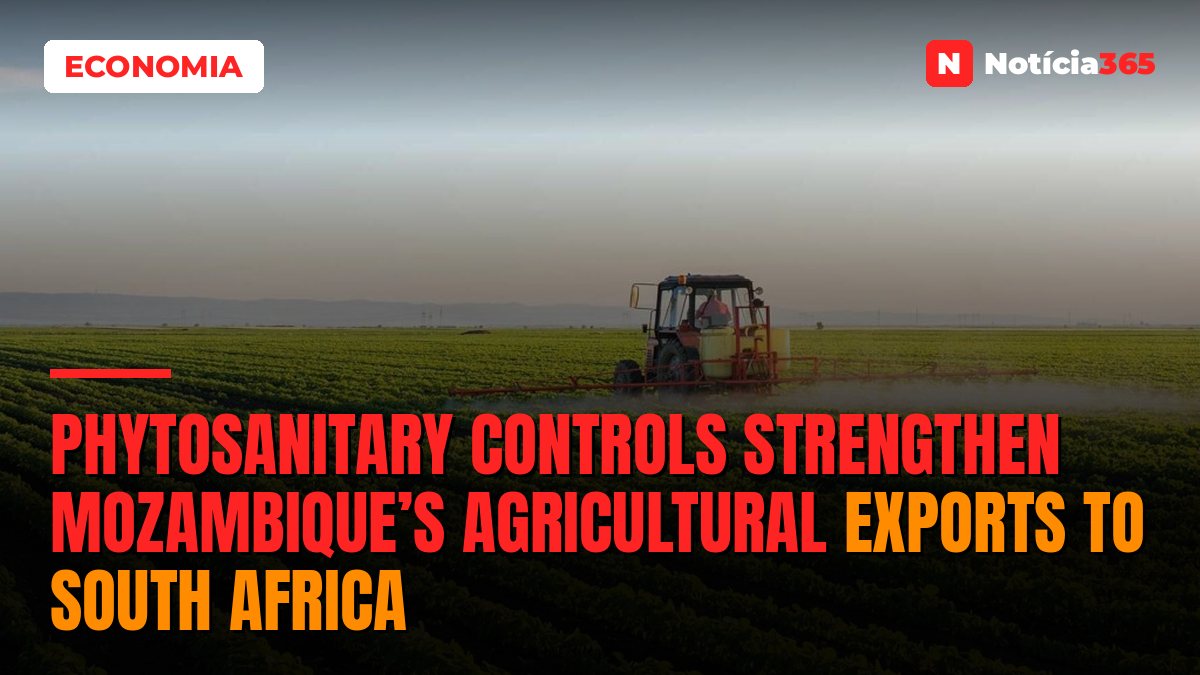

Strengthened phytosanitary controls at agricultural farms are helping to protect Mozambican exports and secure access to international markets, particularly South Africa, which remains the principal destination for produce from companies based in Goba, in Namaacha district, Maputo province.
During a visit to several farms in the region on 30 October, Antónia Vaz, the national director of Health and Biosecurity, said companies are adopting measures to prevent the introduction and spread of disease. "The companies are complying with biosecurity measures to prevent the entry of certain diseases," she stated.
According to Antónia Vaz, the farms visited are expanding their production areas and reinforcing export capacity, with South Africa as their main target market. She cautioned, however, that maintaining export access depends on meeting the sanitary requirements of importing countries. "Maintaining the market is not easy — maintaining the market means complying with the phytosanitary requirements demanded by importing countries," she said.

Among the measures observed were disinfection systems installed at farm entrances, including footbaths and wheel baths used to sanitise the footwear of workers and the tyres of vehicles entering production units. These mechanisms help prevent diseases such as Panama disease, which affects banana crops and can jeopardise both production and access to international markets.
Antónia Vaz explained that national authorities work alongside companies to ensure that products destined for export meet the phytosanitary requirements of importing countries. She added that some banana-producing companies have stopped importing planting material and are instead using suckers from existing plants to expand their cultivation areas.
However, when companies wish to open new production areas and require specific planting material, they may apply for its importation — a process overseen by the Ministry of Agriculture, Environment and Fisheries. During the visit, companies also raised concerns about irregular electricity supply, and Antónia Vaz indicated that the agriculture and energy sectors are working together to find solutions.
On regional cooperation, Antónia Vaz noted that the organisation responsible for combating transboundary pests and diseases has only one helicopter at its disposal. Despite the absence of active outbreaks, she called for stronger intervention capacity, particularly to reach remote and difficult-to-access areas.
The visit also served to assess the prevention measures adopted by companies and to gather data on banana, mango, and macadamia cultivation, the inputs used in pest control, export volumes, and land available for production expansion.
Source: Agência de Informação de Moçambique (AIM)
Source: Diário Económico
Original article: https://www.diarioeconomico.co.mz/2026/11/01/negocios/agronegocios/medidas-fitossanitarias-reforcam-exportacoes-agricolas-para-a-africa-do-sul/