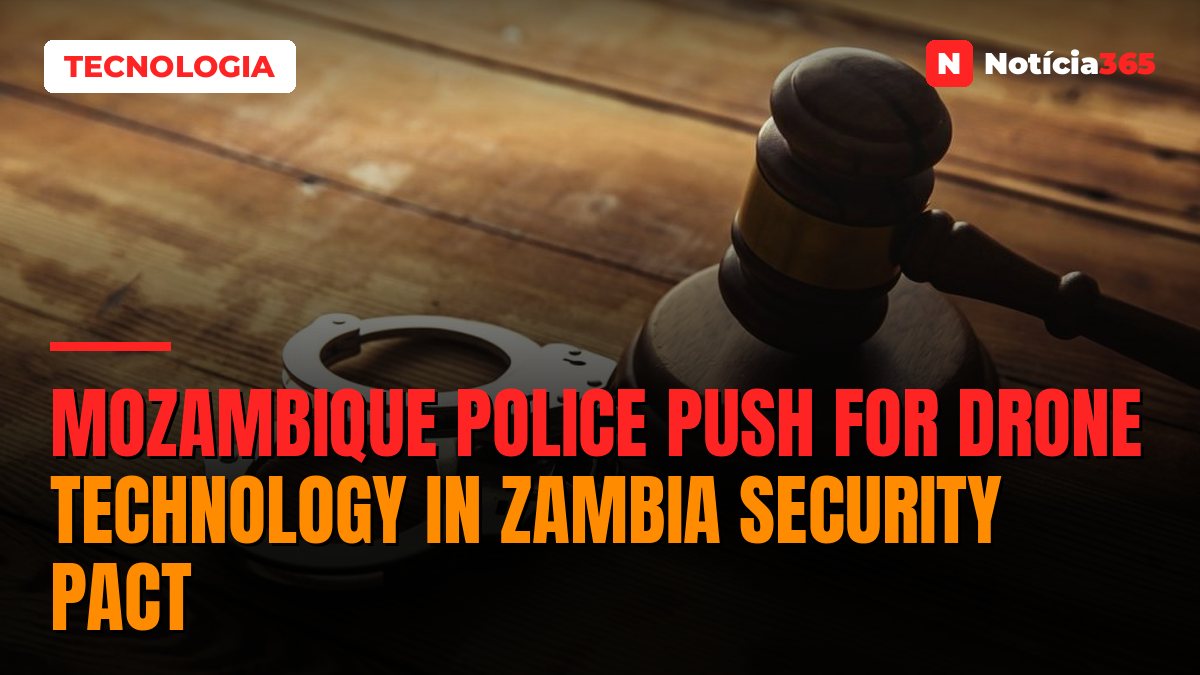

Mozambique’s Republic Police (PRM) has called for deeper security and defence cooperation with Zambia, centred on surveillance technology, operational capabilities and specialist training to combat terrorism and transnational crime across southern Africa.
According to the Mozambique Information Agency, the position was set out by PRM commander-general Joaquim Adriano Sive at the 14th Session of the Permanent Joint Commission on Defence and Security between the two countries, held last week in Maputo.
Sive advocated for the modernisation of available resources to improve the prevention, detection and response to threats affecting the region. Among his priorities, he highlighted the use of unmanned aerial vehicles — drones — and online command and surveillance systems to monitor operations and enhance coordination between security forces.
Sive also pointed to the need to strengthen logistical capacity and invest in the technical and scientific training of personnel, arguing that human resource development must keep pace with advances in technology.
The threats identified include terrorism, drug trafficking, maritime piracy, cybercrime, human trafficking, the illegal circulation of weapons, environmental crimes, illegal immigration and the smuggling of goods.
The commander-general warned that criminal organisations are continuously evolving and adapting to technological innovation, and called for law enforcement institutions to modernise their working methods accordingly.
“We must follow the path of innovation,” he said.
In his assessment of the international context, Sive cited conflicts in the Middle East and Europe as sources of instability with direct effects on the Southern African Development Community (SADC), notably through rising commodity and consumer prices. He argued that these pressures risk compounding security challenges across the region.
The Permanent Joint Commission on Defence and Security serves as a bilateral dialogue mechanism between Mozambique and Zambia to deepen coordination and define strategies for preventing and countering cross-border threats.
Source: Diário Económico
Original article: https://www.diarioeconomico.co.mz/2026/11/02/economia/desenvolvimento/prm-quer-mais-tecnologia-na-cooperacao-com-a-zambia-contra-o-crime/