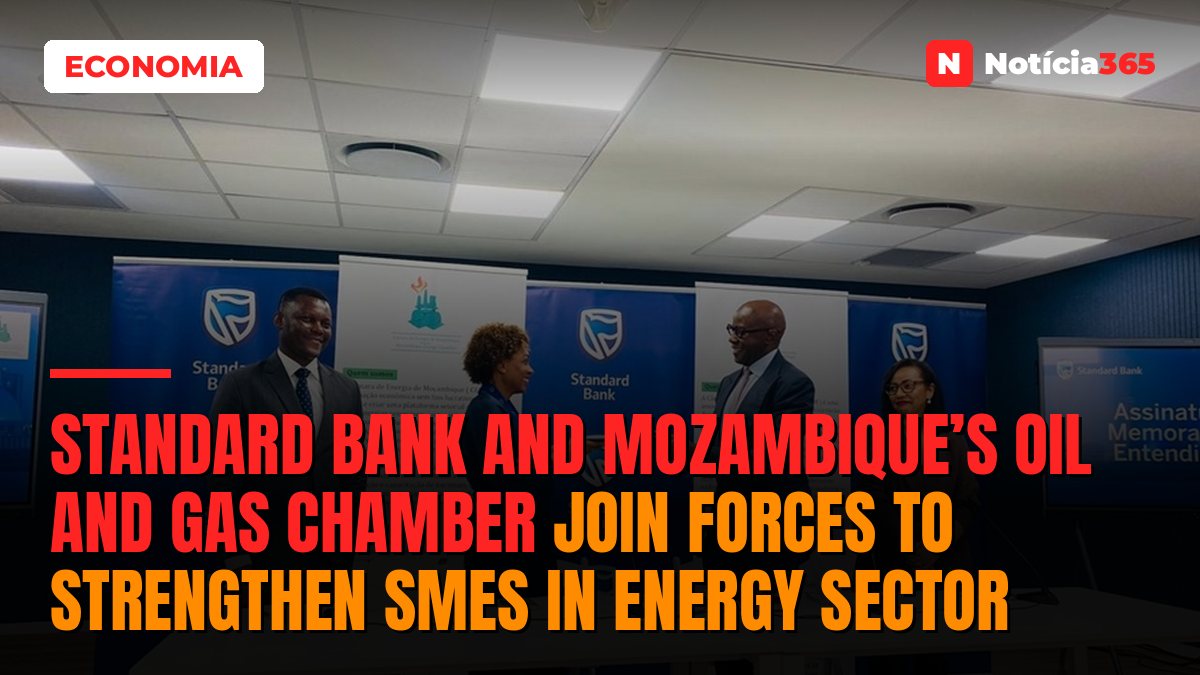
Standard Bank and the Mozambique Oil and Gas Chamber signed a memorandum of understanding (Mou) in Maputo on Monday, 2 November, to support the integration of national micro, small and medium-sized enterprises (MSMEs) into the supply chains of major energy projects. The partnership combines business capacity-building, access to finance and links with sector operators.
On the occasion, the chairman of the Chamber’s Board of Directors, Florival Mucave, argued that the participation of national businesses requires collaboration between financial institutions, business organisations and project developers.

Photo: FDS Fim de Semana
“No institution, on its own, can drive significant participation by national businesses in the oil and gas industry,” Florival Mucave said.
For Mucave, making business opportunities known is only part of the work. Suppliers must also be prepared to compete, execute contracts and ensure the continuity of their operations.
“Our collective ambition must be to ensure that, as business opportunities emerge in connection with the supply chains of liquefied natural gas (LNG) projects, Mozambican companies not only know about these opportunities but are also increasingly prepared, in terms of capacity and financial strength, to compete, successfully execute contracts and grow sustainably,” he said.
Mucave highlighted, in particular, the financing difficulties faced by national suppliers. Citing a MozUp study conducted in 2024, he said that, of the 104 suppliers surveyed, only 27% had bank loans, while 84% indicated that formal sources of finance covered less than half of their needs.
Companies may have to bear the costs of their operations for 90 to 120 days before receiving payment for services provided. For this reason, Mucave observed, “obtaining a contract does not represent the end of the journey”.
Financing, preparedness and market access

Photo: FDS Fim de Semana
Standard Bank’s Director of Business and Commercial Banking, Márcia Karim, argued that the participation of national companies depends on a response that goes beyond the provision of credit.
“We therefore believe that financing, although essential, is not enough. An integrated approach is needed, based on business capacity-building, access to finance and effective links with markets,” she said.
According to Karim, the partnership aims to bring MSMEs closer to major operators and prepare them to meet the technical, financial and operational requirements of the projects. Support is expected to cover training, business preparation and access to financing solutions.

Photo: Diário Económico
Márcia Karim also recalled that, between 2021 and 2024, Standard Bank held five editions of the iCreate programme, which recorded around 120 participations by companies and entrepreneurs from different sectors.
In 2025, the masterclasses organised by the institution brought together more than 1,600 participants, with sessions on financial management, access to finance, digital marketing and business strategy. The bank also provides the digital platform “Empreenda”, which offers 28 free entrepreneurship modules.
For his part, Standard Bank’s Director of Corporate and Investment Banking, João Guirengane, highlighted the potential of gas projects to develop national suppliers and stimulate economic activity.
He argued that the bank’s role should go beyond traditional financial services, such as loans and payments, to include support for business preparation and the establishment of commercial contacts.

Photo: Diário Económico
“We want to do a little more than that: incubate companies, facilitate their introduction to major projects and drive this growth,” he said.
For João Guirengane, collaboration with the Chamber and operators will be crucial to turning investment opportunities into contracts that national companies have the capacity to deliver.

Photo: FDS Fim de Semana
Source: Diário Económico