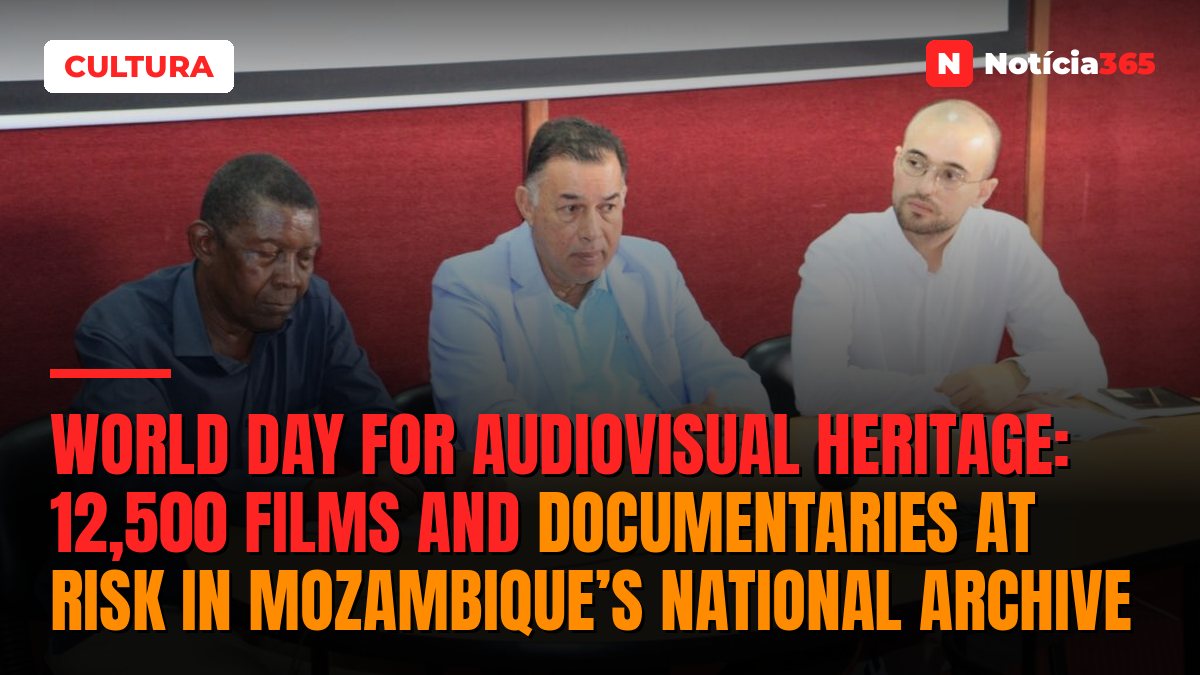
Mozambique is facing difficulties in preserving its audiovisual heritage, with around 12,500 films and documentaries in the national archive at risk and in need of better conservation conditions, including refrigeration and digitisation, sector officials said yesterday.
The collection is held at the National Institute of Cultural and Creative Industries (INICC) and includes records from the colonial period, the creation of the Mozambican state and the years following independence. According to INICC Director-General Roberto Dove, many of these materials are more than 50 years old and are subject to deterioration.
“Our priority is to ensure that we can effectively create the necessary conditions, particularly by addressing refrigeration in the archive,” Roberto Dove said, explaining that high temperatures accelerate the deterioration of film reels and compromise the preservation of historical records.
In addition to improving the conservation conditions of the existing collection in the country, the authorities are seeking to identify and recover Mozambican audiovisual materials held in foreign archives and museums. There are still no exact figures on the extent of this heritage, which the authorities aim to recover or make accessible to Mozambicans through digital means.
In this process, Spanish Cooperation and the Portuguese Cinematheque are working with the Mozambican authorities to identify and digitise documents. Roberto Dove said that around 300 films and documentaries are being digitised in Lisbon, in an operation that depends on the availability of resources and technical conditions.
“At the moment, we still do not have the conditions to carry out digitisation here,” Dove said, advocating the development of technical capacity in Mozambique to handle and preserve audiovisual materials.
Filmmaker and former director-general of production at the National Film Institute Luís Manuel Simão warned of the risk of losing recordings made on film and old video tapes due to the lack of suitable equipment to play them. The existing materials include footage of official activities and visits carried out in the first years after independence.”
Luís Manuel Simão called for technical resources to be strengthened to enable digitisation in the country, while pointing out that some of the materials produced during the colonial period and in the following decades still need to be identified and processed. The filmmaker recalled that some tapes were produced using old equipment, and the technology needed to play them back is no longer available.
We will probably lose a large part of it,’ he warned, referring to old video tapes that can no longer be played using the available equipment. The filmmaker stressed the importance of preserving these records to maintain the country’s historical memory and allow future generations access to the images.
The statements were made during a round-table discussion entitled “Mozambican Audiovisual Memory: Challenges of Preservation and Access”, organised by INICC in Maputo as part of World Day for Audiovisual Heritage, marked on 27 October. The initiative discussed the challenges of conserving, digitising and recovering historical materials.