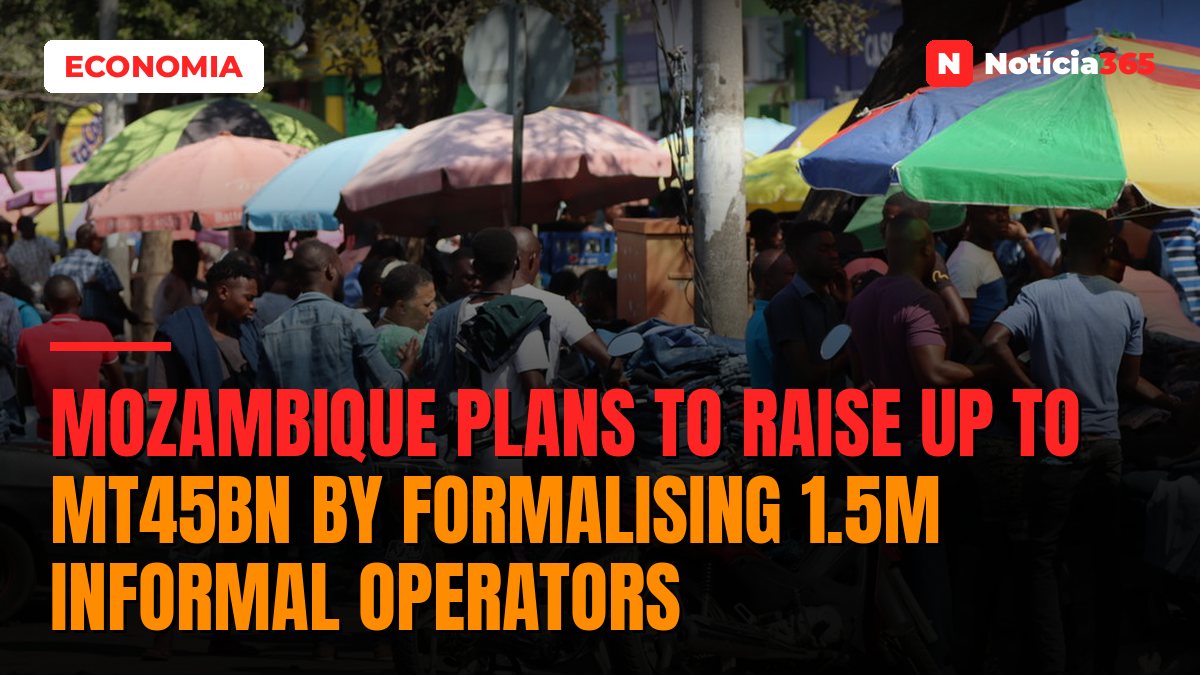

The Mozambican government has announced it expects to collect between 40 billion and 45 billion meticais in net tax revenue by 2045 through the formalisation of 1.5 million informal economic operators into cooperatives.
The projection is contained in the National Cooperative Development Programme (PNDC) 2026–2046, under which the government estimates the creation and formalisation of 10,000 cooperatives over two decades, at an estimated investment of 1.7 billion meticais.
According to the document, the initiative aims to broaden the tax base, increase productivity, and improve access to financing, in a context where 83.7% of the economically active population works in the informal sector.
The programme also envisages the creation of 500,000 direct and indirect jobs through the development of cooperatives across agriculture, fisheries, livestock, trade, manufacturing, and services.
The government expects the initiative to begin generating a positive net fiscal and economic return for the state from 2029 onwards. Beyond tax revenues, the programme projects an additional economic contribution of between 220 billion and 260 billion meticais, linked to increased production, incomes, and formal economic activity.
Among the measures envisaged is the reservation of at least 15% of public procurement of food goods and services for formalised cooperatives. The measure covers institutions such as schools, hospitals, prisons, and defence and security bodies, with the aim of securing guaranteed markets for cooperative production.
The plan also includes concessional credit lines, guarantee mechanisms, technical assistance, and business capacity-building programmes to strengthen the sustainability of cooperative organisations.
Cooperatives led by women and youth will have access to specific incentives, including exemptions from certain administrative fees and preferential access to public support programmes. The government sets minimum targets of 40% female participation and 35% youth participation among direct beneficiaries.
The programme will be financed through the state budget, development cooperation partners, and development finance mechanisms. The measure seeks to operationalise the General Cooperative Law and align with policy instruments covering industrial policy, local content, and support for micro, small, and medium enterprises, promoting the integration of small producers and informal operators into the formal economy.
Source: Diário Económico
Original article: https://www.diarioeconomico.co.mz/2026/10/29/negocios/pndc-formalizacao-de-informais-pode-valer-45-mil-milhoes-de-meticais/