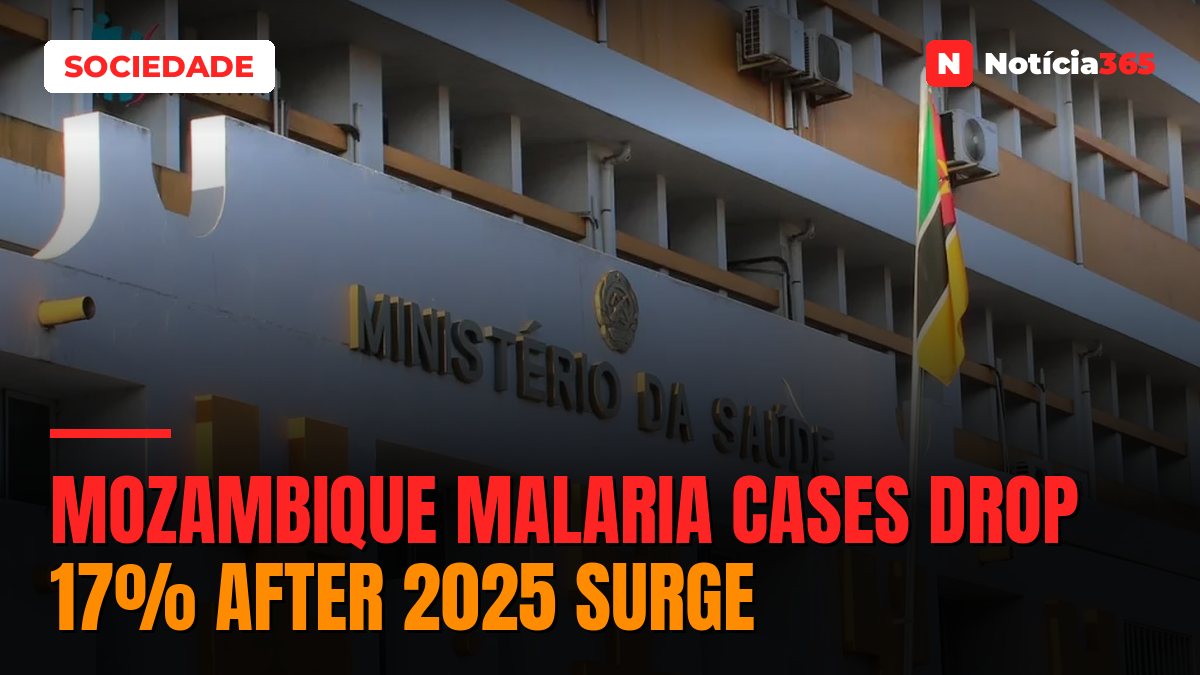

Mozambique recorded approximately 8.7 million malaria cases in the first nine months of 2026, down from 10.4 million in the same period of 2025. The Ministry of Health (MISAU) announced a 17% reduction, though the disease continues to represent one of the country’s foremost public health challenges.
The figures were presented on Wednesday, 21 October, by the national director of Public Health, Quinhas Fernandes, at the opening of the 15th annual meeting of the Roll Back Malaria Case Management Working Group in Maputo.
“Although these results are encouraging, we know that the disease continues to represent a significant challenge for our national response,” Fernandes said, as quoted by Lusa.
According to Quinhas Fernandes, the burden of malaria on outpatient consultations at health facilities has also declined. The improvement follows a rise in cases recorded in 2025 that exceeded trends typically observed in the country.
On the prevention front, Fernandes highlighted the distribution of approximately 14.8 million mosquito nets, which, according to the figures presented, benefited an equivalent number of people. More than 1.2 million pregnant women also received insecticide-treated nets during antenatal consultations.
Authorities continued indoor residual spraying campaigns in the southern provinces, a region where MISAU believes conditions are more favourable for progressing incrementally towards elimination of the disease.
Despite the advances, Quinhas Fernandes cautioned against the obstacles posed by extreme weather events, citing the frequency of cyclones and flooding that have affected the south of the country.
“Almost every year we record cyclones,” he said, adding that these phenomena complicate malaria control efforts.
Flooding can promote the formation of mosquito breeding sites and impede communities’ access to health services, while also undermining prevention interventions.
“The opportunity that technological advances and artificial intelligence give us can ensure that this is used in our favour to accelerate our progress.” — Quinhas Fernandes, National Director of Public Health
To consolidate the reduction in cases, MISAU advocates strengthening epidemiological surveillance, improving information systems, and increasing the participation of community health workers in the identification and follow-up of patients.
Key priorities include timely diagnosis, early treatment, and the referral of severe cases to specialist health facilities. Fernandes also called for more efficient use of resources to ensure the continuity of interventions.
Fernandes further highlighted the potential of new technologies to improve the health response. “The opportunity that technological advances and artificial intelligence give us can ensure that this is used in our favour to accelerate our progress,” he said.
The decline announced for 2026 follows a deterioration of indicators in the previous year. Data from the National Malaria Control Programme point to 496 in-hospital deaths in 2025, compared with 358 in 2024, an increase of approximately 39%.
In the first six weeks of 2026, authorities had recorded 49 deaths and approximately 1.36 million cases — figures covering a shorter period than the balance now presented.
According to the World Health Organization’s World Malaria Report 2025, the WHO African region accounted for 94% of estimated global cases and 95% of deaths in 2024.
Source: Diário Económico
Original article: https://www.diarioeconomico.co.mz/?p=554464