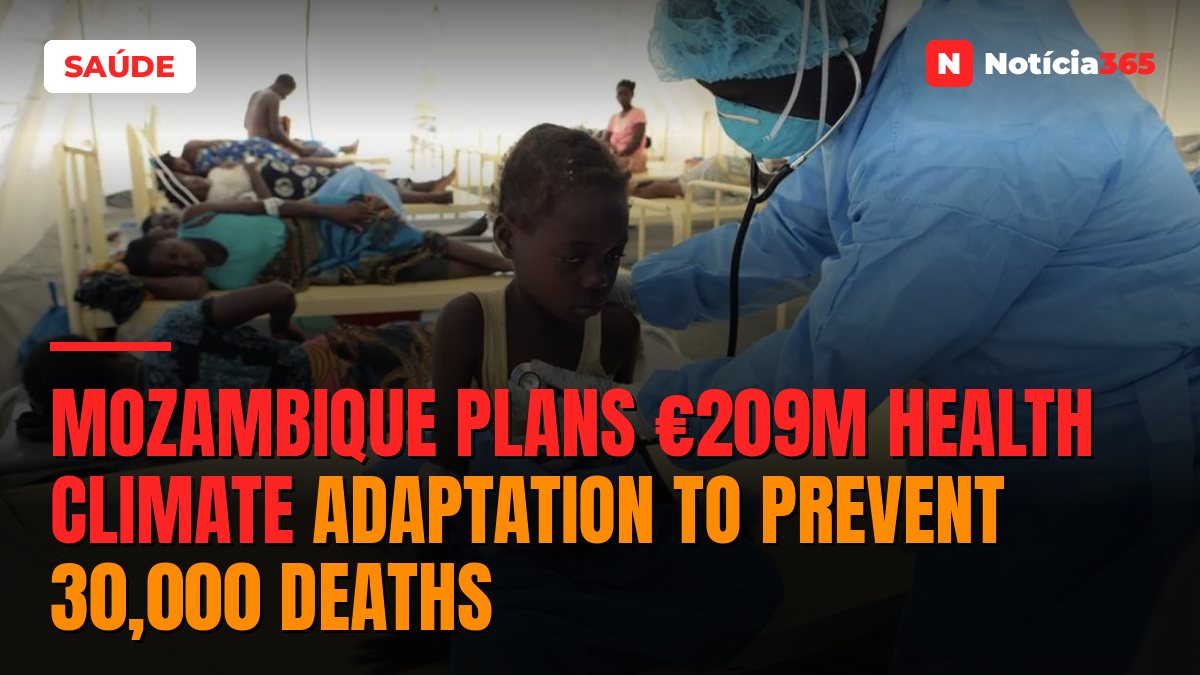

The Mozambican government plans to prevent approximately 30,000 deaths by 2030 through the implementation of a climate adaptation plan for the health sector, valued at €209.3 million. The initiative aims to strengthen the capacity of health services to respond to extreme weather events such as cyclones, floods, and droughts.
The announcement was made on Monday, 19 October, in Maputo, by Health Minister Ussene Isse, during the opening of the 3rd Conference on the Impact of Climate Change on Health, according to Lusa.
At the event, the minister presented the investment roadmap designed to implement the National Plan for the Adaptation of the Health Sector to Climate Change, which sets out intervention priorities and financing requirements.
"The investment roadmap we are launching today is a commitment of leadership and national agenda. It is an expression of shared responsibility aimed at designing a resilient health system prepared to face climate challenges," he said.
According to Ussene Isse, the implementation of the measures should make it possible to prevent around 30,000 deaths by 2030, ensure continuity of health services during emergency situations, and improve the response to disease outbreaks.
Among the priorities are the strengthening of early warning systems, the improvement of health infrastructure, and the training of professionals to respond to the risks associated with climate change.
Financing is expected to be secured through the progressive integration of investments into the State Budget and the mobilisation of resources from national and international partners.
The minister recalled that Mozambique has been affected by cyclones, floods, and droughts — phenomena that compromise the functioning of health units and increase pressure on health services.
"If we do not act vigorously and urgently to ensure the climate adaptation and resilience of the health system at the global and national level, our future could be bleak," he warned.
The two-day conference, running on 19 and 20 October, brings together specialists and representatives of international organisations, including the World Health Organization (WHO) and the Southern African Development Community (SADC), to discuss adaptation measures and the strengthening of health sector response capacity.
Source: Diário Económico
Original article: https://www.diarioeconomico.co.mz/2026/10/19/economia/desenvolvimento/governo-preve-investir-209-me-no-plano-de-adaptacao-climatica-da-saude/