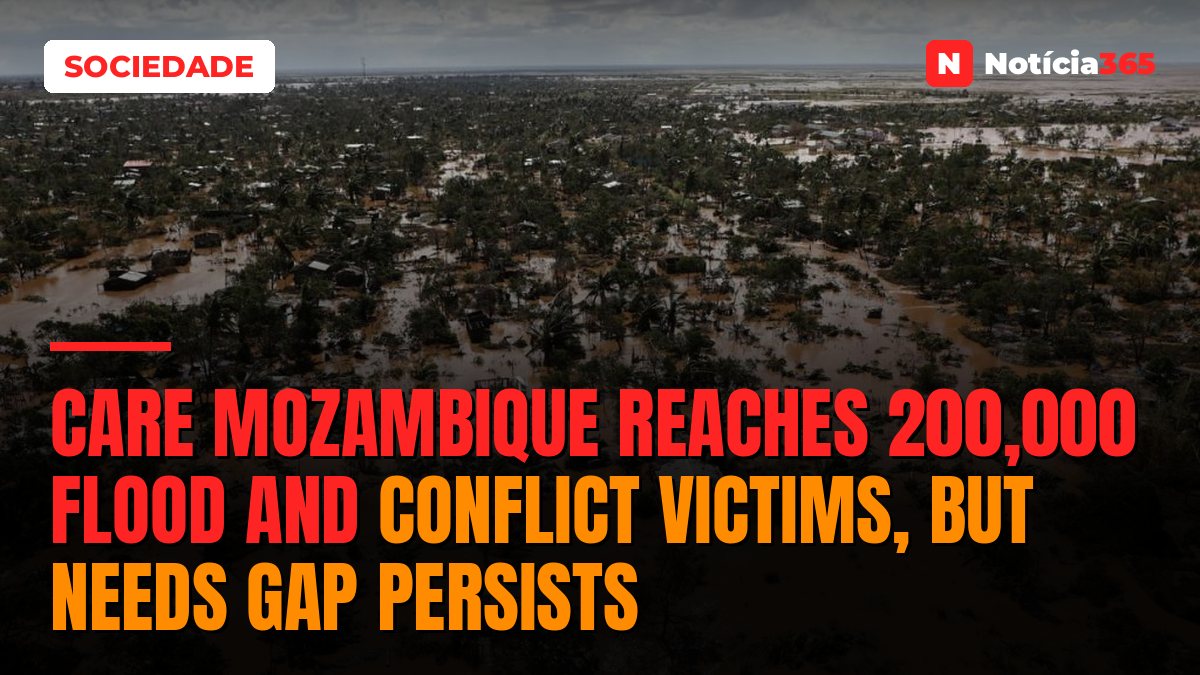

Humanitarian organisation CARE Mozambique has assisted more than 200,000 people affected by armed conflict and flooding across the provinces of Cabo Delgado, Nampula and Gaza, surpassing its initial target of 152,000 beneficiaries. Despite the results, the organisation warns that its response capacity remains below 40% of identified humanitarian needs.
According to Lusa, the support was delivered through the Restore project, implemented between April and October with a budget of eight million US dollars.
CARE Mozambique Deputy National Director Vicente Adriano said that approximately 25% of beneficiaries were affected by flooding in Gaza province, where more than 18,000 people received seeds, other agricultural inputs and tools to resume production after the inundations.

In regions affected by both armed conflict and flooding, the project also provided food assistance, healthcare, water and sanitation services, shelter construction, support for obtaining identity documents, and learning spaces for children.
The intervention further included unconditional direct cash transfers, disbursed over three consecutive months, allowing families to decide how to address their most pressing needs.
"In the area of health, through mobile brigades carried out in coordination with district and provincial health authorities, more than 6,000 people were supported in hard-to-reach areas, including in the districts of Ancuabe and Chiúre," Vicente Adriano said.
On water, sanitation and hygiene, the project rehabilitated more than 30 water sources in communities hosting populations that have returned to their areas of origin after being displaced by violence.
Kits containing buckets, detergents and soap were also distributed to meet household hygiene needs for a period of three months.
In the area of shelter, the intervention enabled the construction of approximately 1,500 units, with different types of roofing adapted to the security conditions of each community.
"We built houses with zinc sheet roofing in Chiúre district, as well as houses with tarpaulin roofing, particularly in areas of greater insecurity. Despite the results achieved, we are flagging the persistence of humanitarian needs — our coverage capacity is below 40% when measured against existing problems," Vicente Adriano stated.
He also highlighted difficulties in financing the humanitarian response at a time when Mozambique is competing with other international crises for donor support.
According to the organisation, the reduction in available resources continues to constrain assistance to affected populations, even as the Restore project has exceeded its originally planned beneficiary targets.
Source: Diário Económico
Original article: https://www.diarioeconomico.co.mz/2026/10/14/economia/desenvolvimento/cheias-e-terrorismo-care-apoiou-mais-de-200-mil-afectados-desde-abril/