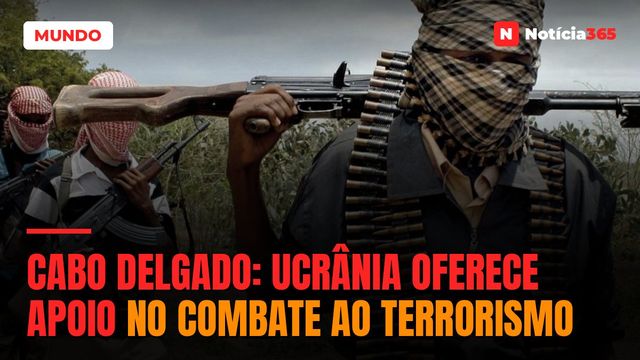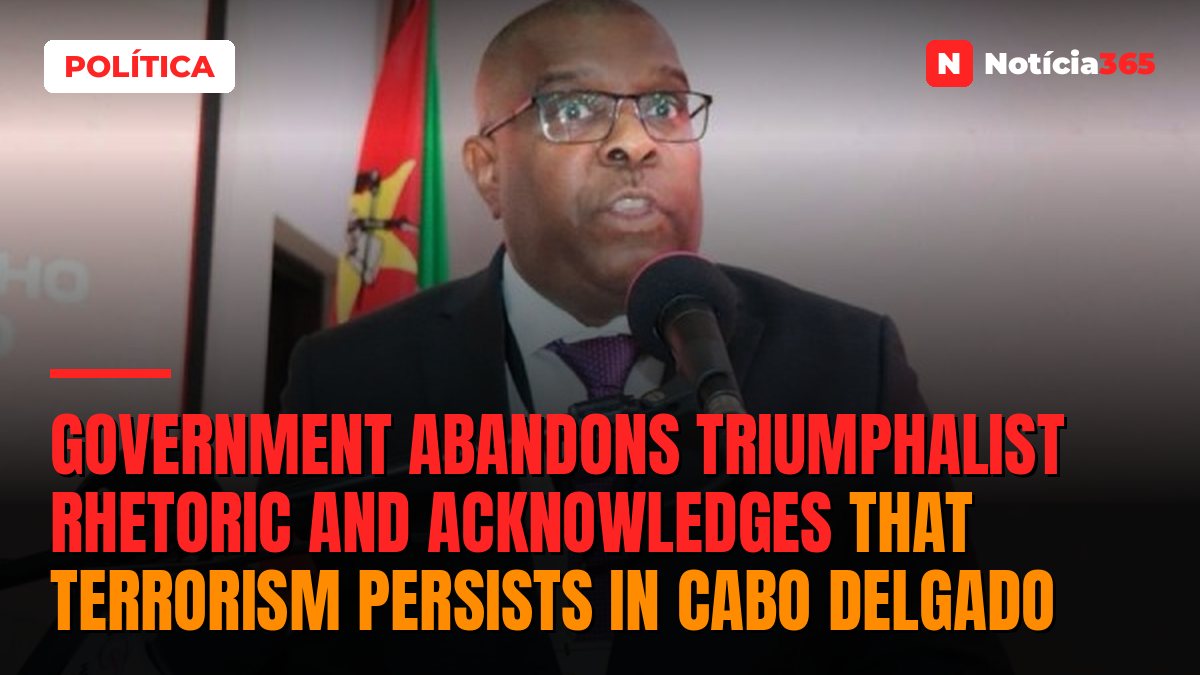
– “Terrorism is still there, the terrorists are still there,” says Plácido Nerino Pereira, Secretary of State for Cabo Delgado
– “Terrorism is not defeated primarily through military means,” says Calton Cadeado, a lecturer in Security Studies at the Higher School of International Relations
By Ricardo Dias
Pemba (MOZTIMES) – The Secretary of State for Cabo Delgado, Plácido Nerino Pereira, said on Wednesday in the provincial capital, Pemba, terrorism has not yet ended in Cabo Delgado.
“Compared with two or three years ago, the situation in Cabo Delgado has improved considerably, because there was a time when local governments were virtually absent from some districts. But that does not mean that [terrorism] has ended,” Plácido Pereira said when questioned by journalists about the security situation in the province. “Terrorism is still there, the terrorists are still there,” he added.
The Secretary of State also confirmed that people had been abducted and killed in Muidumbe and Mueda last week. He was referring to the incident reported on Monday, in which at least five people were beheaded in farming areas in the lowlands of the two districts. The Secretary of State did not specify the number of victims.
This is not the first time a senior state official has acknowledged that terrorism has not yet ended in Cabo Delgado. President Daniel Chapo himself said so last year during the closing ceremony for the 2025 academic year courses at the Lieutenant-General Armando Emílio Guebuza Higher Institute of Defence Studies (ISEDEF) in Maputo.
“To avoid any misunderstanding, we want to clarify that we are not saying there is no longer terrorism in Cabo Delgado. No. We are simply saying that our Armed Forces, the Defence and Security Forces as a whole, are on the ground defending their people against these sporadic attacks that still occur in the province,” Chapo said at the time.
The Government’s position reveals a shift in its rhetoric on the terrorist threat in Cabo Delgado. During the presidency of Chapo’s predecessor, Filipe Nyusi, the Government repeatedly adopted a triumphalist tone, claiming that the terrorists had been defeated, contrary to the reality on the ground.
For example, in May 2024, during the closing ceremony of the Special Forces Course in Nacala, in Nampula province, Nyusi said there were no longer any terrorist bases in any district of Cabo Delgado province.
But this was not the first time Nyusi and his allies had made such claims. In June 2023, the Rwandan President, Paul Kagame, a close ally of Nyusi, who deployed more than 6,000 soldiers and police officers to help combat terrorism in Cabo Delgado, said that 80% of the terrorist threat had been eliminated. “I should say, 80% of the problem has been addressed,” Paul Kagame said in a speech widely quoted by the international media.
Although the insurgents’ firepower has diminished significantly and they can no longer attack and occupy district headquarters as they did between 2020 and 2021, before the deployment of Rwandan troops and the Southern African Development Community Mission in Mozambique (SAMIM), the terrorist threat remains high, particularly for civilians.
Recently, the European Union Military Assistance Mission in Mozambique (EUMAM-MOZ) reported recording 154 terrorist attacks over the past five months, an average of one attack a day.
The figures, presented in Maputo by Brigadier-General Sérgio Estrella, show that insurgent groups retain freedom of movement and the capacity to carry out attacks in several districts of Cabo Delgado and the neighbouring provinces of Nampula and Niassa.
This is happening despite the presence of foreign troops on the ground and the logistical support and training provided to Mozambican troops by the European Union and other international partners.
International support is not the solution
For Security Studies lecturer Calton Cadeado, although international support is valuable and necessary, it cannot be regarded as a definitive solution.
Cadeado lectures at the Higher School of International Relations at the Joaquim Chissano University in Maputo. In an interview with MOZTIMES, he said that Mozambique’s response to terrorism required a paradigm shift.
“The leading actor in combating terrorism must be us, Mozambique; it must be the Mozambican people, and not necessarily the armed component of the struggle. Terrorism is not defeated primarily through military means,” he said.
For the Security Studies lecturer, the insurgents’ continued success reflects weaknesses in the state’s intelligence capabilities. Permanently eliminating the terrorist threat inevitably requires focusing efforts on the top of the enemy’s chain of command and making socioeconomic investments to prevent vulnerable young people from being lured into recruitment.
“We would say that the terrorists’ success is the Mozambican state’s failure. Initially, there was difficulty understanding who the terrorists were; that took a long time, because the terrorists, in their efforts to hide, managed to conceal themselves well,” he said.
According to the lecturer, changing the current situation requires the state to restore close cooperation between the Defence and Security Forces and people living in communities affected by terrorist attacks.
Terrorist attacks in Cabo Delgado began in October 2017 in the coastal town of Mocímboa da Praia. The attacks are estimated to have killed at least 6,600 people since then, around 40% of whom were civilians. More than 1.3 million people have been displaced by the attacks. Around half of those displaced have returned to their places of origin but continue to face insecurity.
The terrorist attacks halted the TotalEnergies-led natural gas project, involving an investment of around US$20 billion, for approximately four and a half years. However, the project resumed in January this year under tight security.
With all security efforts focused on protecting gas projects, local communities remain exposed to attacks by Islamist militants.
A report published in September by the United Nations Office for the Coordination of Humanitarian Affairs (OCHA), entitled “Mozambique: The Cost of Inaction”, indicates a 10% increase in conflict-related incidents in the first half of 2026 compared with the same period a year earlier. (RD)