The Government has reaffirmed its commitment to strengthening its partnership with the private sector through ongoing dialogue, predictability in public policies and the implementation of reforms aimed at improving the business environment, stimulating investment and promoting sustainable economic growth.
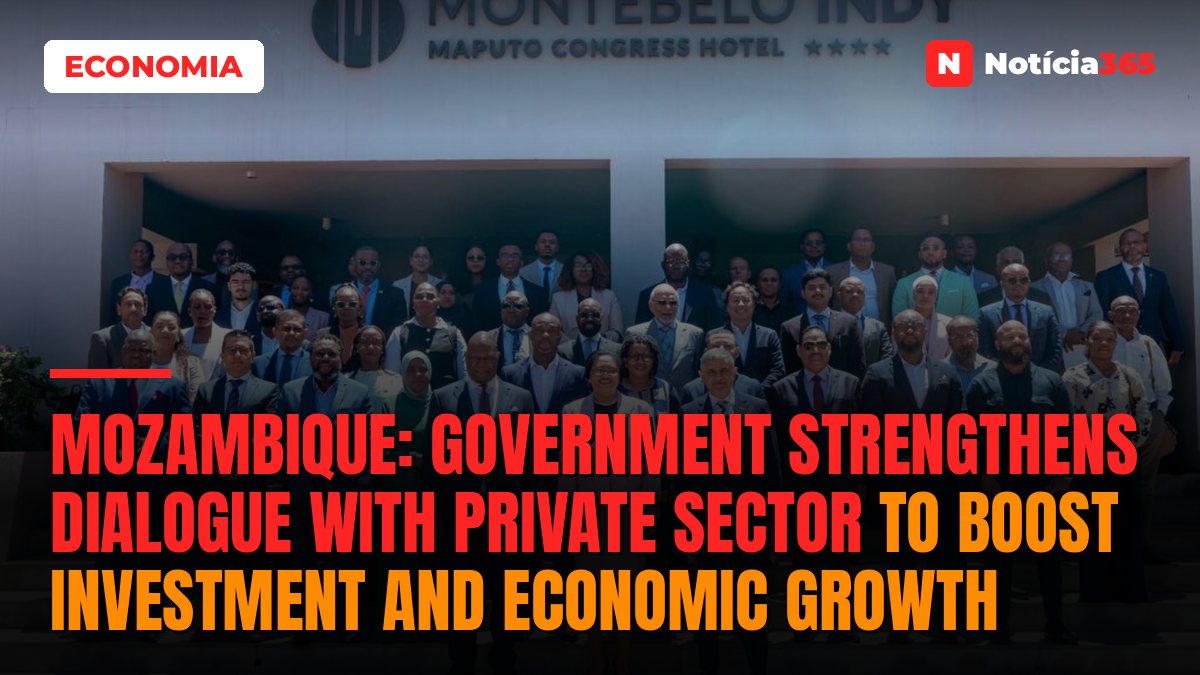
The position was expressed by Finance Minister Carla Loveira on Friday, 30 October, in Maputo, during the sixth edition of the CTA Business Breakfast, organised by the Confederation of Economic Associations of Mozambique (CTA), which brought together Government representatives, businesspeople and financial institutions to discuss the challenges of economic policy and its role in stimulating economic activity.
On the occasion, the Finance Minister highlighted the importance of consolidating a relationship of trust and cooperation between the State and the business community, stressing that the sustainability of public finances and the vitality of the private sector are complementary and interdependent dimensions of national development.
Regarding economic developments, Carla Loveira said that Mozambique recorded growth of 1.7% in the second quarter of 2026, accompanied by a reduction in inflation to around 6% between August and September. These indicators reflect signs of a gradual recovery in economic activity, despite the challenges that continue to constrain the resumption of productive capacity.
In the area of public finances, the minister reported that revenues from oil and natural gas projects reached US$334.35 million.
She also highlighted the implementation of the Fiscal Consolidation Plan, which aims to strengthen revenue mobilisation, rationalise public expenditure and ensure greater transparency and efficiency in the use of State resources.
Regarding ongoing measures to strengthen the private sector, the minister highlighted the structuring of the Development Bank of Mozambique, the establishment of the State Procurement Agency (CAE, IP), the approval of tax regulations and the implementation of the Strategy for Payments to Suppliers.
Also highlighted was the preparation of a Value Added Tax (VAT) Refund Strategy, an initiative intended to improve companies’ liquidity, provide greater financial predictability for economic operators and contribute to stimulating business activity.
These interventions fall within the Public Finance Management Strategy 2026–2035, which establishes an agenda for modernising the State’s financial management, encompassing, among other priorities, digital transformation, the integration of the climate component and human capital development.
For his part, CTA president Álvaro Massingue presented the main constraints affecting business activity, highlighting high financing costs, tax pressure, delays in State payments to suppliers and difficulties in accessing credit, particularly for micro, small and medium-sized enterprises (MSMEs), which account for more than 97% of the country’s business fabric.
The Confederation called for the need for structural reform of the tax system, aligned with regional and international best practices, to simplify tax obligations, reduce compliance costs and create more favourable conditions for the formalisation, productivity and competitiveness of businesses.
In the same context, the CTA considered it essential to improve the predictability of public expenditure execution and establish transparent mechanisms for the validation and settlement of State debts to suppliers, taking into account the impact of payment delays on companies’ cash flow, the maintenance of jobs and the continuity of productive activity.
CTA also argued that the State Budget should play a more strategic role in economic transformation, promoting the participation of domestic companies in public procurement, local content development, industrialisation and the creation of domestic value chains.
Among the proposals presented was also the introduction of mechanisms to strengthen the integrity and credibility of public tenders, including the Business Clearance Declaration, intended to help verify the existence and operational capacity of competing companies.
The CTA expressed its willingness to deepen institutional cooperation with the Ministry of Finance, arguing that the meeting should lead to the definition of priorities, responsibilities and concrete mechanisms for implementing reforms, in coordination with the formal mechanisms of Public-Private Dialogue.
In her closing remarks, Carla Loveira reaffirmed the Government’s openness to addressing the concerns and proposals of the business sector, improving administrative and tax procedures and ensuring follow-up on the implementation of the agreed measures.