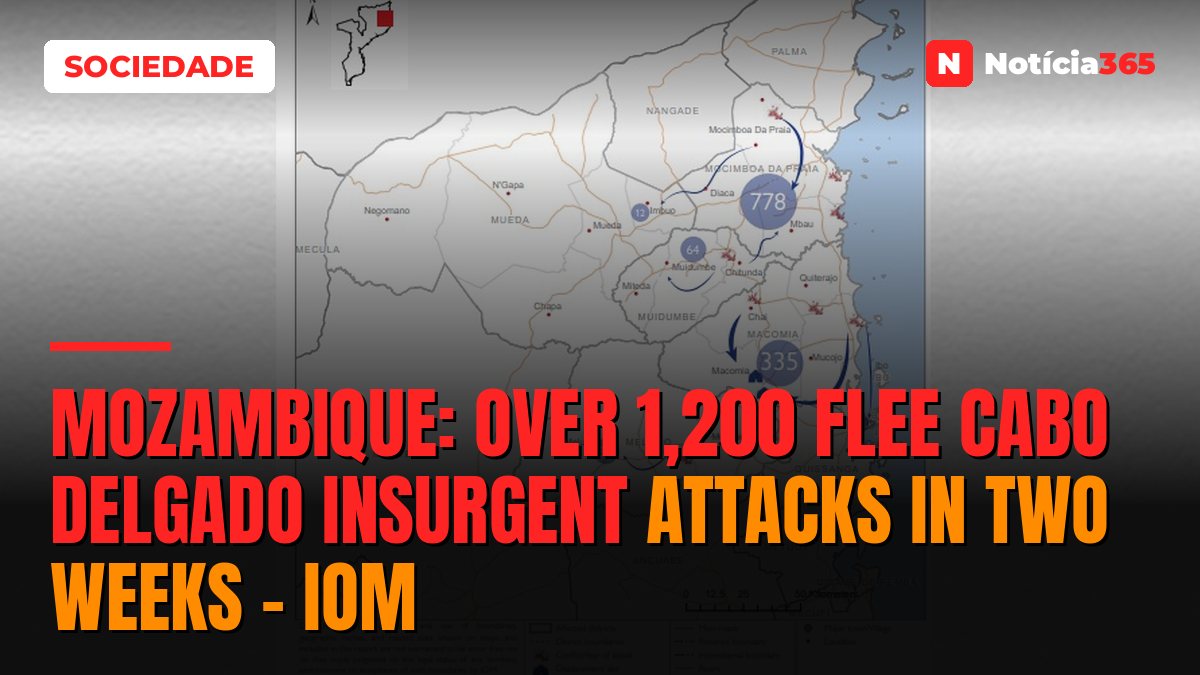
– At least 1,235 people fled attacks or out of fear of attacks by armed insurgent groups in four regions of the Mozambican province of Cabo Delgado during the last two weeks of October, according to the International Organisation for Migration.
According to the latest Movement Alert report from the International Organisation for Migration’s (IOM) Emergency Tracking Tool (ETT), the population movements involved 1,235 people, comprising 316 households, in the regions of Mocímboa da Praia, Macomia, Muidumbe and Meluco, between 14 and 27 October.
The displaced people include 265 men, 386 women and 584 children, who account for around 47% of the total. The IOM also identified 87 pregnant women, 58 elderly people aged over 60, 18 people with disabilities and four unaccompanied children or those separated from their families.
Food, shelter and healthcare are among the most urgent needs identified by the affected groups, cited in 88%, 71% and 44% of the locations assessed, respectively.
According to the organisation, the displacements were triggered by attacks and fears of further attacks carried out by non-state armed groups. The largest movements originated from the administrative post at Mocímboa da Praia, with 785 displaced persons, followed by Chai, in the region of Macomia, with 242 people, and Mucojo, also in Macomia, with 106 displaced persons. Population movements were also recorded in Muidumbe and Meluco.
The IOM recorded 939 displaced persons, equivalent to 76% of the total, being hosted by host communities, whilst 296 people, or 24%, were accommodated in resettlement centres.
The majority of displaced people taken in by host communities were recorded in Mocímboa da Praia, with 778 people, followed by Muidumbe, with 64, Macomia, with 39, Ibo, with 13, and Mueda, with 12.
A total of 296 people were accommodated in the resettlement centres in Macomia, of whom 219 were at the Nondje Centre and 77 at the Serração Centre.
Cabo Delgado, a province rich in natural gas in northern Mozambique, has been the scene of an armed insurgency since 2017; a conflict that has already claimed more than 6,600 lives and displaced more than 1.3 million people over the course of nine years, according to data from international organisations.
Incidents linked to the conflict in the province rose by 10% in the first half of 2026 compared with the same period the previous year, according to the report “Mozambique: The Cost of Inaction”, published in September by the United Nations Office for the Coordination of Humanitarian Affairs (OCHA), which recorded more than 400 incidents of conflict in the first six months of the year.