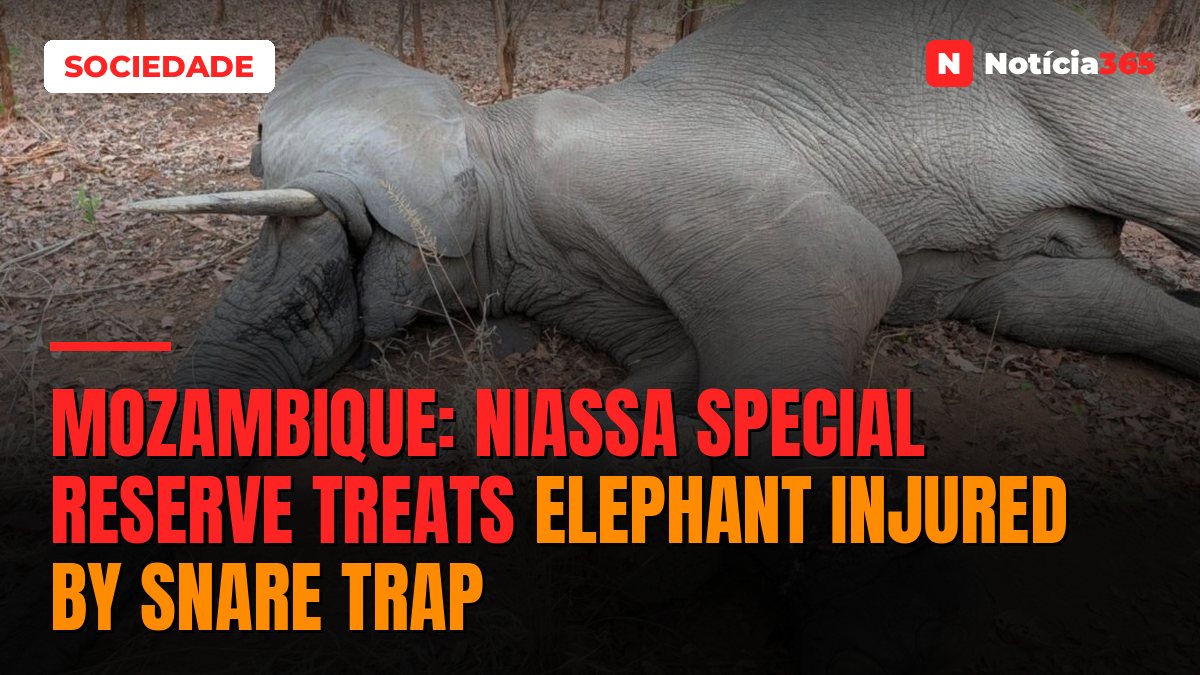
A sub-adult female elephant received veterinary treatment in the Niassa Special Reserve (REN) in an operation led by the Mozambique Wildlife Alliance (MWA), in coordination with the Wildlife Conservation Society (WCS) and REN, with the collaboration of the Niassa Carnivore Project (NCP).
Following an assessment, the elephant was successfully immobilised, allowing the veterinary team to remove a nylon wire snare caught around one of its front legs and treat the wound. Once the intervention was completed, the animal recovered from the immobilisation and returned to its natural habitat. Its recovery is expected to be monitored.

Photo: Reserva Especial do Niassa – REN
Snares pose a serious threat to wildlife, potentially causing deep wounds, infections, difficulty moving and, in extreme cases, death.
In addition to the suffering they cause, injured animals may remain near watercourses, cultivated fields and inhabited areas because of their reduced mobility, increasing the risk of human-wildlife conflict and endangering both animals and communities.

Photo: Reserva Especial do Niassa – REN
This intervention demonstrates that conservation benefits when institutions coordinate their efforts. Collaboration between MWA, WCS, NCP and REN made it possible to combine knowledge, resources and technical expertise for the benefit of wildlife and community safety.

Photo: Reserva Especial do Niassa – REN
REN acknowledges and thanks the reserve rangers and local communities for their essential role in identifying and reporting situations that threaten wildlife.
We urge communities to report immediately any injured animals or animals caught in snares, and not to engage in setting snares or other illegal practices that threaten wildlife.
Protecting wildlife means preserving our natural heritage and promoting safer, more harmonious coexistence between communities and wildlife.