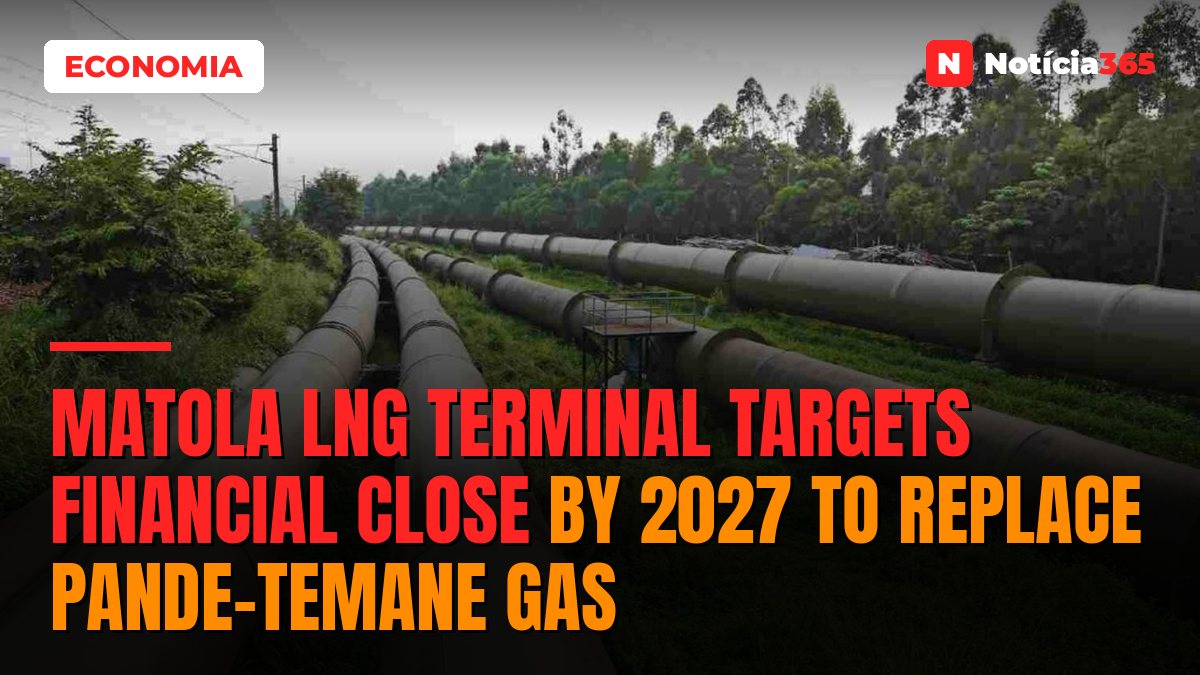

Mozambique is advancing plans for a liquefied natural gas (LNG) import terminal at Matola, designed to secure an alternative gas supply once production from the Pande and Temane fields is exhausted around 2030. Beluluane Gas Company (BGC) expects to reach financial close on the project by end-2027, the company said on Thursday, 5 June.
As part of its preparatory work, BGC announced the appointment of the VGI/PRDW consortium as Owner’s Engineer for the future terminal. The consortium will be responsible for consolidating engineering designs and supporting completion of the contracting process for the construction firm that will execute the works under an Engineering, Procurement and Construction (EPC) contract.
According to the company, this milestone should enable it to proceed to financial close. Initial financing for the project will be provided by Matola Gas Company (MGC) and Gigajoule International (GI).
Terminal to supply power plants and industry
Bringing the infrastructure online before Pande and Temane production runs out is considered essential to ensure continued gas supply to the Chókwè, Ressano Garcia and Maputo power stations, which together provide approximately 450 megawatts to Electricidade de Moçambique (EDM).
The terminal is also intended to supply gas to the manufacturing industry in the greater Maputo and Matola region, whose operations depend heavily on this energy source.
Commercial negotiations covering LNG supply, construction financing and gas sales to South Africa are in their final stages, BGC said, with further announcements expected shortly.
Pande and Temane approach end of productive life
The push for an alternative supply reflects the advancing maturity of the Pande and Temane fields in Inhambane province, operated by South Africa’s Sasol under a Petroleum Production Agreement (PPA) signed in 2000.
According to data presented by the company in August, cumulative production from the Pande, Temane and Inhassoro fields reached 3,306.41 petajoules through October 2025, equivalent to 79.48 billion cubic metres of gas. Of that volume, 3,278.66 petajoules came from the fields covered by the PPA.
Reserves at Pande and Temane were initially estimated at 4.5 trillion cubic feet, of which approximately 3.1 trillion cubic feet had already been produced by end-2025. Sasol projects that extraction will end in 2030, though it has acknowledged the possibility of additional investment to extend operations to 2031. The PPA production licence runs until 2034.
In parallel, Sasol began production in 2025 under a Production Sharing Contract (PSC) linked to the Inhassoro field. Valid until 2050, that concession holds estimated resources of 2.5 trillion cubic feet, of which approximately 1.2 trillion cubic feet are considered recoverable as natural gas, light oil and liquefied petroleum gas.
BGC was established in 2016 by South Africa’s Gigajoule and France’s TotalEnergies to develop the LNG import project through the port of Matola. MGC, for its part, has supplied gas to the region since 2005, currently serving two power plants and more than 35 industrial units with domestically produced gas.
Source: Diário Económico
Original article: https://www.diarioeconomico.co.mz/2026/11/06/oilgas/terminal-de-gnl-da-matola-preve-fecho-financeiro-ate-2027-para-substituir-gas-de-pande-e-temane/