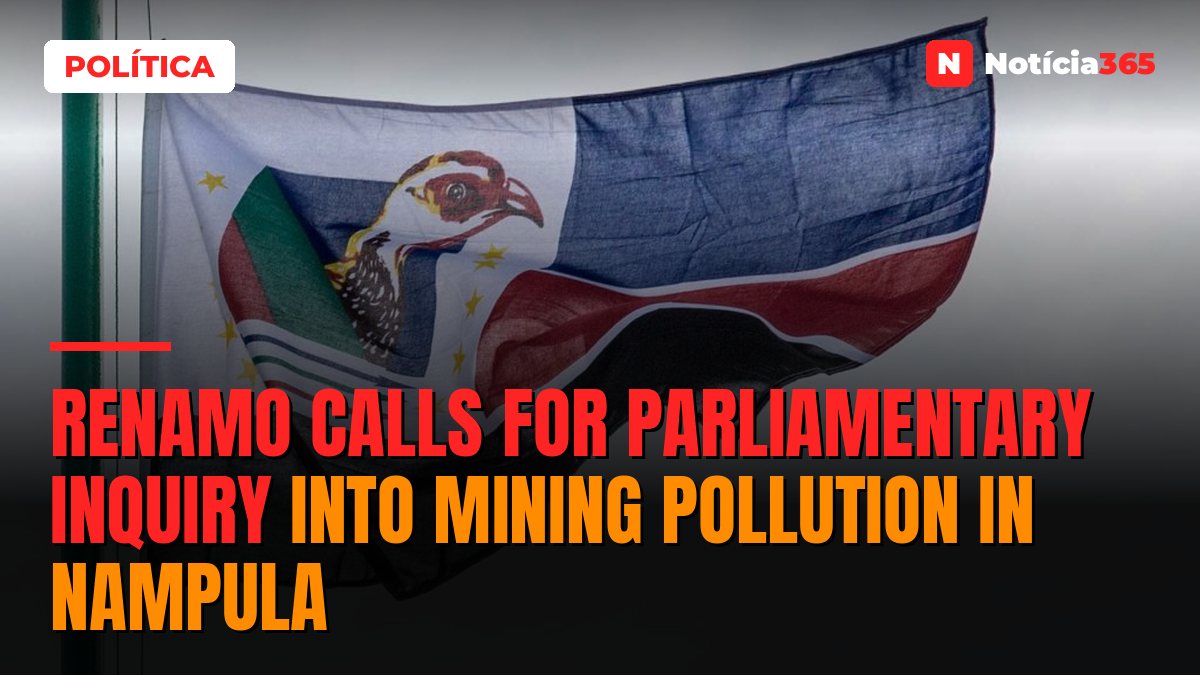

Mozambique's main opposition party, Renamo, has denounced alleged contamination of rivers and lagoons in the districts of Moma and Larde, in Nampula province, which it links to mining activities. The party has called for the creation of a parliamentary inquiry commission to investigate the extent of possible environmental damage and assess the consequences for local communities.
The allegation was presented by Renamo member of parliament Arnaldo Chalaua, who raised concerns about the alleged pollution of waterways, particularly in the district of Moma, where mining operations are under way. According to the MP, the contamination may be linked to fuel spills and the disposal of waste generated by extractive activities.
One of the cases cited is the Pilivili lagoon in Moma, where signs of contamination are reported to have been detected. "The main cause is petroleum and mineral oils, associated with industrial spills originating from large-scale mining operations in the region," said Arnaldo Chalaua.
According to the MP, residents report that water used by local communities carries a strong smell of fuel and visible oil films on the surface. He described the situation as a potential public health risk requiring urgent intervention from the authorities.
In response to these allegations, Arnaldo Chalaua called for the establishment of a parliamentary inquiry commission to determine the extent of the alleged environmental damage and assess its impact on affected populations. The MP also said an urgent independent environmental audit was necessary to identify the causes of the possible contamination.
"Mozambican citizens are in a deplorable situation," he declared, adding that pollution cases had also been reported in the district of Larde. Arnaldo Chalaua said that, at the time of his statements, the government had yet to comment on the situations reported in the region.
The allegations come amid recurring concerns about the environmental impact of mineral resource extraction in Mozambique, particularly the contamination of waterways and soil degradation. In September, the national director of Environment and Climate Change, Sónia Ricardo Muando, advocated strengthening inspections and environmental education to combat illegal mining, identified as one of the main causes of river pollution and environmental degradation.
Also in September, President Daniel Chapo announced his intention to approve, in the near term, regulations for the new Mining Law, aimed at reinforcing oversight and control mechanisms for extractive activity, following accidents linked to the illegal exploitation of mineral resources.
Earlier, in July, the Attorney General's Office warned of the presence of minors at illegal mining sites in Manica province, where approximately 900 excavation points had been identified.
In 2025, the government suspended the licences of mining companies due to environmental irregularities, including the absence of soil recovery plans and waste containment systems, after an official report identified a situation of "uncontrolled mining" in Manica.
According to information released by the government in August, 30 of the 41 companies suspended in that province had already resumed operations after meeting environmental requirements and operating standards, while the remaining companies were still under review.
Source: Diário Económico
Original article: https://www.diarioeconomico.co.mz/2026/11/04/oilgas/extractivas/nampula-renamo-denuncia-poluicao-de-rios-e-lagoas-e-pede-inquerito-parlamentar/