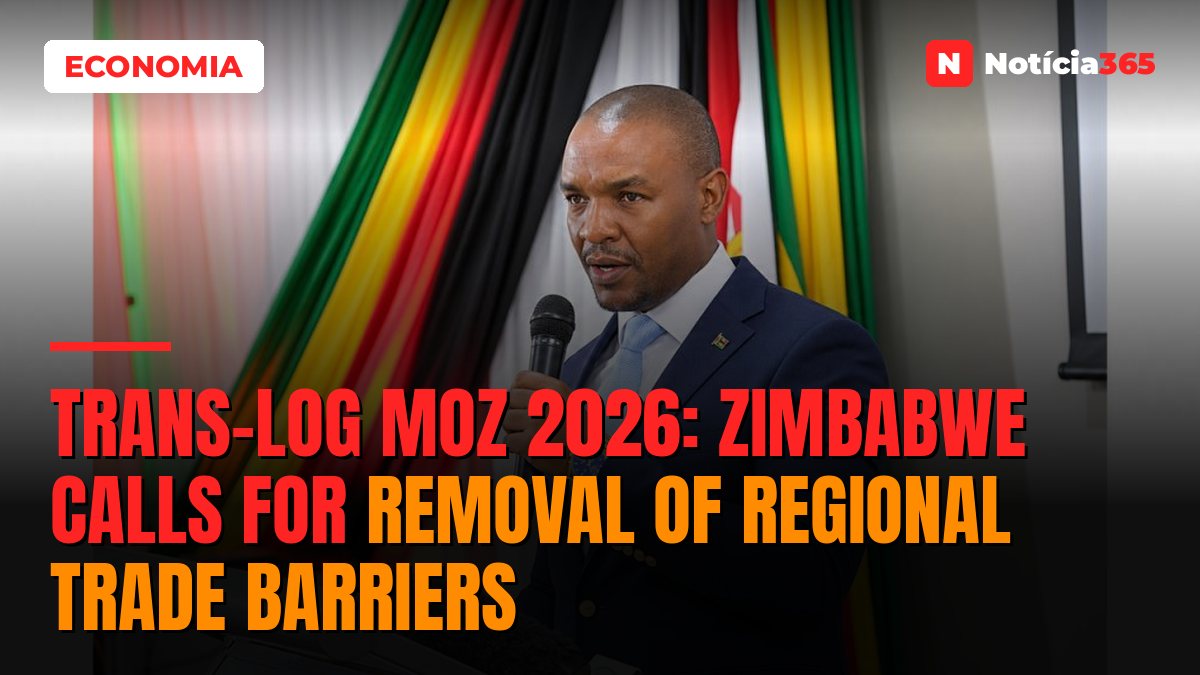

Zimbabwe's Minister of Transport, Felix Mhona, on Wednesday called for the elimination of administrative and operational constraints hampering trade among Southern African countries, warning that a lack of coordination in border management and infrastructure project implementation is undermining the efficiency of regional logistics corridors.
Mhona made the remarks during the inaugural edition of the Mozambique Transport and Logistics Investment Forum and Exhibition (TRANS-LOG MOZ 2026), held in Maputo, where he stressed the need to harmonise procedures and strengthen inter-country cooperation to facilitate the movement of goods and reduce barriers to cross-border trade.
In his address, Mhona argued that modernising transport infrastructure alone is insufficient to guarantee the efficiency of logistics corridors, particularly when the countries involved adopt divergent procedures or fail to coordinate the execution of investments.

"We can do our work, or you can do your work, but when we do not agree, there is no way to have a functional corridor," he said, calling for greater alignment among states in the implementation of regional projects.
The minister identified constraints at border posts — including immigration procedures and the involvement of multiple authorities — as factors that continue to cause delays in cross-border movement.
Overcoming these obstacles, he said, requires not only investment in infrastructure modernisation but also the harmonisation of administrative procedures and project execution mechanisms linking countries across the region.
In this context, Mhona highlighted the importance of effective coordination between Mozambique and Zimbabwe, citing the Machipanda-Forbes border crossing as an example of the need to ensure compatible procedures in the implementation of shared projects.
He also questioned the effectiveness of bilateral agreements when they are not accompanied by concrete measures, arguing that government commitments must translate into action plans with clear implementation mechanisms.
"What is the action plan after we enter into an MOU?" he asked, underlining the importance of establishing an implementation matrix that transforms agreements between countries into tangible outcomes.
TRANS-LOG MOZ 2026 is positioned as a strategic platform to attract investment, modernise transport infrastructure, and strengthen economic and commercial integration between Mozambique and Southern African countries.
Mhona's remarks were delivered during a high-level ministerial panel on the theme "Southern and Central Region Corridors: Limpopo and Beira", moderated by Ambrósio Adolfo Sitoe of Mozambique's Ministry of Transport and Logistics. The panel also featured contributions from Mozambique's Minister of Transport João Jorge Matlombe, Eswatini's Minister of Transport Ndlaluhlaza Ndwandwe, Botswana's Minister of Transport Keagile Atamelang, and Namibia's Deputy Minister of Transport Hans Haikali.
About the Event
The inaugural TRANS-LOG MOZ 2026 forum brings together, over two days — 4 and 5 November — at the Joaquim Chissano International Conference Centre in Maputo, government ministers from Southern African countries, domestic and international investors, financial institutions, business leaders, and sector operators. The event promotes discussions on investment opportunities, the modernisation of ports, roads, and railways, infrastructure financing, logistics cost reduction, and the elimination of trade barriers, with the aim of reinforcing Mozambique's competitiveness and advancing regional economic integration.
Source: Diário Económico
Original article: https://www.diarioeconomico.co.mz/2026/11/04/negocios/comercio/trans-log-moz-2026-zimbabue-apela-a-eliminacao-de-barreiras-que-dificultam-o-comercio-regional/