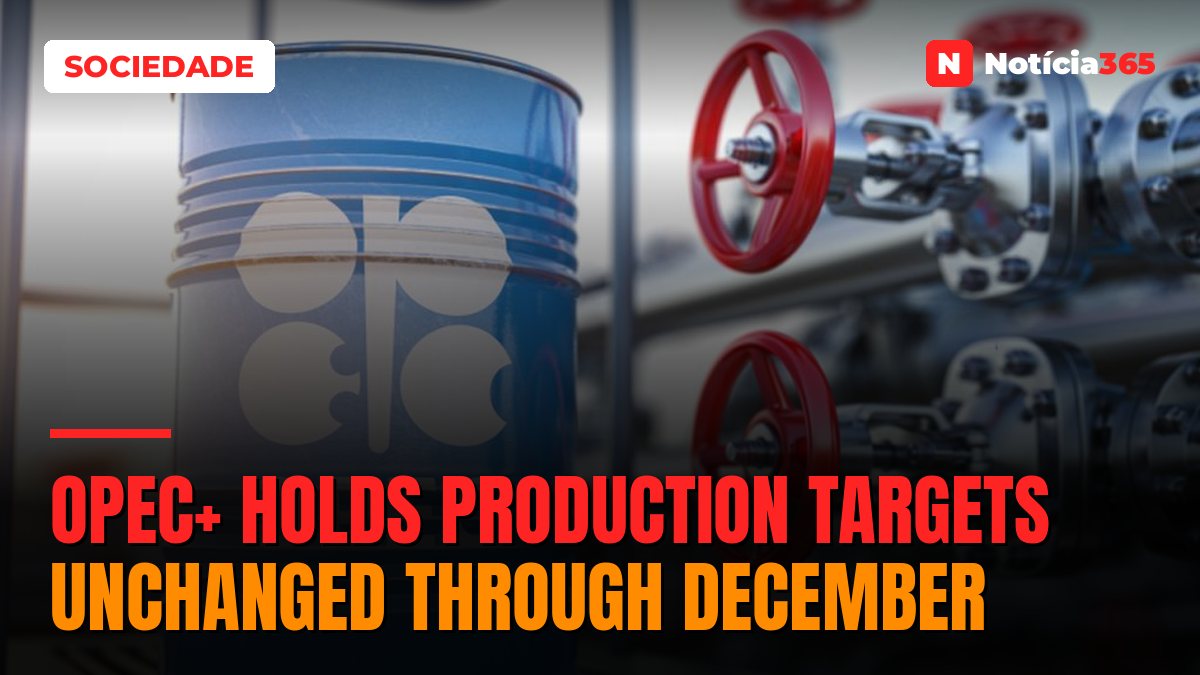

OPEC+ member countries have decided to keep production targets unchanged for December, deferring any new supply policy adjustments to 2027, as the group continues to grapple with export disruptions caused by the ongoing war involving Iran.
The decision was taken on Sunday, 1 November, during a virtual meeting of seven core OPEC+ members: Saudi Arabia, Russia, Iraq, Kuwait, Algeria, Kazakhstan and Oman, according to a statement from the organisation.
Although Gulf countries have been ramping up exports, oil flows remain affected by the conflict, which has persisted for several months. Most producers are still operating below their respective production targets.

OPEC+ brings together the Organisation of the Petroleum Exporting Countries and allied producers, including Russia. In recent years, monthly decisions on output levels have been driven by those same seven countries, previously joined by the United Arab Emirates until its departure from the organisation in May.
The group’s 21 members are expected to reconvene on 29 November, in a session where analysts anticipate a decision on production quotas for 2027.
“Today, the decision was easy. The far more important test will be at the ministerial meeting on 29 November, when OPEC+ decides the production framework for 2027,” said Jorge Leon, analyst at Rystad.
Oil prices rose more than 2% on Friday, with Brent closing near US$118 per barrel — its highest level since April — against a backdrop of fears over a potential escalation of the Iran war following midterm elections in the United States.
The International Energy Agency and other forecasting institutions have warned of a possible supply surplus in 2027 should Gulf oil flows return to normal.
According to Jorge Leon, OPEC+ faces a particularly complex decision for the coming year, given uncertainty surrounding the US-Iran conflict, the recovery of shipping through the Strait of Hormuz, and the scale of the oil surplus that could emerge once exports are normalised.
Production Capacity Review in Focus
The seven countries have been gradually raising production targets throughout 2026 and completed, in September, the phased reversal of a 1.65 million barrels-per-day supply cut that was originally agreed in 2023.
At previous meetings, the group had already decided to hold production targets unchanged for both October and November.
OPEC+ also maintains a second layer of cuts of approximately two million barrels per day, covering the majority of its members, which is set to remain in place through the end of 2026.
The group must also complete, during the fourth quarter, an assessment of its members’ production capacity. The exercise will serve as the basis for setting 2027 baseline levels, which will determine future quotas and plans to unwind the cuts still in force.
However, the war in Iran has disrupted oil capacity expansion projects across the Middle East, adding to uncertainty around the region’s future production potential.
According to information reported by Reuters in October, the completion of the assessment — originally scheduled for this period — has been pushed back to mid-November.
Source: Diário Económico
Original article: https://www.diarioeconomico.co.mz/2026/11/02/oilgas/petroleo/opep-mantem-metas-de-producao-de-petroleo-inalteradas-ate-dezembro/