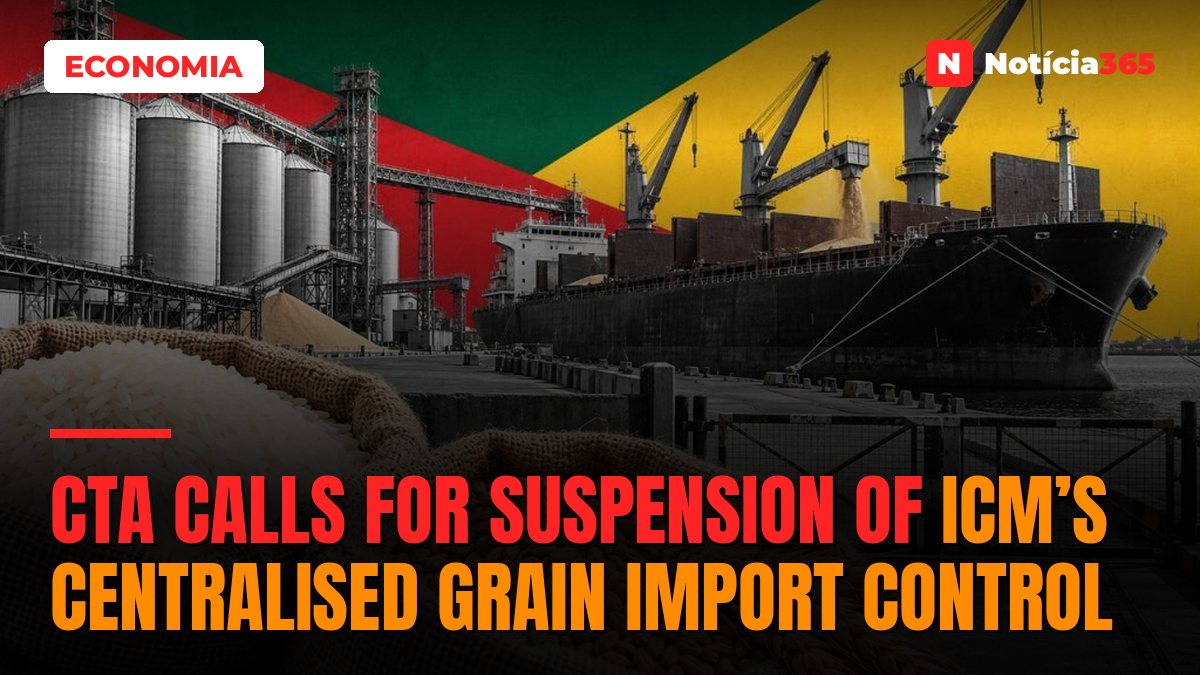

The head of the Fiscal Policy, Customs and International Trade portfolio at the Confederation of Economic Associations of Mozambique (CTA), Kekobad Patel, on Friday called for the suspension of the decree granting the Mozambique Cereals Institute (ICM) centralised management of rice and wheat imports, arguing the measure lacks sufficient legal grounding and conflicts with Mozambique's international commitments.
Speaking on the sidelines of a meeting between business leaders and Finance Minister Carla Loveira in Maputo, Patel said the government must find a definitive solution to the situation. "It is a thorny issue, with other nuances behind it, and someone has to find a definitive solution: the government," he said. In his view, the first step must be the immediate suspension of the mechanism. "This way of operating cannot continue," he added.
According to Patel, the decree — in force since December 2025 — which assigns ICM the management of rice and wheat imports, does not have sufficient legal basis. He further contends that the mechanism is incompatible with international commitments assumed by the country. "This goes against all international agreements to which Mozambique is a party," he said.

The CTA's position follows the suspension by ICM of cereal import operations involving three companies: África Indústria, Pembe Mozambique, and Companhia Industrial da Matola (CIM). The decision, announced last week, was justified by alleged non-compliance with the regulations governing rice and wheat imports. Subsequently, the institute lifted the suspension applied to África Indústria and Pembe Mozambique, while maintaining the measure against CIM.
ICM has justified the centralisation of imports on the need to combat alleged over-invoicing practices, which the institute estimates cause annual losses to the state of around US$100 million. Given the sums involved, Patel said it was necessary to clarify where the money being collected was going. "At this moment, I need to look more deeply into some of these aspects to find out where all this money that is being collected is going. So we will look into this matter because it is a thorny issue," he said.
The business leader also called for careful analysis of the process, citing other cases that have had an impact on business activity — notably the dispute relating to exports of cowpeas to India. "Where millions of dollars are involved, attention — we do not want a repetition of the same problem. So we need to remain calm and analyse the matter," he said.
For its part, ICM maintains that rice and wheat imports must comply with the procedures established by the ministerial decrees regulating the activity. According to the institute, the suspension of operations by the three companies resulted in the seizure of 34,300 tonnes of cereals, including 3,300 tonnes of wheat belonging to Companhia Industrial da Matola.
In response to the decision, CIM described the suspension as "legally inadmissible", stating that it had not been previously notified of any infringement proceedings and had not been given the opportunity to exercise its right of defence. The company also stated that the goods had complied with all required customs procedures and that the discharge had been authorised by the competent authorities.
Companhia Industrial da Matola argued that the dispute concerns the legality of the centralised cereal import mechanism, which it is challenging before the administrative courts. The mechanism came into effect for rice imports in February and for wheat imports in May of this year, with the declared objective of strengthening controls over imports and foreign exchange use in the country.
Source: Diário Económico
Original article: https://www.diarioeconomico.co.mz/2026/10/30/negocios/agronegocios/cta-defende-suspensao-da-centralizacao-das-importacoes-de-arroz-e-trigo-no-icm/