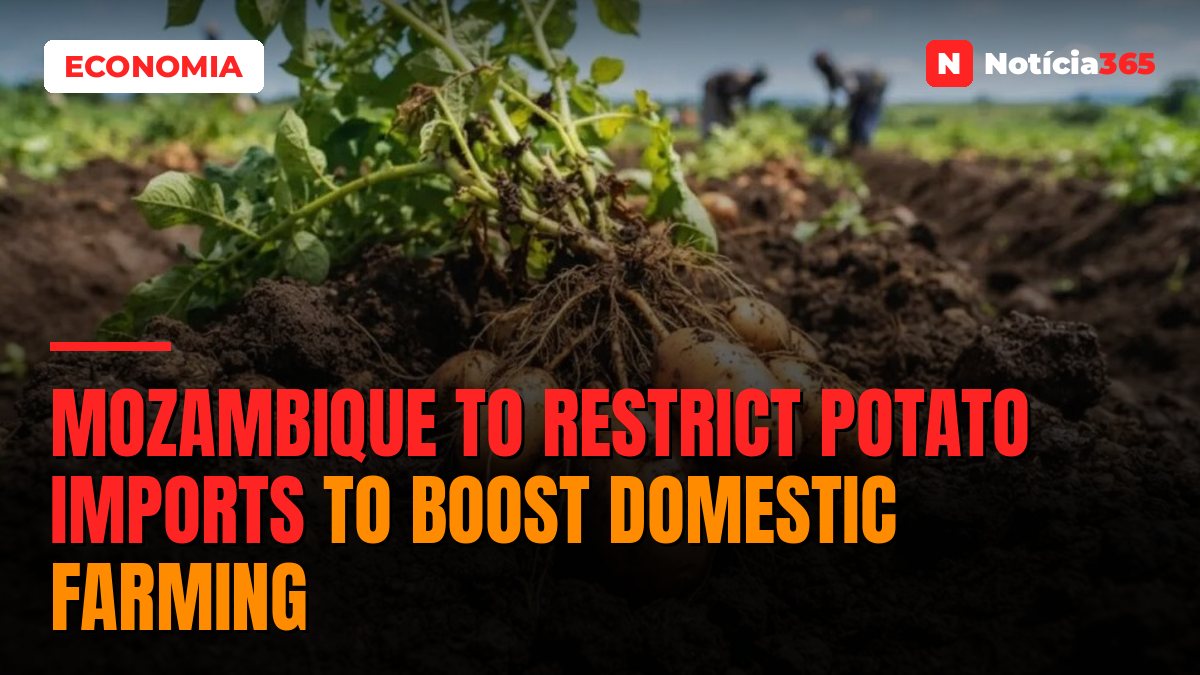

The Mozambican government intends to temporarily restrict potato imports, giving priority to the commercialisation of domestically grown produce and turning to external markets only when local supply proves insufficient. The measure aims to protect farmers without compromising food availability or triggering price increases for consumers.
The announcement was made on Thursday, 29 October, in Maputo, by the State Secretary for Commerce, António Grispos, who ruled out, for now, the possibility of an outright import ban.
According to Grispos, as quoted by the Mozambique Information Agency (AIM), the country produces between 110,000 and 120,000 tonnes of potatoes annually but continues to import between 86,000 and 90,000 tonnes from South Africa.
Faced with this dependency, the government intends to adopt mechanisms that ensure Mozambican-grown produce is sold first, allowing foreign potatoes to enter the market only to cover eventual supply deficits.
The strategy is also expected to cover onions and tomatoes, with the objective of reducing import dependency and creating greater opportunities for domestic producers.
On the subject of onions, António Grispos pointed to a reduction in South African supply — caused by drought — as one of the factors that contributed to rising prices in Mozambique.
To increase production capacity and improve supply, the government considers it necessary to expand access to quality seeds, invest in storage infrastructure, and improve transport conditions for agricultural products.
Among the solutions under consideration are the rehabilitation of roads, particularly tertiary routes, and the use of coastal shipping to transport produce from the central and northern regions to the south of the country, reducing logistics costs and post-harvest losses.
The State Secretary also indicated that the government is expected to announce, within the next two weeks, new restrictions on the importation of products whose domestic production is deemed sufficient to meet internal demand.
Source: Diário Económico
Original article: https://www.diarioeconomico.co.mz/2026/10/30/negocios/agronegocios/governo-quer-limitar-importacao-de-batata-para-dar-prioridade-a-producao-nacional/