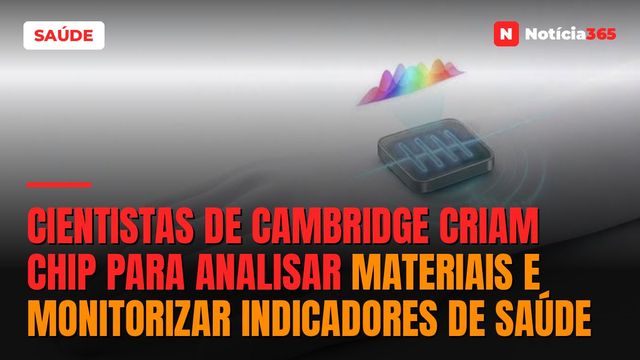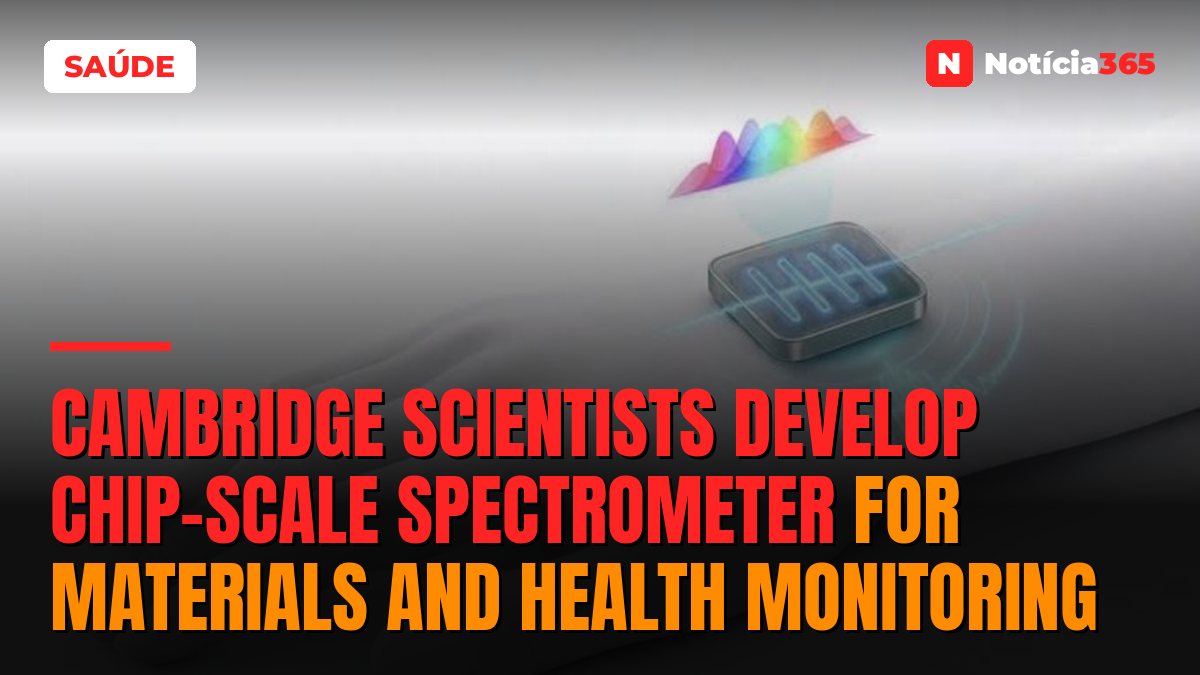

Scientists at the University of Cambridge in the United Kingdom have developed a compact optical spectrometer — a scientific instrument used to measure variations in physical characteristics — built from silicon nitride and capable of identifying materials, foods and medicines, while also demonstrating potential for monitoring health indicators, including glucose levels, without the need for blood collection.
The device, known as a convolutional spectrometer, has centimetre-scale dimensions and operates using a method that physically processes light through a mathematical operation known as convolution. Unlike other approaches that disperse light or rely on computational algorithms to reconstruct a spectrum, this technique aims to deliver high-precision measurements with reduced processing requirements.
According to the researchers, the system functions across a wide band of the near-infrared spectrum and can complete measurements in under one second. Its design also allows resolution to be increased by adding components rather than replacing the entire instrument.
In testing, the spectrometer distinguished between a range of materials and products, including plastics, pharmaceuticals, coffee, flour and tea. The team also demonstrated the ability to measure concentrations in solutions with a precision of approximately 0.01%, according to published results.
One of the applications explored was the monitoring of biomedical indicators such as skin moisture, alcohol, lactate and glucose. In one study participant, the device tracked glucose fluctuations over extended periods, demonstrating potential for future continuous monitoring technologies that do not require skin puncture.
Despite these results, the use of this technology in clinical glucose monitoring will still require additional validation before it can be considered an alternative to medical methods currently available.
The equipment also demonstrated resistance to temperatures ranging from -20°C to 80°C, a characteristic that could support its deployment across a variety of environments, from industrial facilities to portable consumer devices.
The team, led by Qixiang Cheng, believes that the combination of compact dimensions and reduced computational demand could facilitate the integration of spectrometry into everyday technologies. Potential applications include real-time food quality control, environmental monitoring, materials analysis on production lines, and continuous health indicator tracking.
Source: Diário Económico
Original article: https://www.diarioeconomico.co.mz/?p=555627