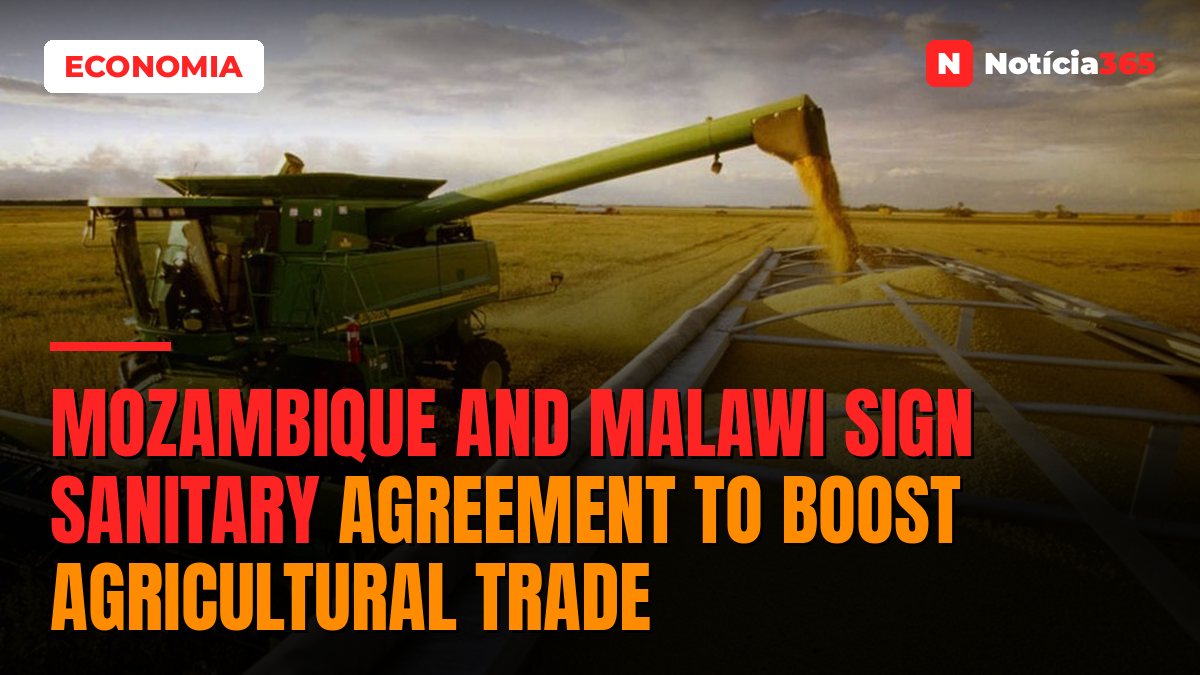

Mozambique and Malawi signed a memorandum of understanding on sanitary and phytosanitary measures in the city of Tete on Thursday, 22 May, with the aim of facilitating agricultural trade, reducing trade barriers, and strengthening product safety standards between the two countries.
The agreement seeks to simplify the movement of agricultural products between the two markets, with particular emphasis on the Beira and Nacala corridors. These transport routes allow Malawi to access regional and international markets through Mozambican ports, facilitating the outflow of its produce and other goods.
Through this initiative, both countries intend to reduce obstacles to agricultural trade and make the movement of goods faster and more efficient, without compromising compliance with the sanitary and phytosanitary rules required to protect human, animal, and plant health.

The Permanent Secretary of Mozambique’s Ministry of Agriculture, Environment and Fisheries, Acubar Baptista, highlighted the importance of strengthening coordination between the institutions of both countries. He said this coordination would facilitate trade exchanges and ensure that the measures provided for in the agreement are implemented in a coordinated manner.
For her part, the Permanent Secretary responsible for the agriculture sector in Malawi underscored the importance of cooperation in the prevention and management of sanitary and phytosanitary risks. The collaboration is expected to strengthen the capacity of both countries to prevent and control pests that affect agricultural production and can hinder the commercialisation of agricultural products.
The private sector also welcomed the signing of the memorandum with optimism, viewing the agreement as a potential improvement to quality control of products traded between the two countries. This reinforcement will enable verification that goods meet the required sanitary standards, contributing to safer and more efficient trade flows.
Sanitary and phytosanitary measures refer to the rules and procedures designed to protect the health of people, animals, and plants. In agricultural trade, these include, for example, the prevention and control of pests and diseases that can damage crops, compromise product quality, and prevent their entry into markets.
With this partnership, Mozambique and Malawi seek to facilitate the trade of agricultural products while ensuring they comply with the required safety standards. To achieve this objective, it will be essential to strengthen cooperation between responsible institutions and promote private sector involvement in implementing the agreed measures.
The memorandum of understanding falls under the Southern Africa Trade and Connectivity Project, financed by the World Bank and implemented by the Ministry of Transport and Logistics. The initiative forms part of broader efforts to facilitate trade between countries in the region and improve market linkages, contributing to more efficient movement of goods.
Source: Diário Económico
Original article: https://www.diarioeconomico.co.mz/2026/10/23/negocios/agronegocios/mocambique-e-malaui-reforcam-comercio-agrario-com-acordo-sanitario/