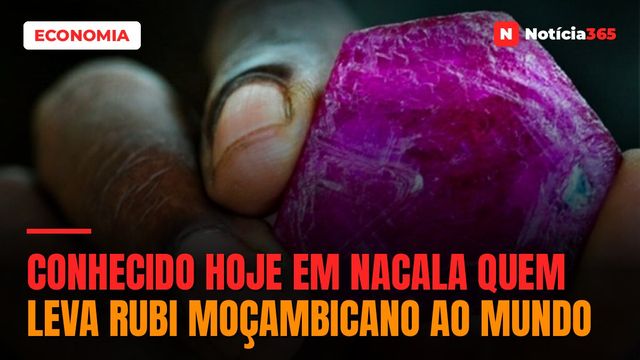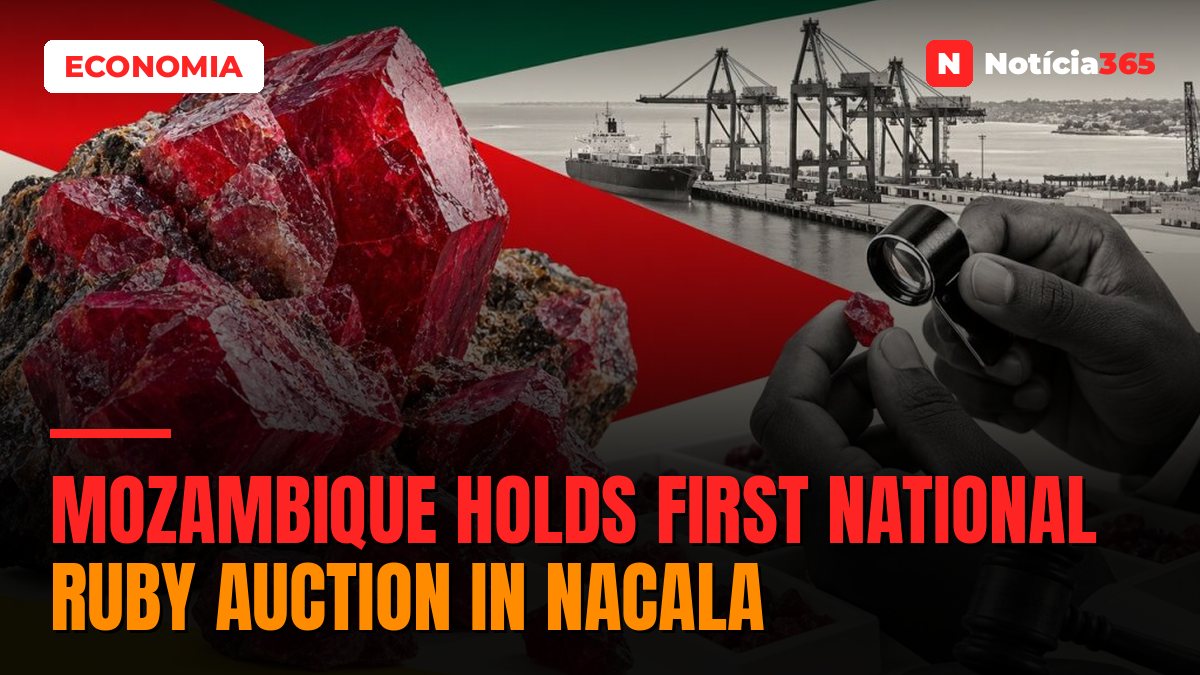

Mozambique is holding its first national ruby and corundum auction on Friday (23 October) in the city of Nacala, Nampula province, in an initiative promoted by mining company Fura Gems that has already attracted the interest of at least four companies. The event marks a shift in the commercialisation model for these precious stones, which have traditionally been auctioned abroad, and is intended to strengthen the valorisation of mineral resources within national territory.
According to information released by the government, three kilograms of rubies and corundum will be offered for sale, distributed across four lots, in a process designed to promote greater transparency in transactions and stimulate participation by domestic companies in the precious stones market. "There are four lots. We have the first evaluator, who is given time to examine each lot and submit their bid," said Castro Elias, executive secretary of the Kimberley Process Management Unit, quoted by Lusa.
According to Elias, at least four companies expressed interest in participating in the auction, which represents a departure from the previous practice of trading these precious stones on international markets. He argued that holding auctions in Mozambique would reinforce transparency in the management of mineral resources, enabling society to follow more closely the commercialisation processes for stones extracted on national territory.
Elias also pointed to potential fiscal benefits for the state, linked to the commercialisation and future local processing of the resources, as well as opportunities for the development of tourism and a precious stone processing industry. "We want to industrialise Mozambique and our expectation is not to have foreign companies participating in the auction, but rather domestic ones acquiring the products," he said.
He added that the initiative aims to facilitate access by Mozambican entrepreneurs to precious stones produced in the country, reducing the need to resort to external markets to acquire resources extracted on national territory. "We know that the best and largest rubies in the world come from Mozambique, but to access them, entrepreneurs have to travel, and we want to change that," he declared.
In his view, the development of a national cutting and processing industry could contribute to job creation, particularly for young people, and broaden the economic opportunities of operators engaged in artisanal mining.
Montepuez Project
Among the reference projects in this sector stands out the Montepuez project, which covers four licences over an area of approximately 19,300 hectares, adjacent to the ruby deposit discovered by multinational Gemfields in 2012.
The Minister of Mineral Resources and Energy, Estêvão Pale, also defended the need to promote the holding of precious stone auctions in Mozambique, arguing that the initiative could help increase the added value of mineral resources and improve transparency in commercialisation processes.
Pale stressed that the strategic objective is to develop national mineral processing capabilities, allowing a larger share of the economic value generated by the exploitation of these resources to remain in the country. "In the future we want to move to another phase, which is the processing of our minerals in Mozambique," he said, adding that the government also intends to create a Mozambican ruby brand.
The remarks were made in Nacala, Nampula province, on the sidelines of the Conference on Value Addition Based on Available Mineral and Energy Resources (CAVAME-d), which runs from 19 to 24 October and brings together government representatives, investors, and mining sector operators to discuss investment and industrialisation opportunities. As part of the event, the minister inaugurated on Thursday (22) the Gems and Precious Metals Exhibition, integrated into the 8th edition of the Nampula Annual Gems Fair, which runs until 24 October.
The drive to commercialise and locally process precious stones comes in a context in which Mozambique has established itself as one of the world's leading ruby producers, with deposits of high commercial value, particularly in Cabo Delgado province. Among the reference projects is the Montepuez venture, covering four licences over approximately 19,300 hectares, near the ruby deposit discovered by Gemfields in 2012.
The international standing of Mozambican rubies was further demonstrated by the sale of a precious stone extracted by Fura Gems in Mozambique. Discovered in 2022, the ruby initially weighed 101 carats and, after cutting, was reduced to 55.22 carats, before being sold in New York for US$34.8 million. The transaction placed the stone among the most valuable ever traded at auction, underscoring the economic potential of the gemological resources found in Mozambican territory.
With the holding of the first national auction, the government aims to create conditions to strengthen the participation of local operators in the precious stones value chain, promote industrialisation, and increase the economic benefits associated with mineral resource exploitation. The Nacala event thus represents a first step in the strategy to bring ruby commercialisation closer to the sites of production, even as the development of a national cutting and transformation industry remains a future stage of Mozambique's mineral valorisation policy.
Source: Diário Económico
Original article: https://www.diarioeconomico.co.mz/2026/10/22/negocios/primeiro-leilao-nacional-de-rubis-atrai-interesse-de-quatro-empresas/