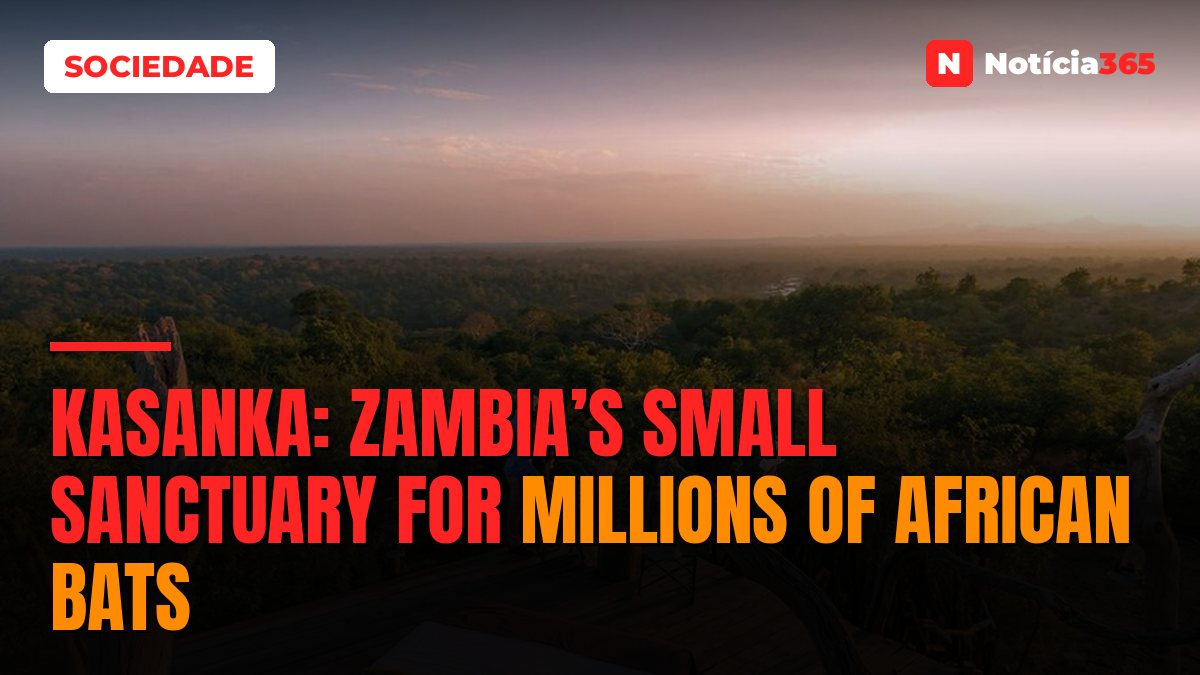

Hidden in the heart of Zambia, Kasanka National Park is one of those destinations that reveals a lesser-known dimension of African wildlife. Amid miombo forests, rivers, lakes and extensive wetlands, the small park transforms each year into the stage for an unusual natural phenomenon: the arrival of millions of bats that blanket the sky at dusk. The park’s relatively modest size — between 400 and 450 square kilometres, depending on the source — stands in sharp contrast to its ecological richness.
Bats drive the world’s largest mammal migration
The main event unfolds between October and December. During these months, between eight and ten million straw-coloured fruit bats (Eidolon helvum) converge on a small area of Mushitu swamp forest. The concentration is considered the largest known mammal migration in the world — a distinction that draws visitors, researchers and nature enthusiasts to Kasanka from across the globe.
At dusk, the bats leave their roosting sites in enormous groups to forage for food. Before sunrise, they return to the forest. The movement of millions of animals creates an image that is difficult to forget: the sky fills with shifting silhouettes.
Up to ten million straw-coloured fruit bats (Eidolon helvum) gather in a small area of Mushitu swamp forest.
Wildlife beyond the bats
Kasanka is not exclusively bat territory. The park is home to hippopotamuses and a range of African antelope species — puku, sitatunga, sable, reedbuck, bushbuck and Lichtenstein’s hartebeest — among other mammals. Elephants may also be spotted on occasion.
Bird diversity is another of the park’s major attractions. More than 330 species have been recorded, including the rare Pel’s fishing owl, the African pygmy goose, Ross’s turaco, the African fish eagle and the wattled crane. With some luck, visitors may also encounter the rare shoebill, particularly along riverbanks and in wetland areas, where boat excursions offer a rewarding way to search for birds.
Kasanka is not, however, a destination for those expecting large herds of game or frequent concentrations of predators at every turn. The experience is quieter and more contemplative, deeply connected to the landscape, the observation of rare species and the discovery of distinct ecosystems.
Kasanka brings together forests, rivers, lakes and wetlands that support a rich diversity of animal and bird species.
A park restored through conservation
The history of Kasanka adds a special dimension to any visit. In 1985, when British national David Lloyd visited the area, the park was heavily affected by poaching. Rather than writing the region off, Lloyd sought ways to restore its wildlife and joined forces with a local farmer to develop a conservation initiative. Camps, roads and bridges were built, and the Kasanka Trust was established to support the park’s recovery.
In the years that followed, a partnership with the national wildlife authorities helped consolidate the park’s management model, also bringing local communities on board. Today, Kasanka functions as an important ecological corridor between the Bangweulu wetlands and the Luangwa Valley.
Best time to visit Kasanka
The choice of season depends on the type of experience a traveller is seeking. For those wishing to witness the great bat spectacle, the period between October and December is the most suitable. That said, Kasanka offers compelling reasons to visit at other times of year. The park sustains a significant diversity of mammals and birds and can be explored through guided walks, safari drives and boat excursions. On the Luwombwa River, for instance, there are opportunities to fish for freshwater species including tigerfish, tilapia and catfish.
Getting to Kasanka from Maputo
For travellers departing from Maputo, the most practical option is to fly to Lusaka, the Zambian capital, and continue by road. Air connections between Maputo and Lusaka typically require a stopover, with Johannesburg being one of the most common transfer points. From Lusaka, Kasanka lies approximately 525 kilometres away. The town of Serenje is a key stop to refuel the vehicle and prepare for the final stretch of the journey.
Within the park, one accommodation option is Wasa Lodge, situated beside the lake. It offers the opportunity to observe bats during the migration season as well as other wildlife.
Kasanka is, in sum, a destination for those seeking a different side of Zambia — one where nature extends beyond the great predators and the vast savannahs. For the traveller who arrives at the right moment, a sunset at Kasanka can become a memory that lasts a lifetime.
Text: Ana Mangana • Photography: D.R.
Source: Diário Económico
Original article: https://www.diarioeconomico.co.mz/?p=553022