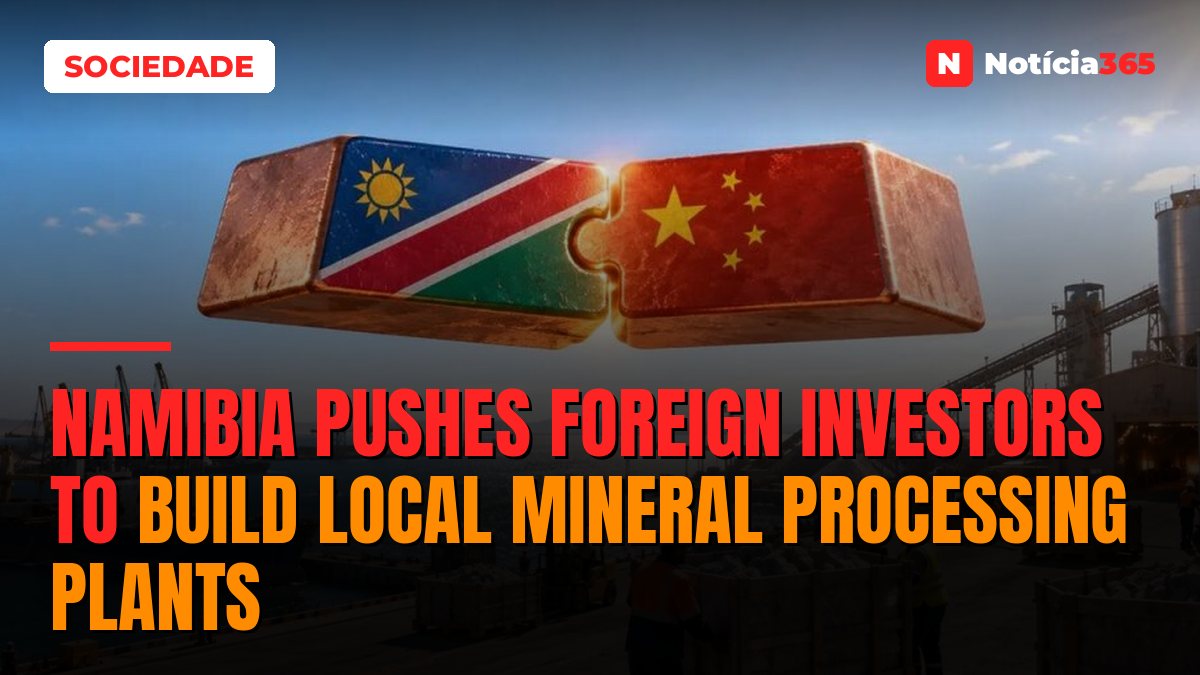

Namibia is intensifying its push for local processing of critical minerals, with President Netumbo Nandi-Ndaitwah pressing foreign investors to build refineries and manufacturing facilities within the country. The policy is designed to increase the value added from mining and strengthen Namibia’s position in global supply chains, according to Further Africa.
The new policy direction requires mining projects to include processing installations on Namibian soil. Nandi-Ndaitwah has also advocated for partnerships with domestic companies and confirmed that the government is embedding this principle into legislation, making local processing a formal condition for investment.
Namibia produces uranium and holds deposits of lithium, rare earths, copper, and graphite — resources critical to electric vehicle manufacturing, renewable energy development, and advanced industry. In 2023, the country restricted exports of unprocessed lithium and certain other critical minerals as part of a broader strategy to capture value within its borders.

The government has also proposed mechanisms to increase the participation of Namibian citizens in new mining projects. However, the Namibia Chamber of Mines has cautioned that the economic viability of in-country processing hinges on electricity costs, water pricing, logistics, and the trajectory of international commodity prices.
Those conditions are central to investor decision-making. Companies need clarity on rules governing equity participation, export rights, licensing timelines, and processing obligations before committing to large-scale projects. For mining firms, the new policy may require integrated project plans linking extraction to concentration, refining, or product manufacturing.
The policy shift could also generate spillover benefits across other sectors, creating opportunities for engineering companies supplying processing equipment and for utilities and independent power producers responding to rising industrial energy demand. In that context, NamPower’s target of sourcing 70% of the country’s electricity from renewable energy by 2030 could support energy-intensive processing operations.
Transport and logistics infrastructure stands to benefit as well, including ports, rail connections, warehousing, and specialised services. Local manufacturers, in turn, could supply components and services to mines and processing units, broadening the participation of Namibian companies throughout the mining value chain.
According to an analysis by Further Africa, the policy is shifting investment discussions away from mine development alone and towards whole value-chain planning. In doing so, Namibia is seeking to attract capital not only for the extraction of its mineral resources, but also for the downstream transformation and production activities that accompany them.
Source: Diário Económico
Original article: https://www.diarioeconomico.co.mz/2026/10/20/mundo/africa/namibia-governo-exige-processamento-local-de-minerais-criticos/