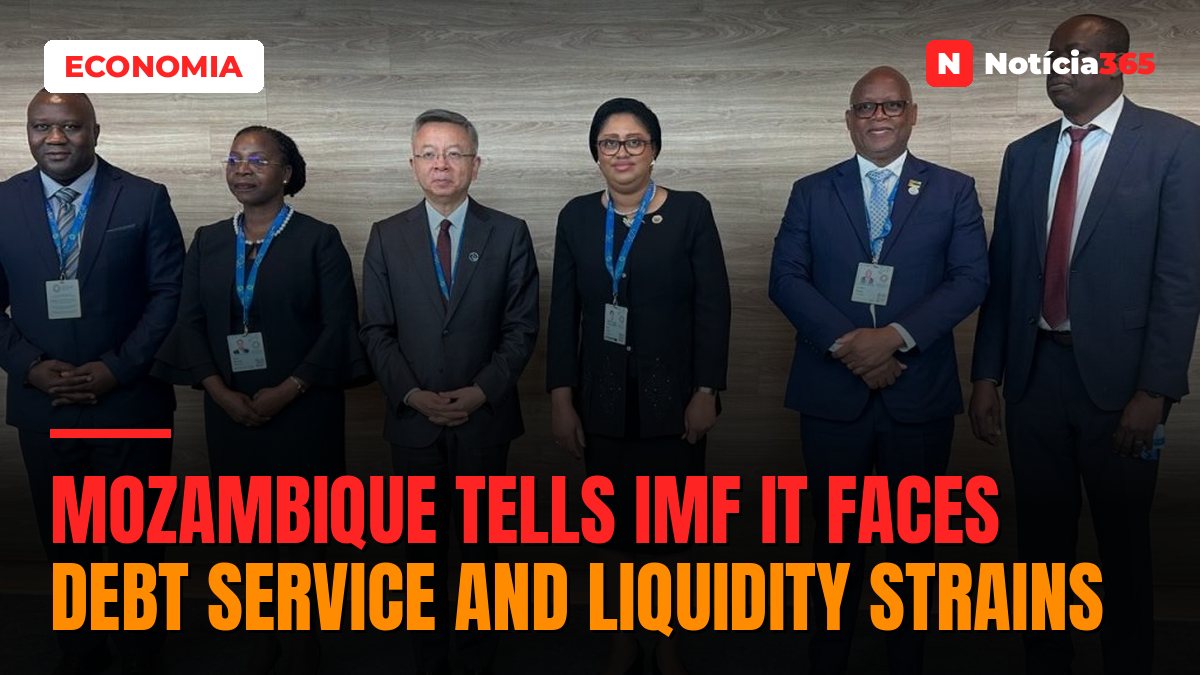

The Mozambican government acknowledged, during a meeting with the International Monetary Fund (IMF), that the country continues to face liquidity constraints in the State Treasury, a situation that is limiting full execution of the State Budget and timely fulfilment of public debt service obligations, even as the national economy shows tentative signs of gradual recovery.
The meeting took place on Wednesday, 14 May, in Bangkok, Thailand, according to a statement from the Ministry of Finance cited by Lusa. The minister presented an assessment of recent economic developments: year-on-year growth stood at approximately 1.7% in the second quarter of 2026, while inflation reached 7%, reflecting, among other factors, persistent upward pressure on fuel prices.
Despite this environment, the government expects to keep inflation below double digits through the end of the year. Carla Louveira acknowledged, however, that the early signs of recovery have not yet translated into a sufficient improvement in the state’s financial conditions.

Faced with these difficulties, the minister reaffirmed the government’s confidence in the economy’s medium-term recovery potential, anchored in fiscal reforms and the development of liquefied natural gas (LNG) projects. Among the factors she cited were the resumption in January 2026 of the Mozambique LNG project, led by TotalEnergies, progress on the Coral Norte project, and Mozambique’s recent removal from the grey list of the Financial Action Task Force (FATF).
According to Carla Louveira, these developments could improve the business environment, strengthen investor confidence, and support the mobilisation of new investment. The minister further stressed that the coordinated application of fiscal and structural reforms could allow the state to gradually expand fiscal space to finance priority social expenditure, stimulate economic activity, and promote more sustainable growth.
Bo Li, for his part, encouraged the government to maintain dialogue and cooperation with the IMF, with a view to restoring macroeconomic stability and reinforcing growth. He also underscored the importance of ensuring that economic and financial policies take into account the protection of the most vulnerable segments of the population.
The meeting served to assess Mozambique’s key macroeconomic and fiscal challenges, including liquidity constraints, the sustainability of public finances, and the need for reforms that strengthen the state’s capacity to respond. The encounter also reaffirmed the importance of sustaining dialogue between the government and the IMF in the search for solutions to the country’s financial constraints.
Despite the favourable outlook associated with large natural gas projects and ongoing reforms, the state treasury’s position remains a challenge for public financial management, particularly in terms of budget execution and meeting public debt commitments.
Mozambican authorities consider that strengthening fiscal discipline, implementing structural reforms, and attracting investment will be decisive in improving the state’s financial sustainability and consolidating economic recovery in the years ahead.
Source: Diário Económico
Original article: https://www.diarioeconomico.co.mz/2026/10/16/economia/financas/executivo-admite-ao-fmi-dificuldades-no-pagamento-da-divida-publica/