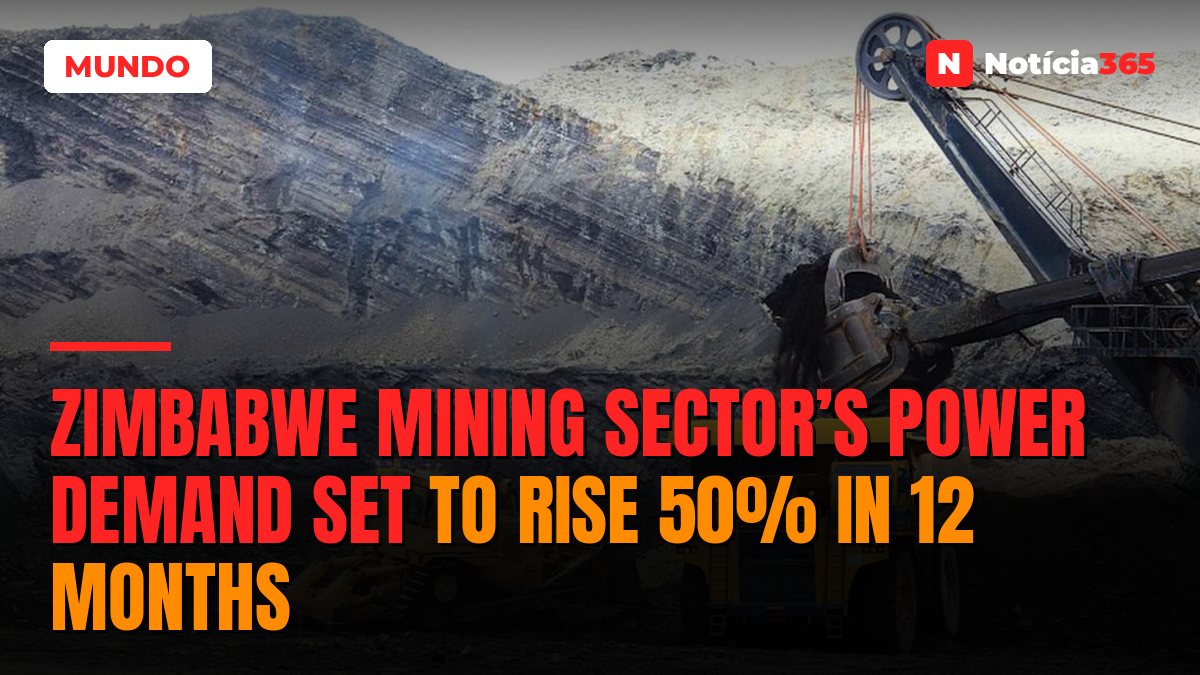

Zimbabwe’s mining sector is expected to increase electricity demand by 50% over the next 12 months, pushing consumption above 1,500 megawatts (MW) from the current 1,000 MW. The acceleration of mining activity and local mineral processing could deepen the country’s energy deficit unless the government moves faster to expand power generation and distribution capacity.
Deputy Minister of Mines and Mining Development Caleb Makwiranzou said the sector’s expansion is outpacing the country’s ability to guarantee a stable energy supply. “Mining is Zimbabwe’s single largest consumer of electricity. Demand is set to exceed current supply,” he said, calling for greater coordination between the ministries responsible for mines and energy.
Grid-connected mine consumption has already reached approximately 1,000 MW, up from a previous range of 600 to 700 MW, according to the minister. The sector accounts for between 16% and 20% of national electricity consumption and roughly 45% of combined industrial and mining demand. These figures do not fully capture energy generated by mining companies themselves through diesel generators and solar installations.
Demand is expected to keep rising as companies shift from raw material extraction to local processing. Among the most energy-intensive activities are lithium concentration plants, chrome and ferrochrome smelters, platinum group metal refineries, gold milling and processing facilities, and expanded coal production operations.
Makwiranzou said more than 100 high-energy mining and industrial companies collectively expect to require around 4,000 MW by 2030. Mine electricity demand is projected to surpass 1,550 MW within the next 12 months, compared with 1,000 MW in 2026 and 750 MW in 2023–24. More than 600 new investment licences have been issued in the interim, with the mining sector accounting for a significant share of anticipated expansion.
Despite this growth trajectory, the country faces supply-side constraints stemming from ageing generation and transmission infrastructure, fluctuating water availability at the Kariba dam, and the high cost of alternative energy sources. The national electricity deficit is estimated at around 600 MW, while reliable generating capacity ranges between 1,200 and 1,600 MW against peak demand of approximately 2,200 MW.
The need to import electricity also represents a substantial financial burden. Between January 2021 and March 2026, Zimbabwe spent US$881.7 million on energy imports. For mining companies, supply disruptions drive up operating costs and reduce output. It is estimated that approximately 10% of potential production is lost annually as a result of these constraints, while electricity accounts for roughly one-fifth of mine production costs.
To address the problem, the Ministry of Mines and Mining Development intends to strengthen cooperation with the Ministry of Energy and Power Development. Proposed measures include securing power supply to critical mining operations, improving demand forecasting, and establishing clear rules for independent power producers and the wheeling of electricity across the national grid. The plan also includes support for self-generation by mining companies and coordination of grid investment, with appropriate tariffs and fuel distribution arrangements.
Source: Diário Económico
Original article: https://www.diarioeconomico.co.mz/2026/10/16/mundo/africa/zimbabue-procura-de-electricidade-nas-minas-devera-aumentar-50-em-12-meses/