
The World Energy Transition Outlook 2026 (WETO), published by the International Renewable Energy Agency (IRENA), argues that electrification and the expansion of renewable energy sources must be treated as strategic priorities through 2035. The report proposes urgent reforms to align the global energy transition with the objective of limiting global warming to 1.5 degrees Celsius above pre-industrial levels.
Despite renewable energy installations reaching new records in 2025, electricity grids are failing to keep pace with that growth. At the same time, energy demand continues to rise rapidly while progress on energy efficiency remains below what is required to meet growing needs.
Against this backdrop, the report contends that the energy transition must go beyond the installation of new clean energy sources. The goal is to progressively replace fossil fuel-dependent systems rather than simply adding renewables to an energy system that continues to operate unchanged.
IRENA considers electrification, improved energy efficiency, and the use of sustainable fuels essential to accelerating this transformation. According to the report, global installed renewable energy capacity is expected to increase from the current 5.2 terawatts to approximately 38.2 terawatts by 2050. Electricity is projected to represent 35% of final energy consumption by 2035 and more than 50% by 2050.
Infrastructure and efficiency are essential to the transition
The document further projects that more than 80% of global electricity will be generated from solar and wind energy by 2050. However, it warns that insufficient investment in energy efficiency, distribution grids, storage, and demand-response capacity could constrain the full utilisation of these renewable sources.
IRENA Director-General Francesco La Camera stated that “the global energy transition is under pressure.” According to La Camera, the growth of renewables alone is not sufficient, given that energy efficiency continues to lag, electricity grids struggle to keep up with expansion, and global energy demand keeps rising rapidly.
“We cannot deliver the transition simply by adding renewable sources to an unchanged energy system. We need reforms to build the infrastructure of a new energy system — one that is electrified, efficient, flexible, and powered by renewables,” La Camera said.
He added that electrification, distribution grids, storage, flexibility, and energy efficiency form the foundation of this transformation. For La Camera, the central challenge is implementing these solutions in a coordinated manner and at the scale required to meet the 1.5°C target, while simultaneously ensuring energy security, affordable prices, competitiveness, and broader social acceptance.
Economic growth and employment among the projected benefits
WETO 2026 also highlights the potential economic benefits of the energy transition. Under IRENA’s 1.5°C-compatible scenario, the global economy could grow by an additional 1.1% per year compared with a business-as-usual trajectory. This difference could translate into cumulative economic benefits of approximately $46 trillion by 2050.
The report further estimates that employment in the renewable energy sector could increase more than fivefold by 2050, compared with the current figure of just over 16 million jobs. Additionally, growing competitiveness in electricity markets could contribute to a 15% reduction in energy prices for end consumers by mid-century.
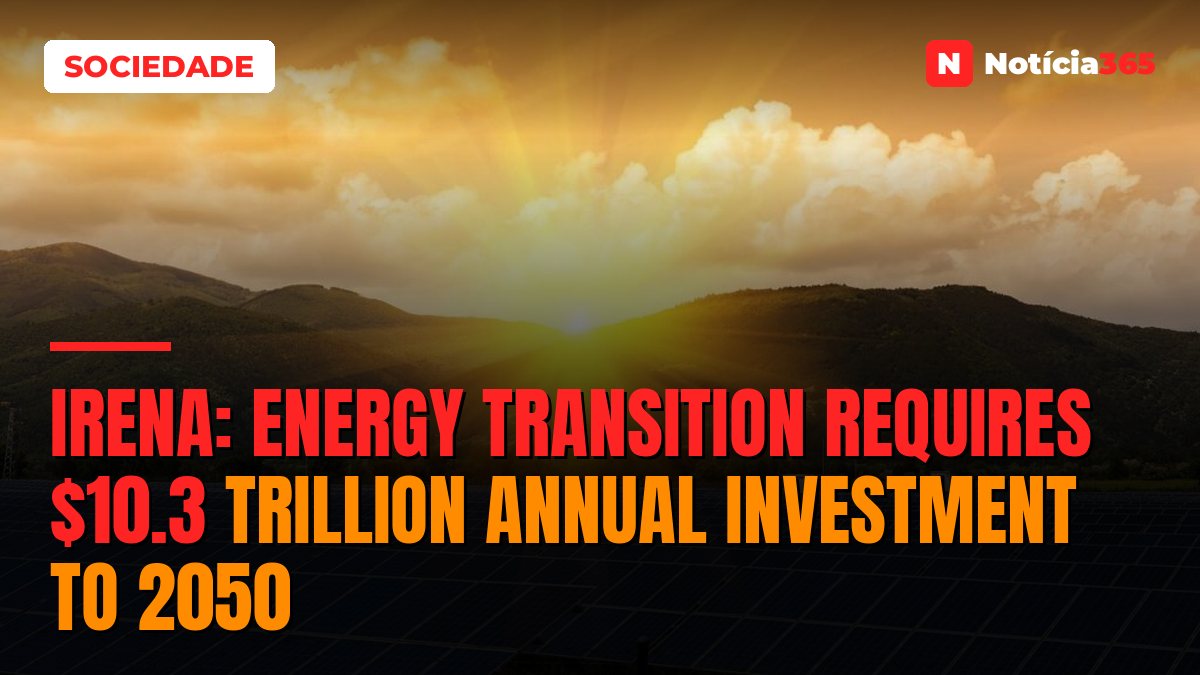
Realising these benefits will, however, require a significant increase in investment. According to IRENA, cumulative annual investment must reach approximately $10.3 trillion between 2026 and 2050, with the bulk of resources directed towards renewables, electricity grids, system flexibility, and the electrification of final energy consumption.
La Camera emphasised that the quality of the transition will be as important as its speed. He stated that accelerated decarbonisation can strengthen investment, productivity, employment, and well-being. He also argued that affordability, social protection, and equitable access to economic opportunities must be built in from the outset to ensure that the benefits of the transition are shared more broadly.
Governments called upon to lead the transformation
The report considers it the responsibility of governments to guide this transformation in an orderly manner, ensuring the reliability of energy systems, affordable prices, and security of supply, while accelerating the deployment of clean alternatives.
To support this process, WETO 2026 identifies seven action priorities for the coming decade. These include integrated energy system and market planning, the development of country-specific plans, modernisation of electricity grids, strengthening of industrial and investment strategies, development of social and environmental policies, and deepening of international cooperation.
IRENA concludes that a well-managed transition away from fossil fuel dependence can drive economic development rather than constrain it. Among the expected benefits are enhanced competitiveness, improved resilience to crises, better public health outcomes, and long-term prosperity.
Source: Diário Económico
Original article: https://www.diarioeconomico.co.mz/?p=552184