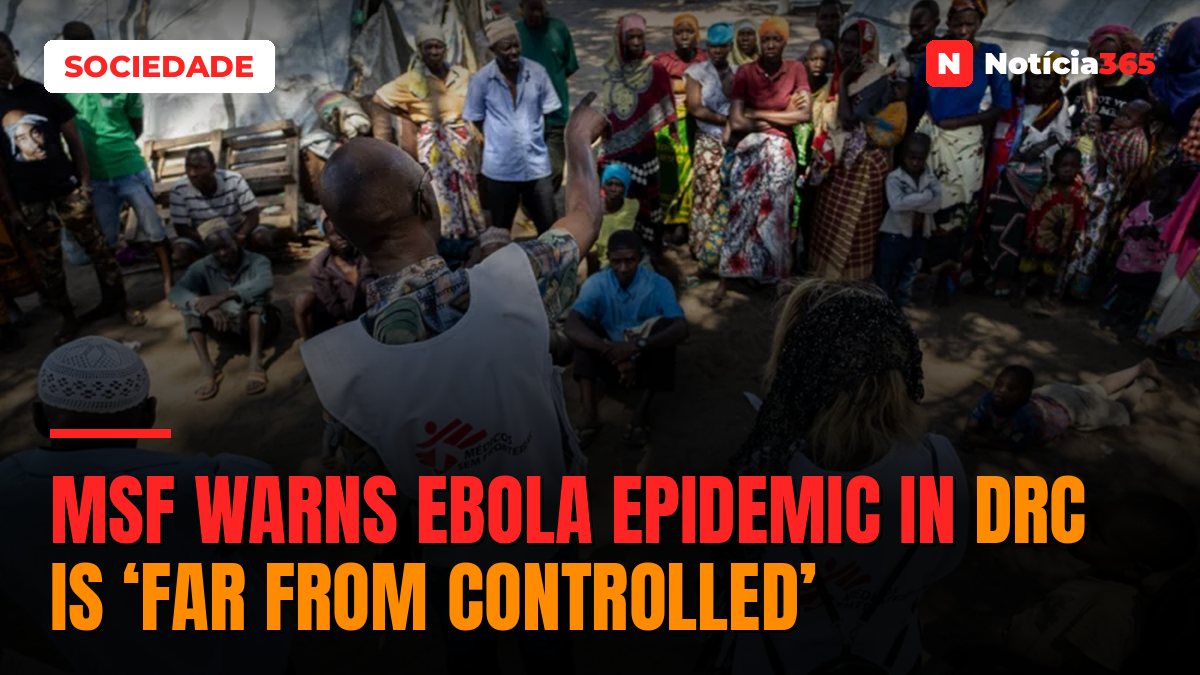

Médecins Sans Frontières (MSF) has warned that the Ebola outbreak in the Democratic Republic of Congo (DRC) remains far from under control, citing late patient arrivals at treatment centres, persistent community deaths, and widespread public distrust of health structures.
Rita Magano, MSF coordinator in Bunia, in Ituri province, is overseeing clinical management at the Ebola Treatment Centre (ETC), epidemiological surveillance, and community response activities in an environment where the outbreak's trajectory remains difficult to assess.
Despite a reduction in admissions in Bunia, deaths outside treatment centres continue to be recorded, underscoring the need to strengthen healthcare outreach in communities — particularly in the most isolated areas. The organisation also faces challenges related to patients arriving in critical condition, when treatment options are significantly more limited.

Magano said it would be premature to conclude that the epidemic is slowing, given that cases have been reported across seven provinces and some regions continue to register new infections. Although Ituri and Bunia show improvement in certain indicators, the overall epidemiological situation remains unstable.
According to the latest data from the European Centre for Disease Prevention and Control (ECDC), as of 4 October, the DRC had recorded 8,603 confirmed cases and 4,148 deaths, with 896 patients hospitalised in isolation. Ituri remained the most affected province, accounting for 6,450 cases and 2,968 deaths.
Community distrust and fear represent further obstacles to containing the outbreak. Magano argued that it is necessary to address rumours circulating about treatment centres without dismissing community concerns, and to engage community and religious leaders in early case identification and breaking transmission chains.
The clinical response is further constrained by the absence of a vaccine specifically targeting the Bundibugyo virus strain responsible for the current outbreak. In this context, early diagnosis, supportive care, and transmission prevention measures take on heightened importance, while research into potential vaccines and treatments continues.
Meanwhile, a vaccine developed against the Zaire strain of the Ebola virus has begun to be administered to frontline workers under the PARTNERS study, which aims to assess its potential effect on the current outbreak. Magano cautioned that this is not a Bundibugyo-specific vaccine, though there is hope that possible cross-immunity could help reduce mortality.
She also warned that a fatality rate approaching 50%, combined with the fragility of the Congolese health system, makes it difficult to scale back international assistance. Beyond Ebola, it is essential to ensure continued care for patients with malaria, cholera, HIV, tuberculosis, and chronic diseases. For MSF, the population's vulnerability and the persistence of new cases indicate that the end of the epidemic remains a distant prospect.
Source: Diário Económico
Original article: https://www.diarioeconomico.co.mz/2026/10/12/mundo/africa/ebola-msf-alerta-que-epidemia-na-rdc-esta-longe-de-ser-controlada/