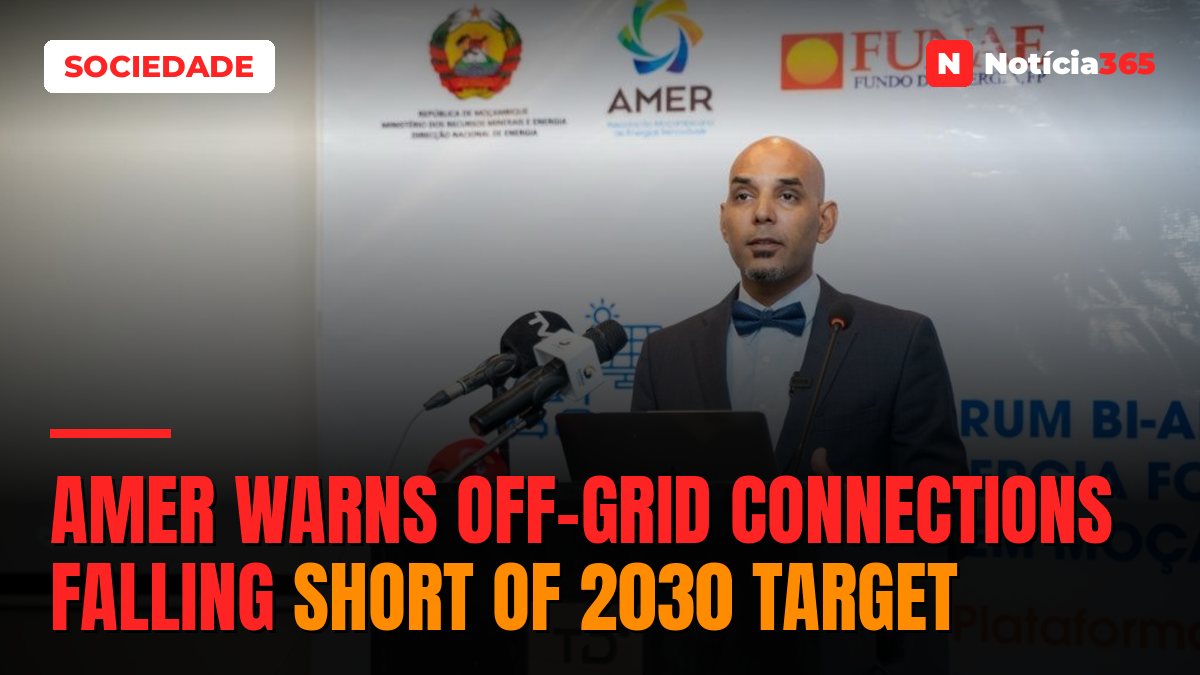

The Mozambican Renewable Energy Association (AMER) has warned of a decline in new off-grid electricity connections, which fell to 122,000 in 2025 — well below the 180,000 to 200,000 annual connections considered necessary to achieve universal energy access by 2030.
The warning was issued on Thursday, 8 October, in Maputo, by AMER president Ricardo Pereira, during the opening of the Biannual Off-Grid Energy Forum in Mozambique, which brought together sector representatives to discuss the challenges and prospects for expanding electrification across the country.
According to Pereira, sales of household solar systems have been declining since 2024, a trend that could undermine the contribution of off-grid solutions to electrifying communities not yet covered by the national grid.
Pereira also drew attention to disparities in electricity access between urban and rural areas, where electrification rates stand at approximately 89% and 30%, respectively.
"The 2025 numbers tell two stories: the electrification rate reached 66.4%, above projections, and the national grid is almost on track for the 2030 target," he said.
Despite the progress recorded, the AMER president cautioned that meeting the universal access target by 2030 will depend increasingly on the expansion of off-grid solutions, particularly household solar systems and mini-grids.
These technologies are embedded in the country's key energy planning instruments, including the Just Energy Transition Strategy and the National Energy Compact.
Pereira also referred to the completion of the Least-Cost National Electricity Plan, which provides a technical basis for identifying the most appropriate electrification solutions for different regions of the country.
"The 2025 numbers tell two stories: the electrification rate reached 66.4%, above projections, and the national grid is almost on track for the 2030 target."
Pereira highlighted the approval of electricity concession regulations and the universal access levy, arguing that these instruments could help attract investment to the sector.
He also referred to plans to establish a strategic coalition to finance off-grid electrification, announced during the United Nations General Assembly in September.
According to Pereira, the initiative could mobilise approximately one billion dollars to enable around 2.5 million off-grid connections.
Despite the difficulties, Pereira identified signs of market expansion, pointing to a rise in the number of service providers registered with the Energy Regulatory Authority (ARENE) — from 26 in 2024 to 67 in 2025.
He argued, however, that the growth in the number of operators must translate into greater project execution capacity, particularly in the mini-grid segment, where challenges persist around tender preparation and the financial viability of investments.
In this context, he highlighted the Renewable Mini-Grid Promotion Programme in Mozambique (PROMR-MZ), which has already mobilised more than 60 million euros and plans to launch a first tender for approximately 100 mini-grids in the provinces of Tete, Zambézia, and Niassa.
Source: Diário Económico
Original article: https://www.diarioeconomico.co.mz/?p=551284