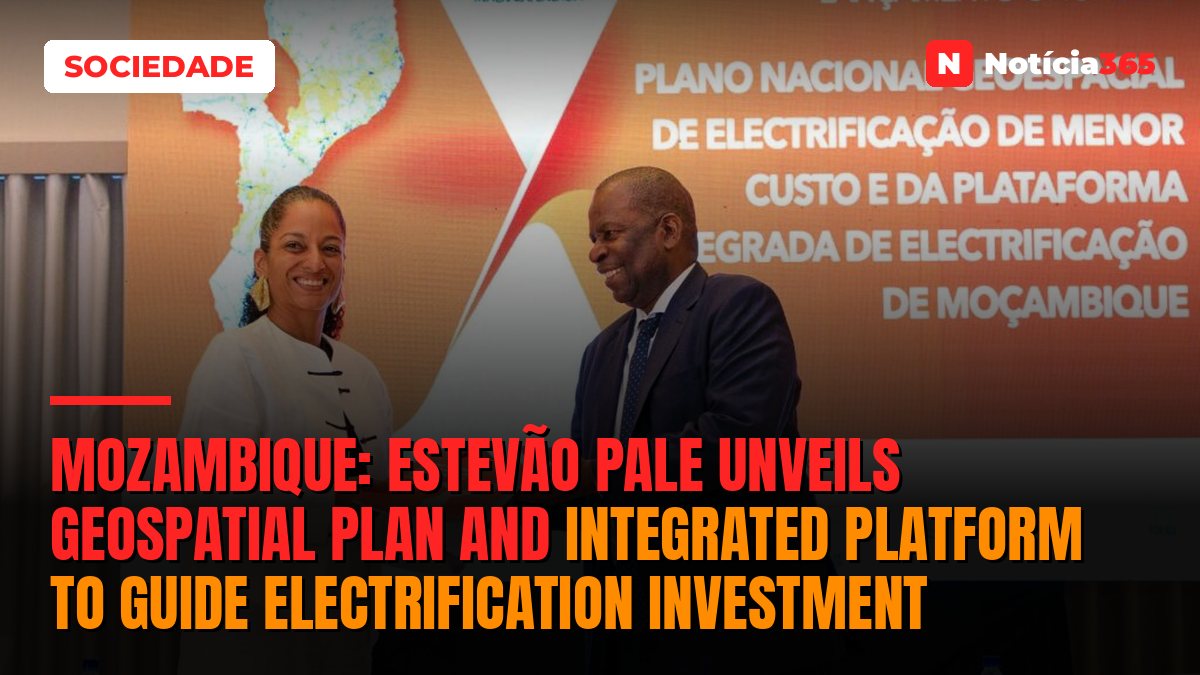
- Mineral Resources and Energy Minister Estevão Pale has launched the National Geospatial Least-Cost Electrification Plan 2026–2030 and the Integrated Electrification Platform. These tools are designed to guide investment in the sector by identifying the lowest-cost solutions for each region and maximising the economic and social impact of the resources invested. According to Estevão Pale, the new plan ensures that every metical invested delivers the greatest possible benefit to communities.
Mozambique now has geospatial planning tools to guide investment in the country’s electrification. These tools can help identify the lowest-cost solutions for each region and maximise the economic and social impact of the resources invested in the sector.
The tools comprise the National Geospatial Least-Cost Electrification Plan 2026–2030 and the Integrated Electrification Platform of Mozambique, launched in Maputo on Friday by the Minister of Mineral Resources and Energy, Estevão Pale.

Photo: Ministério dos Recursos Minerais e Energia de Moçambique
“This instrument ensures that every metical invested in electrification delivers the greatest possible social and economic impact for each human settlement, efficiently and at the lowest possible cost per connection,” Pale said.
The plan uses advanced modelling and geospatial data to determine the most efficient combination of extending the national electricity grid and deploying off-grid solutions, taking into account the characteristics of different human settlements.
The approach aims to ensure that investment decisions are based on geographical information, making it possible to identify areas where extending the conventional electricity grid is most appropriate and those where decentralised solutions may offer a more economically viable alternative.

Photo: Ministério dos Recursos Minerais e Energia de Moçambique
The Integrated Electrification Platform of Mozambique was designed to bring together and harmonise information from the sector, providing interactive maps and dashboards that make it possible to monitor projects, identify needs and improve coordination between the institutions involved.
The tool is expected to facilitate coordination between the Ministry of Mineral Resources and Energy (MIREME), the Energy Regulatory Authority (ARENE), Electricidade de Moçambique (EDM), the Energy Fund (FUNAE), the private sector and development cooperation partners.
According to the minister, integrating this information will make it possible to reduce duplication of initiatives, strengthen transparency and improve the monitoring of investments, both in electrification through the national grid and in decentralised solutions.
Estevão Pale invited the private sector and financial institutions to use the platform to identify investment opportunities, taking into account the information available on the country’s electrification needs and priorities.
The minister called on institutions in the sector to adopt both tools as reference points for their day-to-day work, ensuring that data is updated and that the institutional coordination required for their implementation is in place.
The launch forms part of the Government’s efforts to achieve universal access to electricity by 2030, in line with Sustainable Development Goal 7.
The initiative is funded by the World Bank, with technical assistance from Sustainable Energy for All (SEforALL).

Photo: Ministério dos Recursos Minerais e Energia de Moçambique
Source: AIM Moçambique / Voz do Índico