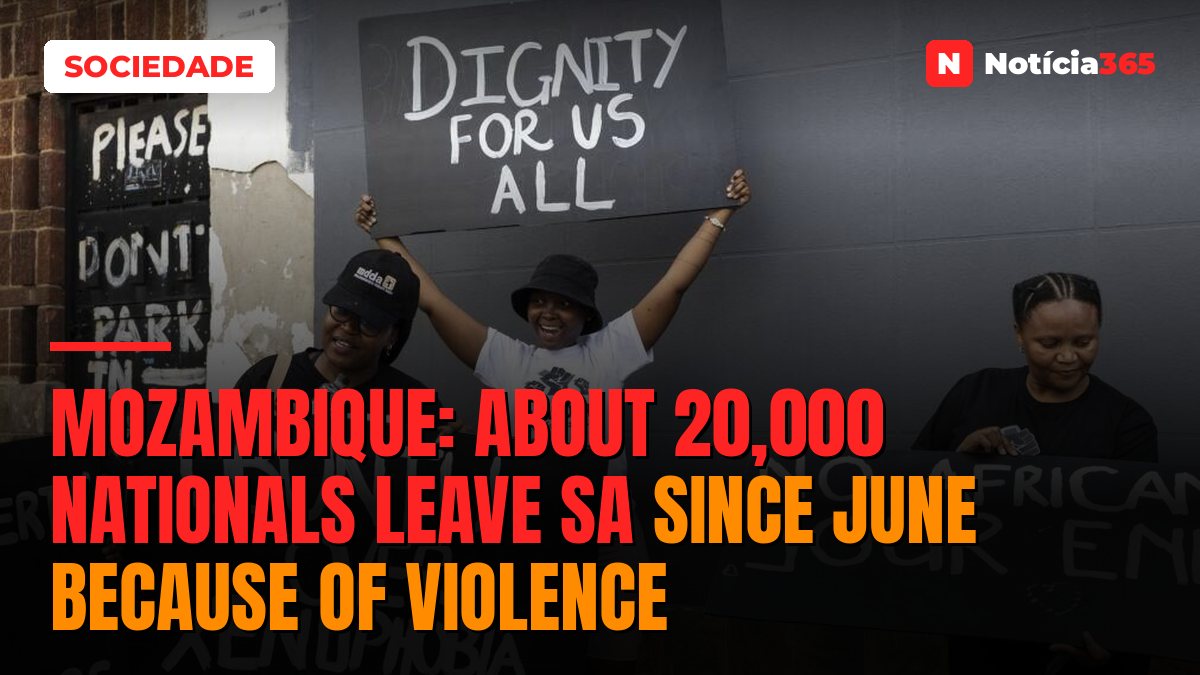
Around 90,000 foreigners, including approximately 20,000 Mozambicans, have left neighbouring South Africa since June following threats and incidents of violence against immigrants, a South African official told Lusa on Thursday.
“Overall, we are talking about around 90,000 people who have left South Africa following threats of violence recorded after 30 June 2026,” Michael Masiapato, Commissioner and Chief Executive of the South African Border Management Authority (BMA), told Lusa in an exclusive interview.
Without providing specific figures for the other countries, the official acknowledged that the wave of violence had prompted a mass exodus of immigrants, mainly by land, identifying Zimbabwe as the main country of origin of those who had left South Africa, followed by Malawi, Mozambique and Lesotho.
“Mozambicans accounted for approximately 20,000 people,” Michael Masiapato said.
Among foreign nationals who left the country by air through OR Tambo International Airport, the official highlighted citizens of Nigeria and Ghana.
Although attacks are still occurring in some parts of the country, the commissioner assured Lusa that South Africa had recorded an increase in migrant arrivals in recent days, although illegal immigration remained the authorities’ main concern.
“Unfortunately, the biggest challenge remains illegal immigration. It is a constant struggle. This is why the population sometimes becomes frustrated and complains about the number of people who are in the country illegally,” he said.
However, he added that the authorities continued to process and allow entry to foreign nationals who meet the legal requirements for tourism, visits or work.
To reduce illegal immigration, Michael Masiapato said South African authorities had stepped up enforcement operations along the border and at border crossing points.
“We have started carrying out more intensive operations to ensure that we identify and intercept individuals attempting to enter the country illegally, both along the border and at entry points, particularly those who try to bribe officials to gain illegal entry,” he said.
Among the measures adopted, he highlighted the use of drones at major border crossing points, particularly in the Lebombo area, near the border with Mozambique. According to the official, the introduction of this technology had significantly reduced attempts to enter South African territory illegally.
The BMA official also highlighted cooperation with Mozambican authorities in combating illegal immigration, through coordinated operations involving the Mozambique Defence Armed Forces, the police and customs authorities.
“We know that the Government of Mozambique and its officials do not encourage illegal immigration. That is why we work together, and they help us intercept individuals attempting to enter South Africa illegally,” he added.
Xenophobic tensions are a recurring problem in South Africa and have triggered several waves of violence in recent years, resulting in dozens of deaths, particularly in economically vulnerable neighbourhoods.
Anti-immigration groups frequently blame foreign nationals for economic problems, shortcomings in public services and high crime rates, and have even prevented immigrants from accessing public health and education services.
In September, the Mozambican Government announced that at least 2,071 of its citizens had returned to the country because of xenophobic violence, a phenomenon that has officially claimed the lives of 11 Mozambicans.
Mozambique has around 300,000 citizens living in South Africa, with the Presidency of the Republic having previously indicated that thousands of nationals had returned home amid the escalation of violence.