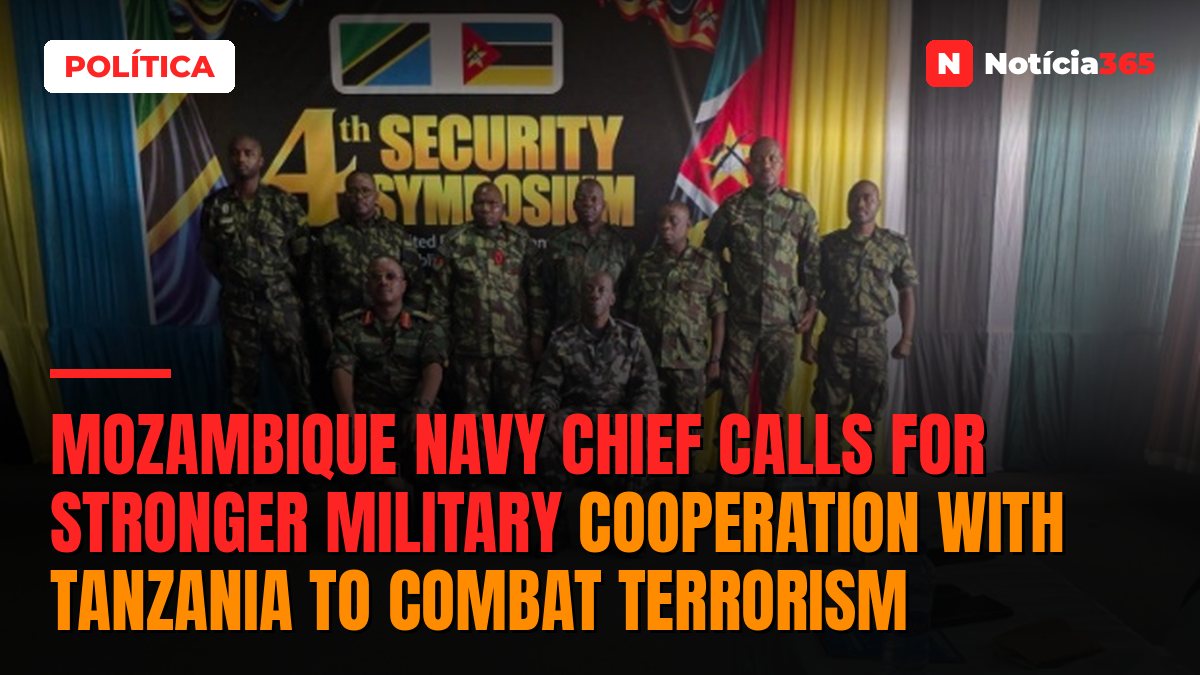
Mozambique’s Navy Commander, Rear Admiral Bernardo Estevão Nchokomala, has called for stronger military cooperation between Mozambique and Tanzania, prioritising information-sharing, joint operations along the common border and combined military exercises as part of efforts to combat terrorism in Cabo Delgado.
The position was presented at the closing of the 4th Security and Good Neighbourliness Symposium between the Mozambique Defence Armed Forces (FADM) and the Tanzania People’s Defence Force (TPDF), held in the Tanzanian city of Mtwara.
Leading the Mozambican delegation, Rear Admiral Nchokomala attended the meeting with Brigadier-General Sijaona Michael Myala, Commander of TPDF Brigade 401, at an initiative dedicated to assessing the security situation in border areas and reviewing the military commitments undertaken by the two countries.
In his address, the Navy Commander highlighted the importance of the symposium as a platform for direct dialogue between the military institutions. He said the discussions had taken place in an atmosphere of openness and frankness, helping to deepen the longstanding ties of friendship, cooperation and solidarity between Mozambique and Tanzania.
Nchokomala called on the two Defence Forces to maintain permanent and timely communication to ensure the implementation of the recommendations arising from the meeting.
Nchokomala places Cabo Delgado among military cooperation priorities

Photo: Marinha de Guerra de Moçambique
Rear Admiral Bernardo Estevão Nchokomala highlighted the need to advance the implementation of the legal instruments governing bilateral military cooperation, particularly in the areas of information-sharing, joint operations along the common border and combined military exercises.
According to the Mozambican Navy commander, these matters should occupy a priority position on the cooperation agenda between the FADM and the TPDF, given the security challenges associated with terrorism in Cabo Delgado.
The Navy Commander’s position underscores the importance Mozambique attaches to coordination with Tanzania, particularly in the face of threats that can extend beyond the territorial boundaries of the two states.
For his part, Brigadier-General Sijaona Michael Myala acknowledged that, despite relative calm in certain areas, terrorism in northern Mozambique and transnational crime continued to require the constant attention of military institutions.
The Tanzanian official highlighted the need to strengthen the timely exchange of verified information and coordinate responses, considering the protection of communities on both sides of the common border essential.
Brigadier-General Myala also emphasised the historical relationship between Mozambique and Tanzania, identifying mutual trust and military cooperation as important foundations for addressing security challenges.
Tanzania warns of arms trafficking and calls for tighter border controls
In his address, Brigadier-General Sijaona Michael Myala highlighted the need to intensify joint efforts against the illicit trafficking of weapons, ammunition, explosives and materials used to manufacture explosive devices.
The Tanzanian side’s concern centres on preventing these materials from reaching terrorist networks without compromising legitimate civilian activities in border areas.
Brigadier-General Myala also drew attention to the security of unofficial crossing routes and the need to combat practices that facilitate the illegal movement of people and goods.
Another issue discussed was the prevention of conflicts related to land use in border communities. The Tanzanian delegation called for solutions that respect the rights of local populations and prevent criminal networks from exploiting local grievances.
The safety of passengers and their belongings also received attention, with Tanzania acknowledging the Mozambican side’s willingness to examine measures to protect vehicles travelling through areas affected by security threats.
Myala further stressed the importance of direct communication between commanders in operational areas, particularly when information emerges about possible terrorist threats.
According to the position presented by the Tanzanian delegation, these contacts should be timely, secure and conducted in accordance with established military procedures.
Maritime cooperation and Pemba resolutions under review
The symposium provided an opportunity to assess progress in implementing resolutions previously adopted in Pemba, including matters related to bilateral maritime cooperation.
The Tanzanian delegation acknowledged developments in this area, referring to the MOSATA initiative and the contribution of the two countries’ Defence Attachés in monitoring institutional commitments.
The discussions also covered a proposal to establish a Joint Operations Centre, a matter that remains subject to further consideration and assessment by the relevant senior authorities.
Tanzania also requested continued follow-up on the proposal to resume TPDF participation in coordination meetings of the National Investigation Team (NIT), with the aim of improving coordination and information-sharing.
At the closing of the symposium, Brigadier-General Sijaona Michael Myala argued that the resulting resolutions should be supported by concrete implementation mechanisms.
The Tanzanian official stressed the need to assign a responsible officer or office to each resolution, establish an implementation timetable and produce reports to assess progress.
The secretariats of the two delegations are expected to maintain coordination, identify any obstacles and refer matters requiring additional decisions to the senior authorities ahead of the next symposium, scheduled for March 2027.
Rear Admiral Bernardo Estevão Nchokomala’s remarks reflected the same concern, as he called for continued interaction between the two countries’ military teams to ensure that the commitments undertaken are fulfilled.
The Mtwara meeting highlighted a shared position among the military leadership of Mozambique and Tanzania on the need to turn bilateral dialogue into effective cooperation mechanisms. While Nchokomala identified information-sharing, joint operations and combined exercises as strategic priorities, Myala emphasised the control of cross-border threats, the protection of communities and the implementation of resolutions. Both positions reinforce the importance of military coordination in securing the common border and addressing terrorism in Cabo Delgado.
Source: Integrity