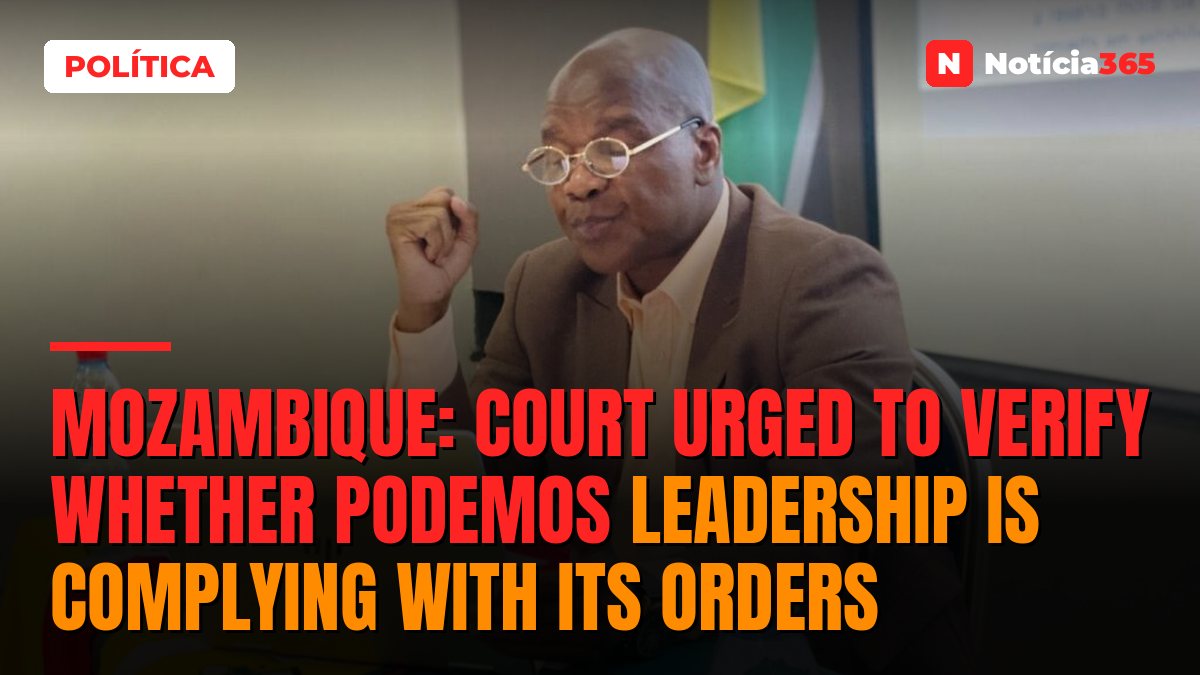
Hélder Mendonça, a senior member of PODEMOS (Optimistic Party for the Development of Mozambique) – which is now the country’s largest opposition party with 43 seats in parliament – calls on the Judicial Court in KaMavota municipal district, in Maputo, to verify whether the party leadership is complying with a court order suspending all activities carried out in the party’s name until internal elections are held.
A ruling by the Judicial Court of the Kamavota orders PODEMOS central bodies “to refrain from carrying out any act related to the party on the grounds that such actions are manifestly outside their statutory mandate.”
The Court also points out that the party’s current central bodies expired a five-year mandate without the holding of a National Congress, which is responsible for electing new leadership, including the party’s president, Albino Forquilha.
According to Mendonça, in a statement published on his official Facebook account, the party’s current leadership continued to act and speak on behalf of the party despite having been formally notified of the court order.
He wants the court to clarify whether such actions violate the ruling and could amount to disobedience of a judicial order.
“There is uncertainty over whether the order also applied to the party’s president and secretary-general is being complied, as some interpretations suggest that these officeholders are not legally classified as party bodies”, he said.
Mendonça also argued that the party’s statutes provide for the election of the president and secretary-general by the Congress for five-year terms. The statutes, he added, also assign specific responsibilities to the president, including chairing the Central Council and the Political Council.
According to Mendonça, these provisions raise questions about whether the president and secretary-general can be considered outside the scope of a court order directed at the party’s central structures.
He said he intended to ask the court to specify which party organs and officeholders are covered by the ruling and to determine whether activities carried out after formal notification constitute non-compliance with the order.
Mendonça added that if the court establishes that the leadership acted in violation of the ruling “it should determine the applicable legal consequences, including possible disobedience of a judicial order.”
Source: AIM