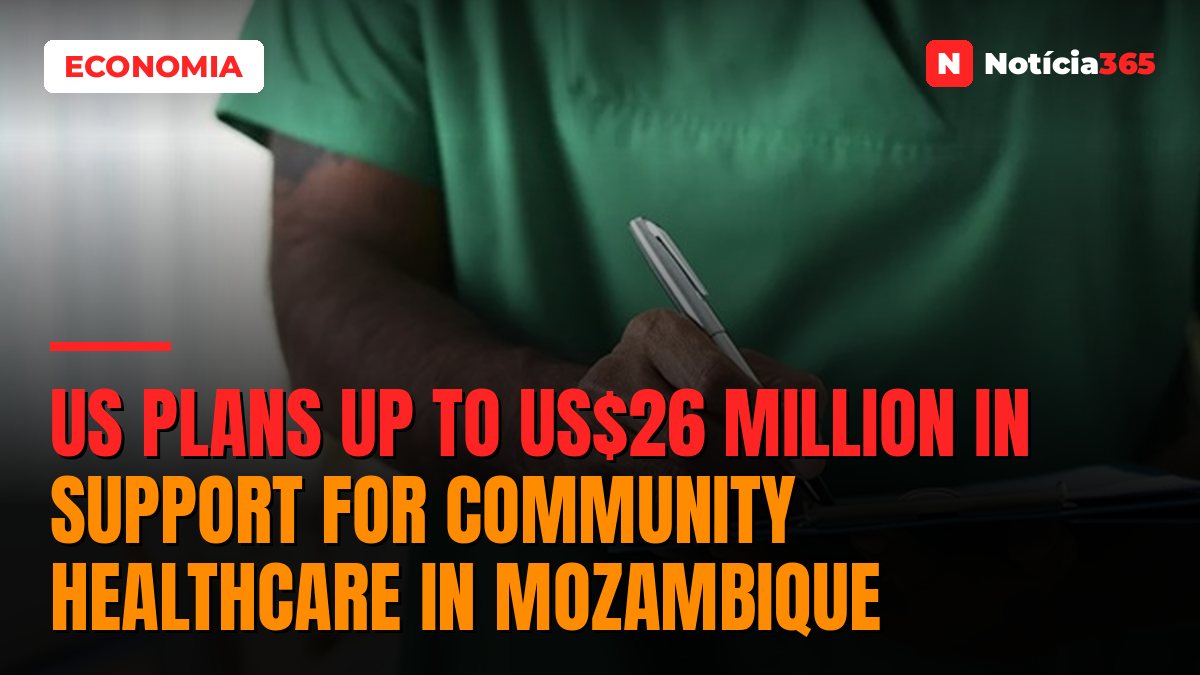
The United States plans to provide up to US$26 million to improve access to healthcare in Mozambican communities, focusing on the prevention and treatment of HIV/AIDS, tuberculosis and malaria, as well as maternal and neonatal health and nutrition.
“We are very proud that Mozambique has been selected as one of the 17 priority countries for this initiative, with up to US$26 million (€23.2 million) for the first year,” said Mark Troger, director of the US Embassy in Maputo’s Office of Foreign Assistance, on Tuesday.
Troger was speaking in Maputo at the opening of a three-day workshop aimed at defining the initiative’s implementation model, in partnership with World Vision Mozambique.
The initiative, known as Supporting Health through Community and Faith-Based Organisations (OCBF), aims to improve access to healthcare through religious and community organisations, strengthening disease prevention, the dissemination of information and the referral of patients to health facilities.
According to Troger, activities will be defined in consultation with the parties involved to address Mozambique’s needs and complement existing health programmes supported by the United States.
According to the initiative’s organisers, an implementation proposal will be drawn up at the end of the workshop and sent to Washington for consideration and final funding approval.
The planned funding is additional to the US$1.8 billion (€1.6 billion) memorandum of understanding signed this year between the Mozambican and US governments to support the health sector. It will not replace interventions already covered by the agreement.
World Vision Mozambique’s national director, Maria Carolina, said the initiative was an opportunity to strengthen community healthcare through social mobilisation, the promotion of health literacy and improved patient referral mechanisms.
“It is an opportunity to strengthen efforts within the community health subsystem,” Maria Carolina said, calling for better coordination between community structures and health services, particularly in areas where access difficulties limit people’s use of healthcare.
Meanwhile, the national director for Planning and Cooperation at the Ministry of Health called for the initiative to be aligned with national priorities, arguing that bringing services closer to communities was essential to improving access to primary healthcare.
“This initiative has been created to bring the health sector closer to the population in an organised and coordinated manner. It is also a specific approach aimed at making coordination within the health sector increasingly consistent,” José Manuel said, adding that it was also important to prepare mechanisms to ensure the continuity of activities supported by the programme.
The initiative aims to strengthen the role of community and faith-based organisations in disseminating health information and referring patients, helping to improve access to healthcare, particularly in communities where access to health facilities is difficult.