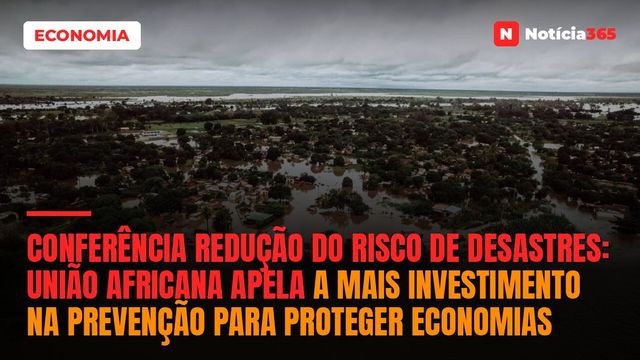
The African Union (AU) on Tuesday called for greater investment in natural disaster prevention and early warning systems, warning that extreme climate events continue to undermine economic growth, infrastructure, and public finances across African countries.
The appeal was made by AU Commissioner for Agriculture, Rural Development, Blue Economy and Sustainable Environment, Moses Vilakati, at the opening of the International Conference on Disaster Risk Reduction and Resilience in Africa, which runs from 13 to 15 October in Maputo and has drawn approximately 500 participants.
Speaking before President Daniel Chapo, Vilakati argued that Africa must translate political commitments into concrete prevention measures, particularly at a time when the continent faces escalating climate risks. “We must decisively move from commitments to implementation,” the commissioner said. Despite technological advances in forecasting and monitoring extreme weather events, he noted, many countries continue to act only after disasters have already struck.
This reactive approach, Vilakati argued, undermines economic and social development, as catastrophes destroy infrastructure, damage agricultural production, reduce household incomes, and increase pressure on state budgets. “We cannot continue to predict disasters with precision and only respond after livelihoods and economies have already been affected,” he warned.
The effects, he added, extend far beyond immediate human losses: a single catastrophe can erase in a matter of days investments and economic progress accumulated over several years. Resources allocated to prevention should therefore be treated as strategic investments to protect African economies, rather than as additional government expenditure.
Vilakati also underscored the need to strengthen mechanisms for financing anticipatory action, improve early warning systems, and ensure that the most vulnerable communities have access to information and the means to respond to risks.
The commissioner highlighted the conclusions of the African Early Warnings Forum, held from 2 to 4 September in Addis Ababa, Ethiopia, which recommended that early warning systems be recognised as public-interest instruments essential for reducing human and economic losses.
On the international front, Vilakati also called for greater access to climate finance, particularly for adaptation, resilience, and compensation for losses and damages. He noted that Africa continues to bear a disproportionate share of the impacts of climate change without receiving adequate funding to address them.
The commissioner urged governments and international partners to back their commitments with financial resources and concrete targets capable of delivering measurable results in risk reduction.
The International Conference on Disaster Risk Reduction and Resilience in Africa brings together in Maputo representatives of African governments, regional organisations, United Nations agencies, and partner institutions to discuss strategies for prevention, preparedness, and response to extreme weather events.
Source: Diário Económico
Original article: https://www.diarioeconomico.co.mz/2026/10/13/economia/conservacao/conferencia-reducao-do-risco-de-desastres-uniao-africana-apela-a-mais-investimento-na-prevencao-para-proteger-economias/
The post African Union Calls for Greater Investment in Disaster Prevention to Shield Economies appeared first on 360 Mozambique.