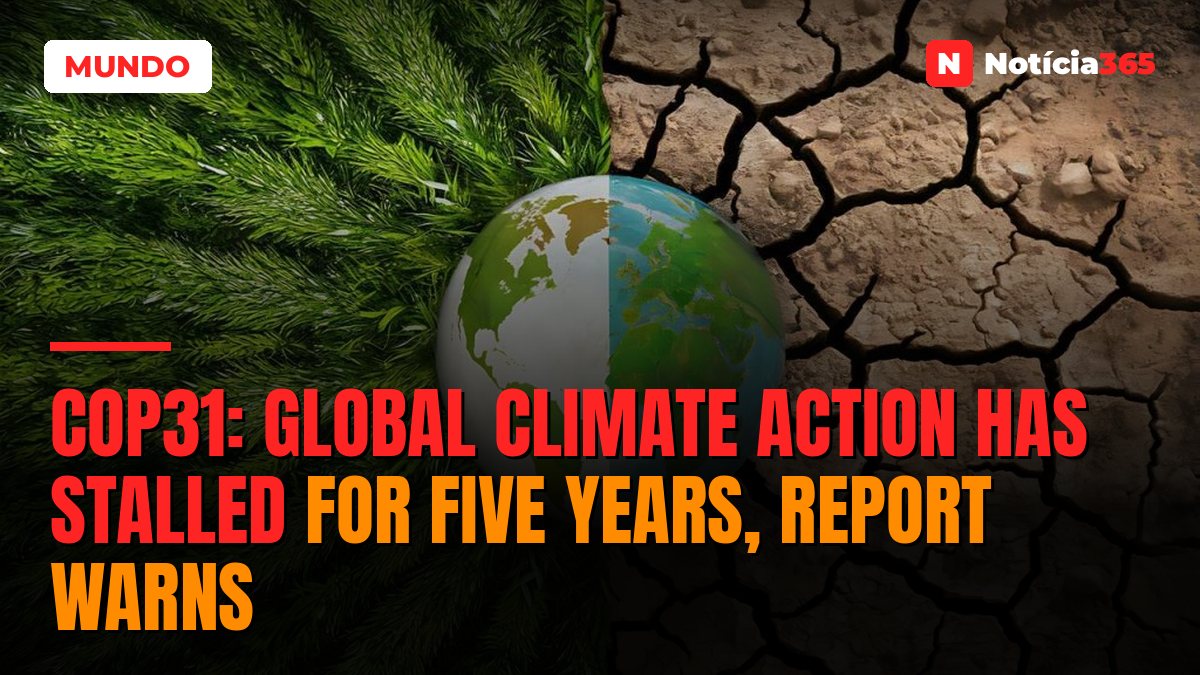

Global climate action has made virtually no net progress over the past five years, as positive and negative developments have offset one another, according to an assessment released on Thursday, 12 November, by the independent organisation Climate Action Tracker.
The report was presented during the United Nations Climate Change Conference (COP31), taking place in Antalya, Turkey, at a moment when several government leaders are preparing to set out their positions on worsening global warming and the measures they intend to adopt in response.
“Global climate action, in aggregate, has essentially stalled over the past five years, with positive and negative initiatives cancelling each other out,” the document states.

In the five years following the Paris Agreement, reached in 2015, the world advanced far enough to reduce warming projections by approximately 1°C. Since then, however, the pace of progress has barely changed, according to the organisation.
Climate change is driven primarily by greenhouse gas emissions associated with the burning of fossil fuels — including oil, gas, and coal — making a substantial reduction in annual atmospheric emissions essential.
Countries define their commitments through nationally determined contributions, which set specific targets and strategies for cutting emissions, although the pace and tools adopted vary significantly across economies.
According to the report, collective efforts remain insufficient to meaningfully reduce global emissions, placing the planet on a trajectory that could lead to an irreversible breach of the 1.5°C threshold above pre-industrial levels — the central target of the Paris Agreement.
Even if all countries fully honour their existing climate pledges — a scenario still surrounded by significant uncertainty — average global temperatures could end the century at 2.6°C above pre-industrial levels.
Sarah Heck, lead author of the report and climate policy analyst at Climate Analytics, said the trajectory remains similar to that observed in 2024 and 2025, indicating that the new set of commitments presented last year was not enough to alter the projections. “This is still not enough. Countries really need to strengthen their targets,” she said.
Island Nations Warn of Risks of Breaching the 1.5°C Limit
The urgency of the situation has been highlighted with particular force by small island states. Marshall Islands President Hilda Heine warned that every new oil well drilled and every additional tonne of coal extracted represents a threat to her country’s future, arguing that the discovery of new fossil fuel reserves should be a cause for serious concern.
Heine also said the global response to the prospect of breaching the 1.5°C limit would need to be “forceful”, after reporting that she had personally witnessed coral reefs that were once “vibrant and lush” turning white due to bleaching this year. Leaders from Tuvalu, the Bahamas, Antigua and Barbuda, Niue, and other island nations are expected to make similar appeals.
Barbados Prime Minister Mia Mottley, for her part, argued that wealthy nations must not only strengthen their climate commitments but also mobilise greater financing to help poorer economies recover from climate damage and adapt to higher temperatures. “Promises are not payments,” she said, adding that pledged financing is currently running 70% below previously committed levels.
Source: Diário Económico
Original article: https://www.diarioeconomico.co.mz/?p=561214