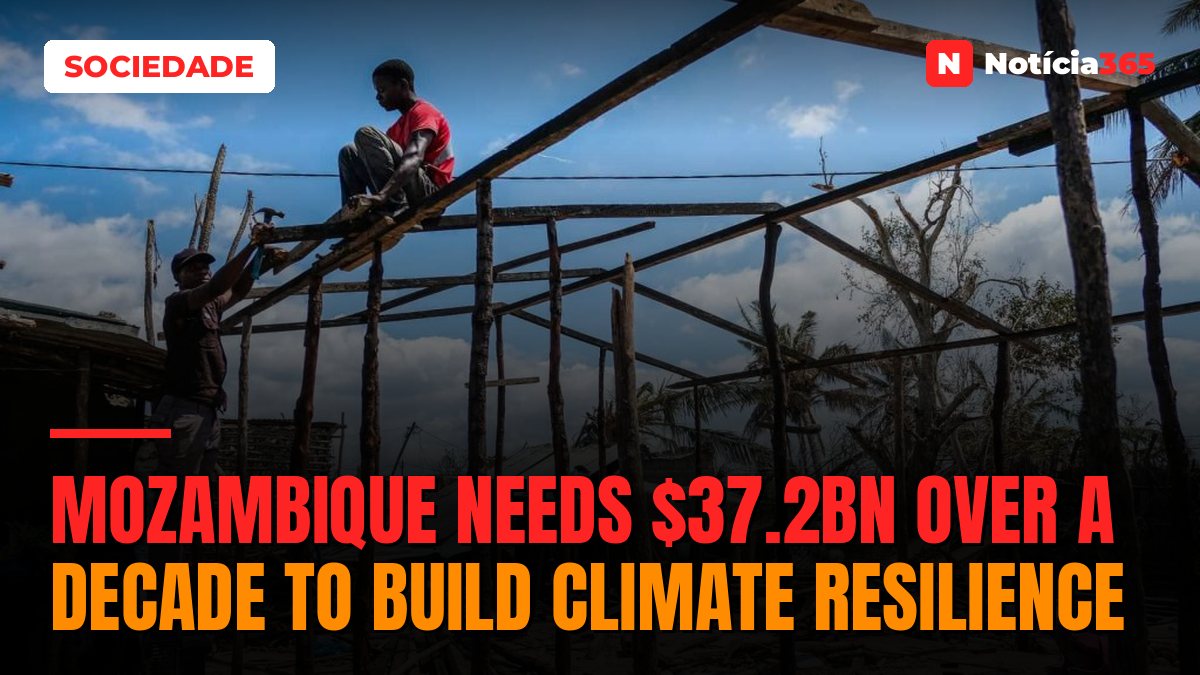

Mozambique requires approximately $37.2 billion over the next ten years to strengthen climate resilience and protect its population from the effects of climate change. The appeal was made by President Daniel Chapo on Wednesday, 11 June, in Antalya, Turkey, on the sidelines of the 31st United Nations Climate Change Conference (COP31).
“To strengthen resilience and protect the population, Mozambique needs approximately $37.2 billion over the next ten years. We therefore call on the support of bilateral and multilateral partners and other relevant actors,” Chapo said.
Chapo noted that over the past 25 years, the country had been struck by more than 76 extreme weather events — including floods, inundations, and cyclones — causing loss of life and economic damages exceeding $4.5 billion.
Against this backdrop, the president identified adaptation to climate change and disaster risk reduction as strategic government priorities, with a focus on prevention, community protection, and strengthening response capacity to extreme weather events.
“We have adopted the National Adaptation Plan, which prioritises the strengthening of early warning systems and the integration of the climate dimension into local planning,” he said, adding that the country has at least 141 local adaptation plans and more than 1,500 local disaster risk management committees.
Chapo also called for greater international support for African countries, particularly to finance risk prevention and the building of climate resilience. He stressed that the response to environmental challenges must be grounded in the principle of climate justice, backed by financial resources capable of supporting the most vulnerable nations.
Recalling commitments made under the Paris Agreement, the president insisted on the need for the world’s largest economies to lead reductions in greenhouse gas emissions and to honour their climate financing pledges.
Mozambique ranks among the most climate-vulnerable countries in Africa. Tropical cyclones, floods, and severe storms regularly strike the country, with significant consequences for infrastructure, economic activity, and the living conditions of its population.
According to the National Disaster Risk Management and Reduction Institute (INGD), the 2025–2026 rainy season, running from October 2025 to April 2026, claimed 311 lives and affected approximately 1.07 million people.
Source: Diário Económico
Original article: https://www.diarioeconomico.co.mz/2026/11/12/economia/desenvolvimento/cop31-mocambique-precisa-de-372-mm-para-enfrentar-riscos-climaticos/