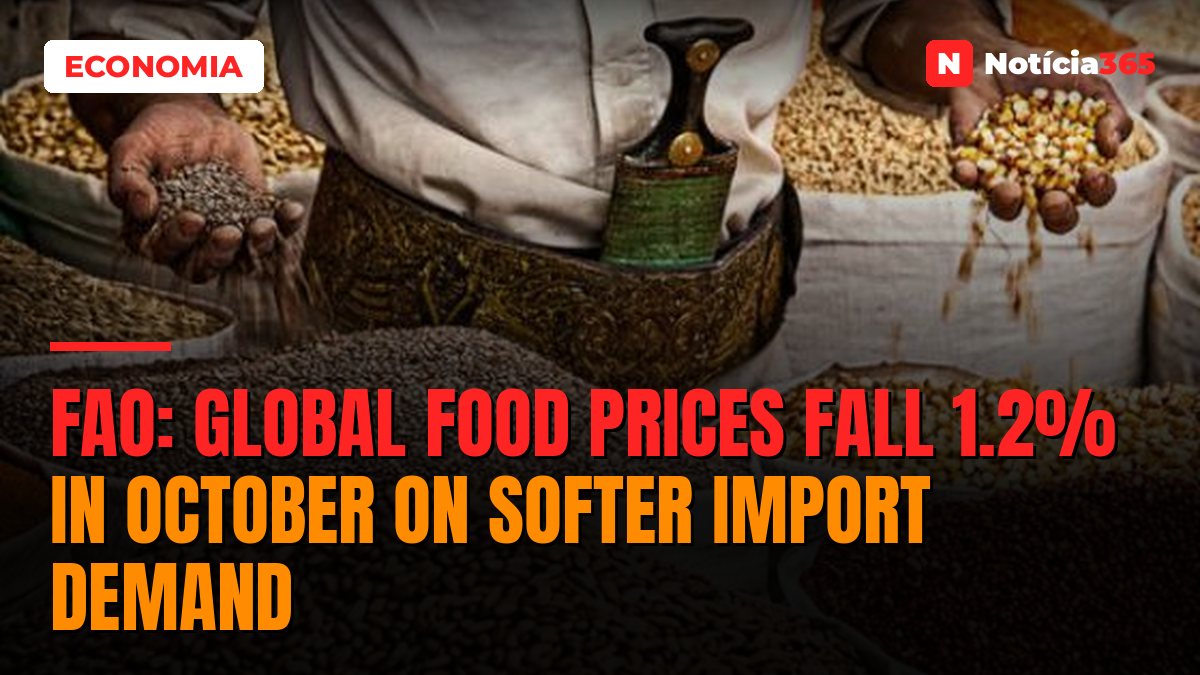

The Food and Agriculture Organization of the United Nations (FAO) Food Price Index fell 1.2% in October, settling at an average of 133.9 points, pulled lower by weakening international import demand and declining quotations for cereals, dairy products and meat.
Despite the monthly decline, the index remained 5.9% above the level recorded in October 2025, though it continues to sit well below the all-time high reached in March 2022. The index tracks the monthly evolution of international prices for a basket of food commodities traded on world markets.
Among the main commodity groups covered, cereals posted the sharpest decline, falling 4.5% from September. Wheat prices retreated after four consecutive months of gains, reflecting weak international demand, improved production prospects — particularly in Argentina — and expectations of an easing of export restrictions in the Black Sea region. Maize also fell, influenced by the harvest in the United States and supply prospects in South America.

Moving in the opposite direction, the rice price index rose 1.6%, driven by harvest delays in several exporting countries, adverse weather conditions and higher costs. Vegetable oils posted a more modest gain of 0.3%, supported by increases in soybean and sunflower oil prices that more than offset a decline in rapeseed oil. Soybean oil reached its highest level since late 2022, underpinned by demand from the biofuels sector.
The meat price index fell 1.2% in October, despite remaining above the level recorded in the same period a year earlier. Pig, ovine and bovine meat quotations all declined, while poultry prices held steady. In dairy, the index dropped 1.1%, reflecting lower butter and cheese prices amid ample supply and subdued buyer interest, which outweighed firmer quotations for milk powder.
Bucking the trend across most food groups, sugar recorded its fourth consecutive monthly increase, rising 6.6% from September and 28.8% year-on-year to reach its highest level since December 2024. The move was driven by rainfall that disrupted sugarcane harvesting and milling operations in Brazil's main centre-south producing region, as well as concerns over production prospects in India, the European Union and Thailand for the 2026-27 campaign.
Overall, the decline in cereal, meat and dairy prices offset upward pressure from sugar and the modest appreciation in vegetable oils, producing the 1.2% fall in the FAO global food price index for October, the organisation said.
Source: Diário Económico
Original article: https://www.diarioeconomico.co.mz/2026/11/06/mundo/fao-precos-mundiais-dos-alimentos-recuam-12-em-outubro-com-menor-procura-de-importacoes/