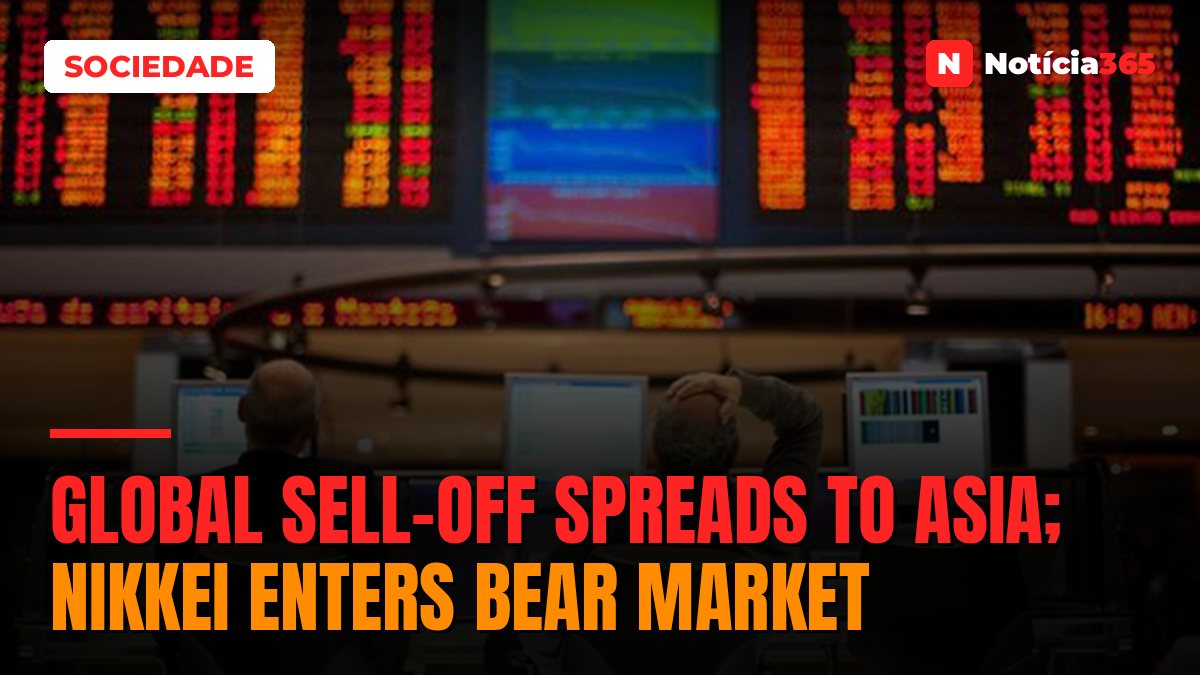

The global equity sell-off spread to Asia on Friday, with the region’s benchmark index posting its steepest single-session decline in more than a year, as investors grew increasingly concerned that the United States could move to tighten regulation of the artificial intelligence sector following the Democrats’ victory in the country’s midterm elections.
Japan’s Nikkei fell 5.96% and the Topix shed 5.90%. In China, Hong Kong’s Hang Seng dropped 1.30% and the Shanghai Composite retreated 1.10%. Taiwan’s TWSE declined 4.51%, while South Korea’s Kospi tumbled 6.02%.
The MSCI Asia-Pacific regional index fell 4.1%, its largest single-day decline since April 2025. South Korea’s Kospi at one point fell as much as 8.8%, triggering a temporary trading halt. Shares in Samsung Electronics and SK Hynix also retreated, with Samsung losing more than 6% and SK Hynix more than 13%.
Against this backdrop of sharp declines, Taiwan’s main index entered technical correction territory, meaning it has now lost more than 10% from its last record high, while Japan’s Nikkei is trading in bear market territory, having shed more than 20% from the record it set in June.
“Taiwan equities are falling sharply today, tracking the heavy losses in South Korea. The Taiex had held up better than other Asian indices with heavy semiconductor exposure, largely thanks to greater diversification along the AI value chain and TSMC’s resilience. However, with the chipmaker down around 5% this morning, one of the key supports for the region’s equity markets is giving way,” said David Savage of Macro Squawk.
Asian authorities announced measures to try to counter the declines. South Korea said it would temporarily suspend a rule requiring brokerages to maintain collateral equivalent to at least 140% of the value of loans extended for equity investment. The measure is intended to prevent forced selling from amplifying volatility in equity markets, according to a joint government statement cited by a financial newswire.
In Taiwan, the Financial Supervisory Commission was expected to announce stabilisation measures later on Friday afternoon, according to the Commercial Times, citing its chairman, Peng Jin-lung.
“Today’s market has all the hallmarks of a panic sell,” Jumpei Tanaka, head of investment strategy at Pictet Asset Management Japan in Tokyo, told Bloomberg. “We are at a critical juncture in determining whether the appreciation of AI-related equities is coming to an end or whether this is merely a temporary pause,” he added.
Elsewhere, the yield on 10-year Chinese government bonds fell to a historic low during the session, in a context of abundant liquidity and demand for safe-haven assets.
Global financial markets have experienced sharp swings this week. Initially, investors bet that a Democratic victory in both chambers of Congress in the midterm elections would accelerate the end of the war in Iran, but that expectation was overtaken by fears of tighter regulation of the data centre sector. The Philadelphia Semiconductor Index has fallen nearly 16%, putting it on course for its worst week since April 2025.
On Thursday, the S&P 500 fell 4.4%, its worst session since the turbulence triggered by tariffs in April 2025, and the Nasdaq 100 dropped 6.4%, wiping out USD 2.3 trillion in market capitalisation.
Source: Diário Económico
Original article: https://www.diarioeconomico.co.mz/2026/11/06/mercados/mercados-mercados/sell-off-global-alastra-se-a-asia-com-fortes-perdas-japones-nikkei-entra-em-bear-market/