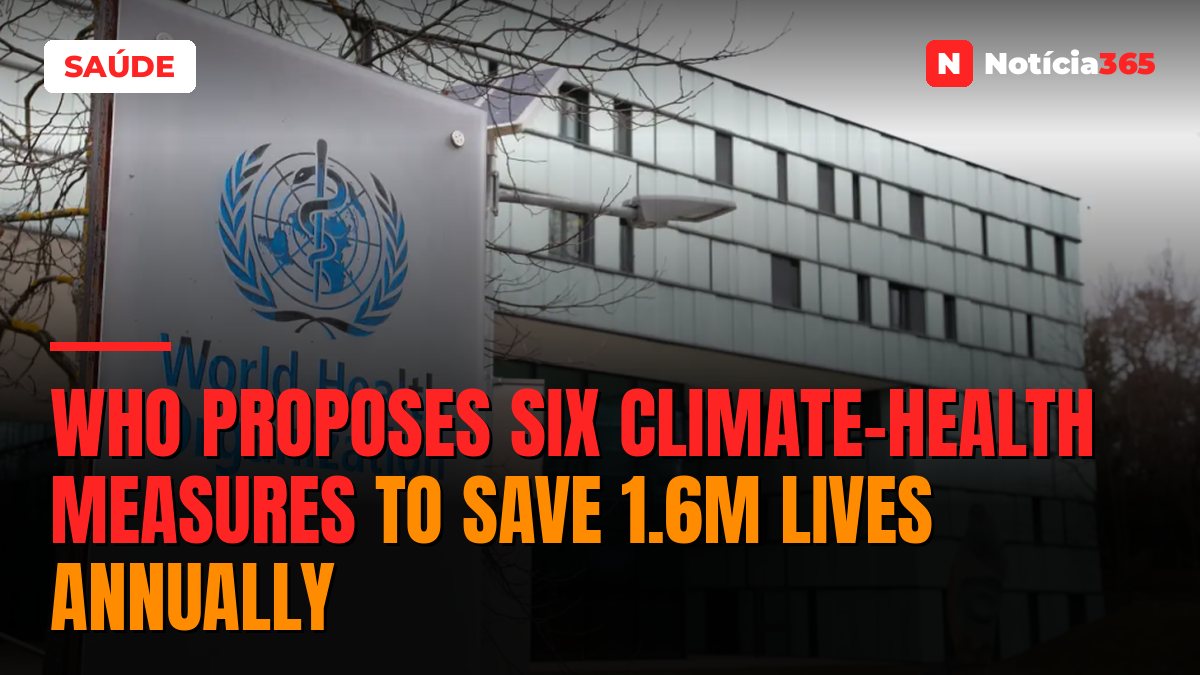

The World Health Organization (WHO) has proposed the adoption of six low-cost climate and health measures that could prevent 1.6 million deaths per year and generate trillions of dollars in economic and fiscal benefits.
According to a WHO report cited by Lusa, the measures could produce annual economic benefits of $3.9 trillion, with an additional $5.4 trillion in fiscal gains.
Among the proposals are the installation of health early-warning systems for heatwaves, the strengthening of climate-resilient drinking water supply services, and investment in basic sanitation, hygiene, and handwashing infrastructure.
The list also includes the adoption of cleaner cooking and heating fuels, as well as fossil fuel pricing policies — through the elimination of inefficient subsidies and the introduction of consumption taxes.
According to the WHO, implementing these measures would prevent one in every 40 annual deaths and significantly reduce the health risks associated with climate change and pollution.
"The report demonstrates that applying effective and affordable measures could save millions of lives, with the greatest benefits in the countries that need them most," said WHO Director-General Tedros Adhanom Ghebreyesus.
Frank Pega, the WHO's head of Climate, Health and Economics, described the interventions as "one of the greatest health investment opportunities of the 21st century," with economic returns that few other initiatives could match.
The WHO estimates that every dollar invested in the six measures will generate $24 in benefits. In the case of heatwave health early-warning systems, the return could reach $835 for every dollar invested.
According to the organisation's projections, fossil fuel pricing policies alone could prevent 1.2 million deaths per year and generate annual benefits of $3 trillion.
Beyond public health and fiscal gains, implementing the measures could help avoid the emission of 16.7 billion tonnes of carbon dioxide — equivalent to 31% of annual greenhouse gas emissions, excluding those from land use and forestry.
With the United Nations Climate Change Conference (COP31) scheduled for 9 November in Antalya, Turkey, the WHO Director-General argued that health protection must occupy a central place in climate negotiations.
Source: Diário Económico
Original article: https://www.diarioeconomico.co.mz/2026/11/04/mundo/oms-propoe-medidas-climaticas-e-sanitarias-para-salvar-16-milhao-de-vidas-por-ano/