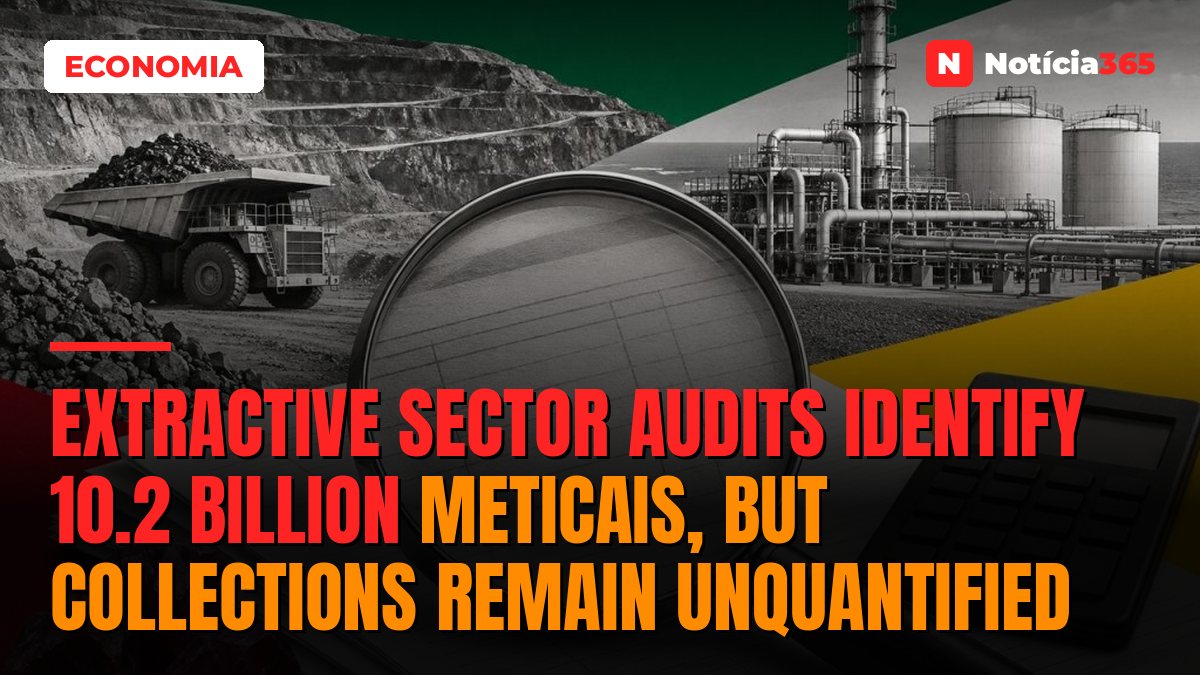

Audits of extractive sector companies by Mozambique’s Tax Authority (Autoridade Tributária, AT) identified around 10.2 billion meticais, equivalent to €137.4 million, between January and September 2026. The figure reflects the amount flagged through enforcement and does not mean it has been collected in full. Over the same period, revenue from megaprojects rose 84% to 14 billion meticais.
The data come from an AT review of enforcement and revenue collection in the mining and oil sectors released on Monday, 2 November, Lusa reported. The audits were supported by consultants from the Taxation for Inclusive Development (TEDI) project and the African Tax Administration Forum (ATAF).
The figures released do not break down how much of the 10.2 billion meticais identified has already reached state coffers, is in the process of being collected or has been disputed by companies. That distinction is essential to assess the financial outcome of the audits: identifying an amount through enforcement and turning it into revenue are separate steps.
The two figures presented by the AT — the amount identified in audits and megaproject revenue — should also not be added together as if they were independent sources of additional revenue, as the review does not clarify any overlap between them.

Oil Accounts for Around Four-Fifths of Megaproject Revenue
Megaproject revenue reached approximately 14 billion meticais in the first nine months of the year, equivalent to €189.1 million. The oil sector contributed around 11.4 billion meticais and mining 2.5 billion.
Oil therefore generated roughly four-fifths of revenue from this group of projects. According to the AT, it was also the main driver of the 84% year-on-year increase.
The concentration underlines the weight of the oil sector in this component of revenue collection. The available data, however, offer no breakdown by company or tax that would show how much of the increase stems from higher output, price changes, one-off payments or tax settlements.
Mining Dominates Sector-Specific Taxes
The picture is different for taxes specific to the extractive sector. Revenue rose 103% compared with the same period of 2025, with mining accounting for around 86% and oil and gas for the remaining 14%. The review does not state the absolute amount for this line.
The two breakdowns cover different universes: one measures revenue from megaprojects, the other the taxes specific to extractive activity. Oil’s dominance in the first and mining’s in the second is therefore not a contradiction.
The distinction reflects the variety of financial flows in the sector. As the Extractive Industries Transparency Initiative (EITI) points out, government revenue can include taxes, royalties, production entitlements, fees and bonuses, and disclosing them separately gives a clearer view of companies’ contribution to the state.
Ruby Auctions Generate US$83.7M in Sales
Enforcement also covered three international ruby auctions held between January and July, which generated sales of US$83.73 million. The associated Mining Production Tax amounted to US$8.07 million.
The two amounts are of a different nature: the first is the commercial value of the auctions, the second the tax revenue reported by the AT. The US$83.73 million is therefore not money collected by the state.
In monitoring transfers of interests in mining and oil assets, the institution also reported capital gains of 282.53 million meticais and US$1.3 million. The information released does not allow these amounts to be treated automatically as tax actually collected.
Oversight Covers 30 Projects in Four Provinces
Between January and September, the AT carried out monitoring visits to 30 projects in Cabo Delgado, Niassa, Nampula and Manica to track company operations and strengthen on-the-ground controls.
The institution also highlighted staff training, the preparation of specialised studies and its participation in the revision of tax legislation, with the aim of improving enforcement and fiscal risk management.
The review points to stepped-up inspection activity and higher megaproject revenue. To measure the return on the audits, what is still missing is how the amounts identified progress to collection: how much has been confirmed, how much remains in dispute and how much has actually been received.
Source: Diário Económico
Original article: https://www.diarioeconomico.co.mz/2026/11/02/economia/financas/auditorias-ao-sector-extractivo-apuraram-mais-de-137-milhoes-de-euros-ate-setembro/