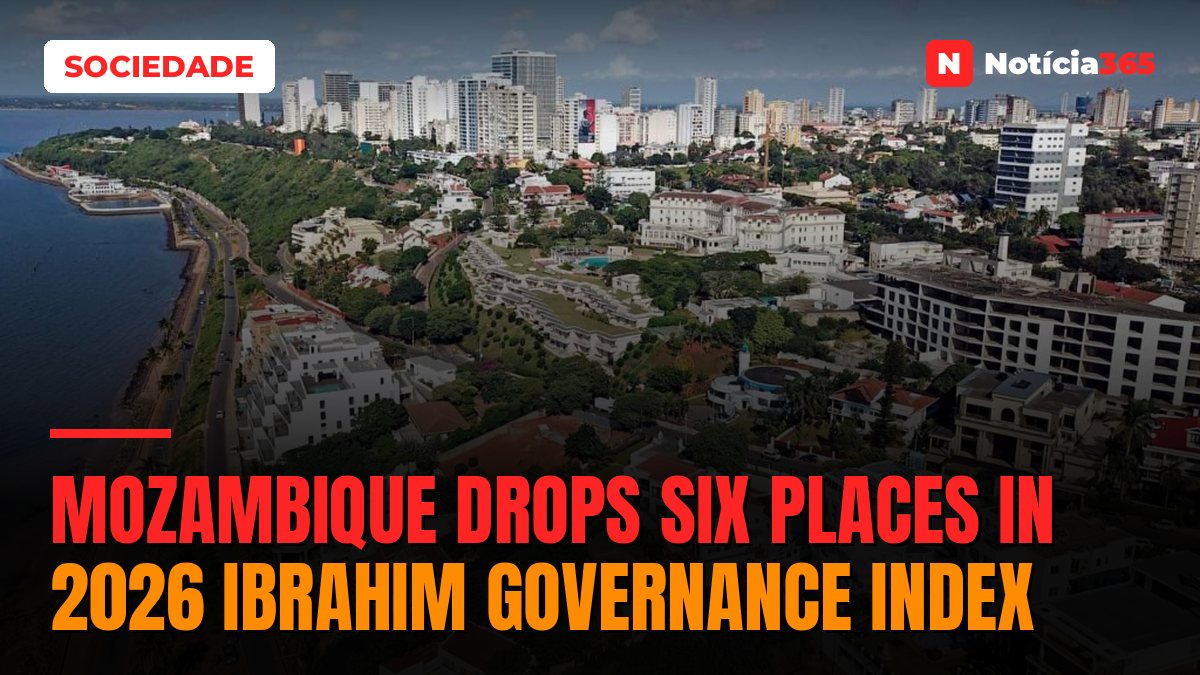

Mozambique has fallen six places in the 2026 Ibrahim Index of African Governance (IIAG), ranking 29th out of 54 countries assessed. The country recorded a deterioration in governance quality between 2016 and 2025, with the rate of decline accelerating since 2021, according to the report released on 31 October by the Mo Ibrahim Foundation.
With a score of 48.8 out of 100, Mozambique lost 1.9 points over the past decade and is among the 11 African countries that have recorded the steepest governance declines.
Mozambique also features among seven states where deterioration has intensified, alongside Burkina Faso, Guinea, Guinea-Bissau, Niger, Sudan, and Tunisia.
The report notes that Mozambique is the only one of these seven countries that did not experience a coup d’état during the period under review, in contrast to the remaining six.
The areas recording the sharpest deterioration include Rights, Gender Equality, Security, and Participation. Mozambique appears among the countries with the largest setbacks in the Rights dimension, alongside Burkina Faso, Ethiopia, Mali, and Tunisia.
Despite the overall decline, the index identifies improvements in Foundations for Economic Opportunity and Human Development.
Mozambique also stands out for progress in promoting the socioeconomic inclusion of young people — an indicator that measures access to employment and economic opportunities. In this area, the country is grouped among those with the greatest improvements, alongside Comoros, Seychelles, and Tanzania.
Published every two years, the Ibrahim Index of African Governance evaluates 54 countries across 96 indicators, grouped into four dimensions: Security and Rule of Law; Participation, Rights and Inclusion; Foundations for Economic Opportunity; and Human Development.
The 2026 edition, presented in Cairo, Egypt, analyses the evolution of African governance between 2016 and 2025.
Source: Diário Económico
Original article: https://www.diarioeconomico.co.mz/2026/11/02/economia/desenvolvimento/indice-ibrahim-mocambique-cai-seis-lugares-no-e-agrava-deterioracao-da-governacao/