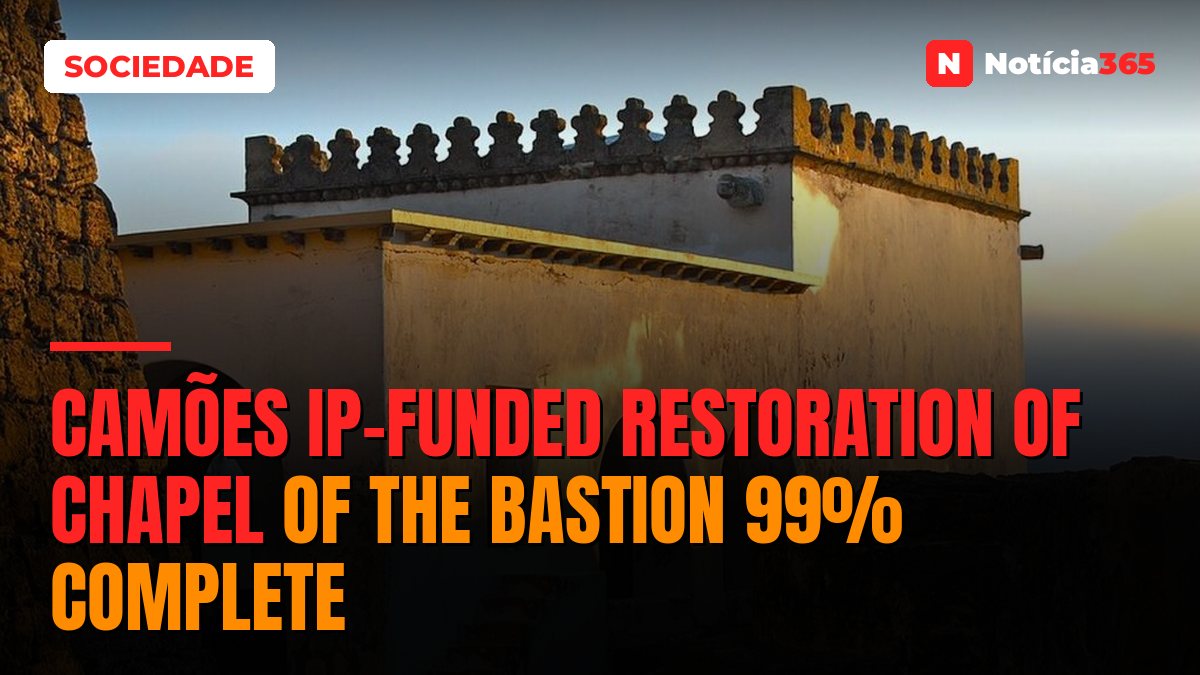

The director of the Conservation Office of Mozambique Island, Cláudio Zunguene, has announced that rehabilitation works on the Chapel of Our Lady of the Bastion are 99% complete, with the handover of the monument to Mozambican authorities expected before the end of the year. More than 500 years old, the chapel is a religious building of significant historical value, and its restoration aims to improve visitor conditions and attract greater numbers of tourists to the island.
Speaking to the Portuguese news agency Lusa, Zunguene explained that works are in their final phase and that the handover is expected imminently. "The Chapel of the Bastion is currently in the final phase of works and we can confirm that construction is 99% complete. The handover to the government is expected very soon. Our expectation is that, with the chapel rehabilitated, the number of tourists visiting Mozambique Island will increase," he said.
Launched in 2024, the rehabilitation forms part of broader efforts to restore the tourism sector on Mozambique Island. The works are financed by the Camões Institute — Portugal's agency for cooperation and language promotion — and are being carried out by Portuguese construction group Mota-Engil.

The Chapel of the Bastion is considered the only monument in the Manueline architectural style on the eastern coast of Africa. With more than five centuries of history, it is also regarded as the oldest stone-masonry construction on the African coast of the Indian Ocean and the oldest surviving European building in the region. The site served as a place of passage and worship for Portuguese navigators.
The chapel forms part of the fortress complex on Mozambique Island and was one of the remaining elements that required intervention to allow the regular conduct of guided tours. Zunguene believes the restoration will improve access conditions and enhance the site's tourism value. "We believe that, with the rehabilitation of the monument, there will be better conditions for visits and for the tourism valorisation of the fortress," he said.
The restoration is taking place against a backdrop of continued challenges for the tourism sector on Mozambique Island. Despite those difficulties, the number of domestic visitors has been rising gradually since 2014. The completion of the works is expected to help stimulate the local economy and create conditions for the chapel to host educational activities as well.
Beyond its architectural significance, the Chapel of the Bastion is closely linked to the history of the fortress, which served both defensive and religious functions. The monument is also a testament to the participation of Africans in its construction — an aspect considered important for the preservation of the region's historical memory.
Mozambique Island was classified as a UNESCO World Heritage Site in 1991. That designation recognises the island's historical and cultural significance and underscores the importance of preserving its monuments, of which the Chapel of the Bastion is among the most prominent.
Source: Diário Económico
Original article: https://www.diarioeconomico.co.mz/2026/11/01/negocios/infra-estruturas/obras-de-reabilitacao-da-capela-do-baluarte-financiadas-pelo-camoes-ip-praticamente-concluidas/