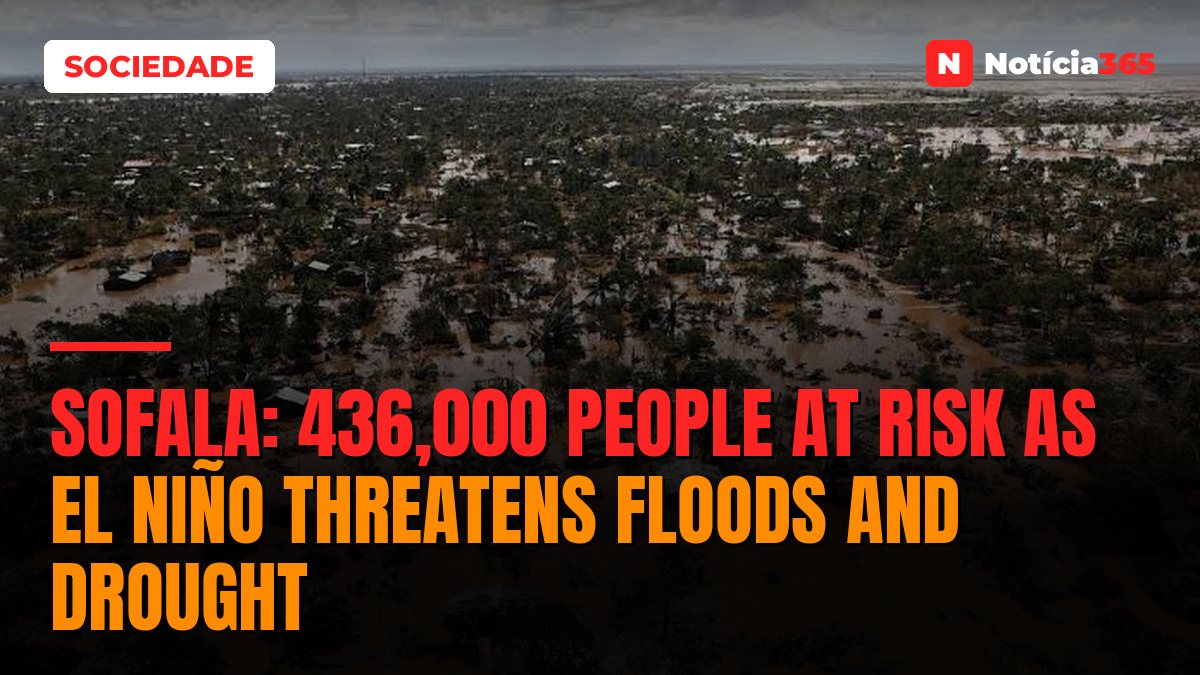

Sofala province has identified approximately 436,000 people at risk of being affected by extreme weather events during the 2026-27 rainy season. Provincial authorities have approved a contingency plan valued at 43 million meticais to respond to potential cyclones, floods, and drought periods associated with the El Niño phenomenon.
Around 436,000 people are at risk of natural disasters in Sofala province, in central Mozambique, during the 2026-27 rainy season, which is forecast to bring extreme weather events linked to El Niño. In response, provincial authorities have activated a 43-million-meticais contingency plan designed to strengthen prevention measures and emergency response capacity.
The figures were disclosed by the provincial delegate of the National Institute for Disaster Risk Management and Reduction (INGD), Aristides Armando, following the first meeting of the Operational Emergency Committee (COE), held on Monday (26), to assess the climate risks projected for the next six months.

According to Aristides Armando, communities located along the province’s main river basins face the greatest vulnerability to flooding, while other areas may experience prolonged drought. “We have a total of 436,000 people at risk, particularly communities located along the main river basins,” he said. The contingency plan includes community awareness campaigns covering prevention measures, safety protocols, and early response to extreme weather events.
The INGD said Sofala currently holds reserves for initial assistance to affected populations, including 75 tonnes of emergency supplies already pre-positioned at strategic locations. Authorities also intend to strengthen early warning mechanisms and improve coordination among institutions responsible for disaster management, with the aim of reducing the human and material impact of any emergencies that may occur.
The Secretary of State for Sofala province, Manuel Rodrigues, said efforts are under way to mobilise support from partners in order to bolster resources for assisting potentially affected populations. He stressed the importance of ensuring that meteorological warnings and safety recommendations reach vulnerable communities in a timely manner. “This information must reach all local communities as quickly as possible. A warning is only effective when it reaches our population in time,” he said.
Manuel Rodrigues also announced plans for a meeting to determine pre-positioning sites for food, tents, and rescue teams, enabling a faster response in the event of an emergency. The strategy seeks to reduce the risk of loss of life, family displacement, and destruction of infrastructure, particularly in areas historically affected by floods and cyclones.
Sofala is one of Mozambique’s most exposed provinces to extreme weather events, having recorded significant destruction caused by cyclones and tropical storms in recent years. The most notable incidents include Cyclone Idai in 2019, Cyclone Eloise in 2021, and Cyclone Gombe in 2022, as well as Tropical Storm Chalane in 2020.
These events caused widespread damage to housing, roads, public infrastructure, and agricultural areas, underscoring the need to strengthen prevention mechanisms and climate change adaptation. El Niño, a climate phenomenon associated with the abnormal warming of surface waters in the central and eastern Pacific Ocean, can alter precipitation and temperature patterns across different regions of the world, increasing the risk of drought and other extreme weather events.
At the national level, the government has already warned of potential impacts from the phenomenon in at least 52 districts across the country’s central and southern regions, and has announced the preparation of measures to mitigate the effects of drought and water scarcity. In Sofala, authorities consider that the implementation of the contingency plan, the timely dissemination of early warnings, and the availability of assistance resources will be critical to protecting communities during the 2026-27 rainy season.
Source: Diário Económico
Original article: https://www.diarioeconomico.co.mz/2026/10/28/desenvolvimento-2/sofala-el-nino-coloca-436-mil-pessoas-sob-risco-de-desastres-climaticos/