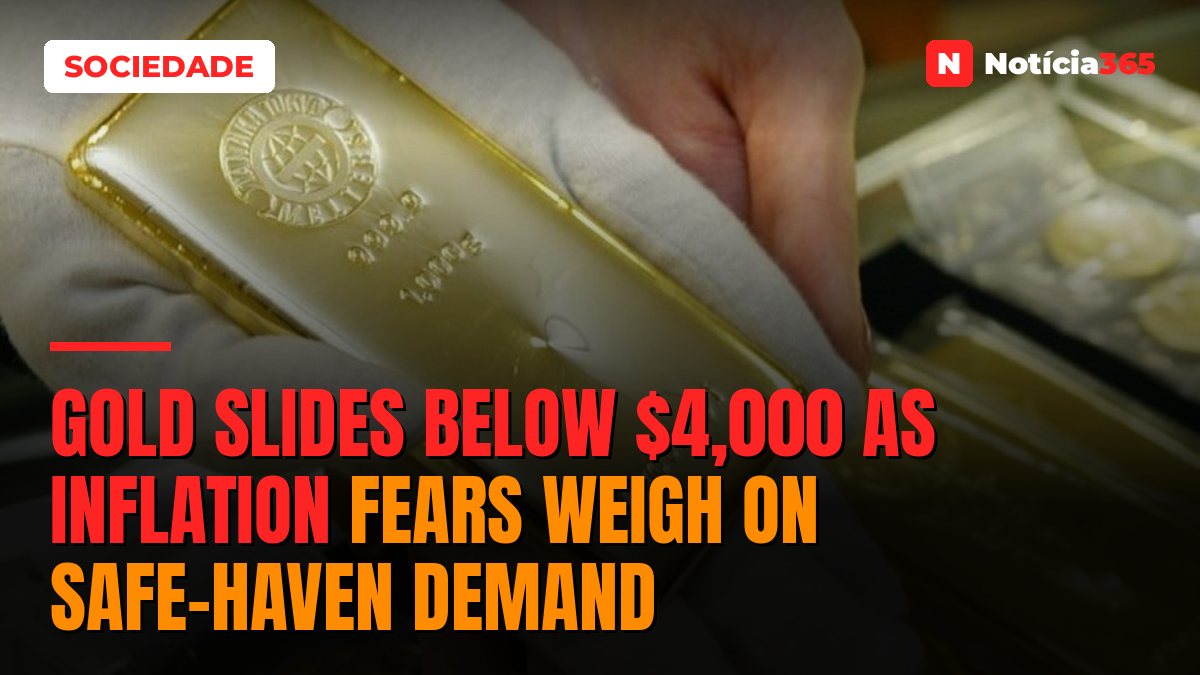

Gold briefly fell below the $4,000-per-ounce mark in early trading, touching its lowest level in more than three months, as oil prices continue to rise and investors anticipate a substantial inflationary impact that could force central banks to adopt a more aggressive monetary tightening stance.
By mid-morning, bullion had trimmed its losses to 0.26%, trading at $4,014.60 per ounce, having earlier slumped nearly 1% to below $3,990. As a non-yielding asset, gold tends to underperform in a restrictive monetary policy environment, limiting its ability to capitalise on its traditional safe-haven status.
“We remain cautious in the near term, especially as gold has struggled to react positively to the recent decline in yields,” Christopher Wong, analyst at Oversea-Chinese Banking Corp, told Bloomberg. “The latest wave of selling suggests that a broader risk reduction and persistent inflation concerns may be outweighing the relief provided by lower yields,” he added.

The most recent sell-off in the Artificial Intelligence sector prompted investors to seek shelter in other corners of the market, including bonds. A decline in bond yields typically supports gold, but persistently elevated energy prices have dampened investor appetite for the precious metal.
Swap markets are currently pricing out a rate hike at next week’s Federal Reserve meeting, though a 25-basis-point increase in December is widely regarded as inevitable. A similar trajectory is expected from the European Central Bank, which has already raised its key interest rates by 50 basis points this year.
Source: Diário Económico
Original article: https://www.diarioeconomico.co.mz/?p=554962