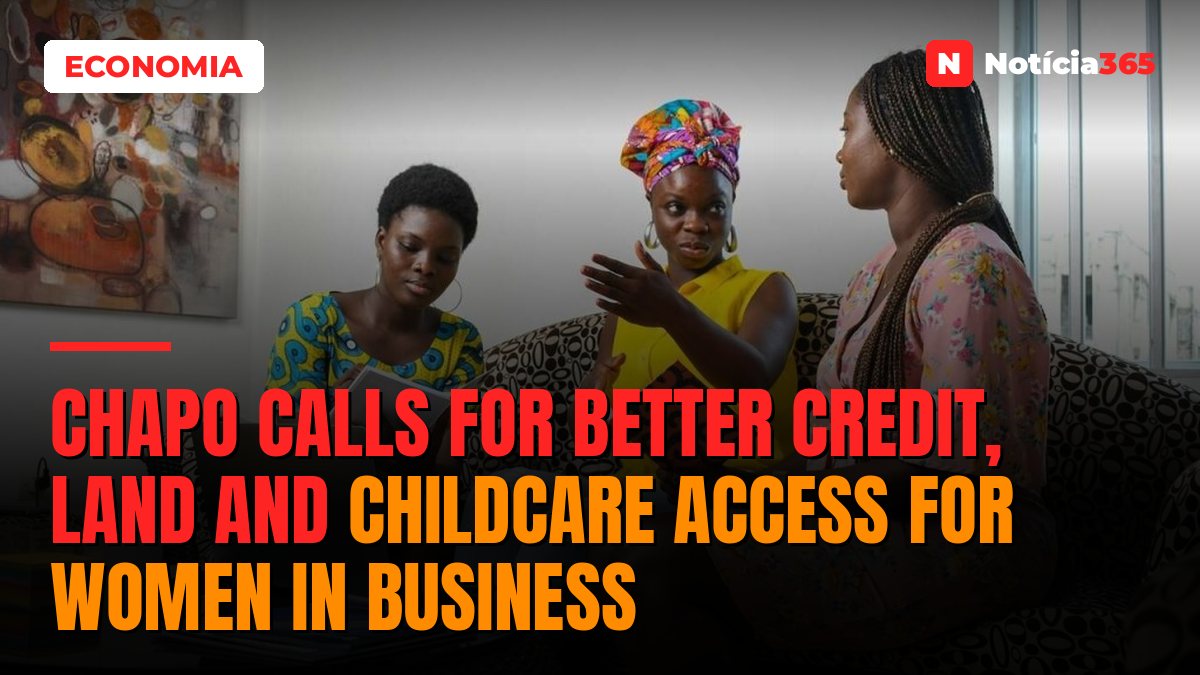

President Daniel Chapo on Wednesday, 21 October, called for the removal of barriers limiting women’s access to bank credit, land, technology and markets, and appealed for investment in childcare services to ease the burden of family responsibilities on women’s economic participation.
Speaking at the opening of the National Dialogue of the 2nd Women’s Economic Forum in Maputo, Chapo argued that financing must be accompanied by conditions that allow women to produce and trade, transforming subsistence activities into sustainable businesses capable of generating income and employment.
“Financing alone is not sufficient,” he said, as quoted by Lusa, stressing the need to link credit to production, market access and the capacity of women entrepreneurs to reinvest in their businesses.

For women in rural areas, the President highlighted that access to land must be complemented by technical assistance, irrigation systems, financing and commercialisation opportunities. The goal, he explained, is to raise productivity and ensure that agricultural work translates into higher incomes.
Chapo also pointed to the need to reduce obstacles associated with family responsibilities, advocating investment in nurseries, children’s centres and community care solutions that help women balance work and family life.
“A woman’s time is equally an economic resource that we must value,” he declared.
On the business side, he called on financial institutions to develop products tailored to the realities of women entrepreneurs, and urged large companies to expand the participation of women-led businesses in their value chains.
The President further advocated for a greater female presence in energy, logistics, industry, construction, oil and gas, as well as in the digital and blue economies. According to Chapo, such participation requires conditions that allow businesswomen to scale up their activities and move from subsistence to larger-scale production.
The forum is being held under the theme “More Investment in Women, More Growth for Mozambique” and brings together representatives from government, civil society, the private sector, academia and development partners to discuss female entrepreneurship and access to financing.
Source: Diário Económico
Original article: https://www.diarioeconomico.co.mz/?p=554429