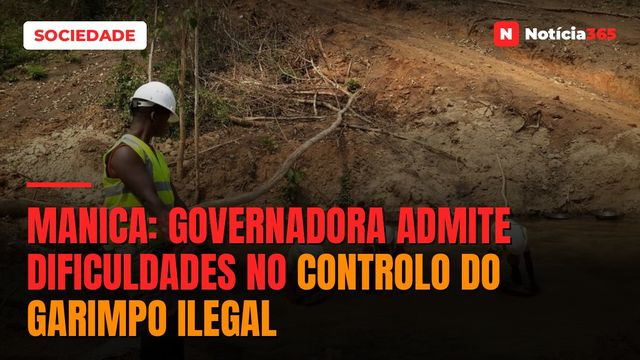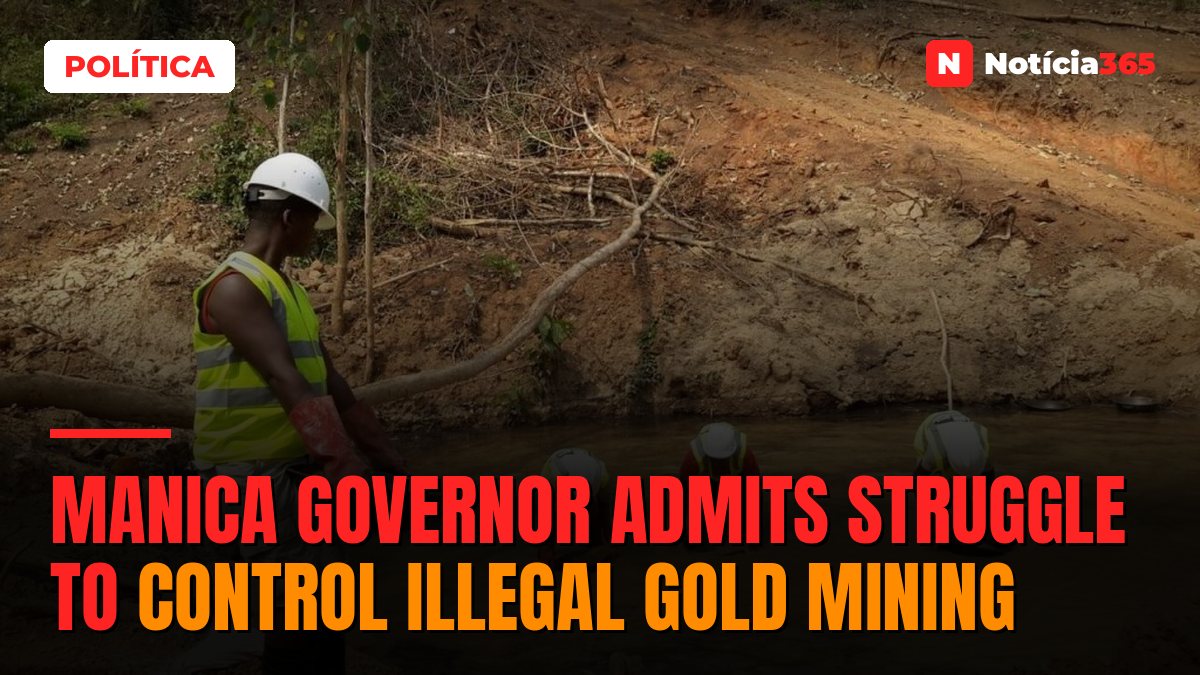

The governor of Manica province, Domingas Tomás, acknowledged on Monday, 19 October, that authorities face serious difficulties in controlling illegal gold mining at the ‘Seis Carros’ site in the district of Vanduzi. The site has at one point concentrated more than 12,000 artisanal miners and has recorded fatal accidents, prompting authorities to pursue the organisation of operators into cooperatives.
‘It is difficult, even today, to control the situation there,’ said Domingas Tomás, as quoted by Lusa, during the Conference on Value Addition Based on Available Mineral and Energy Resources (CAVAME-d), held in Nacala, in the province of Nampula.
Domingas Tomás explained that the proliferation of excavations — many of them interconnected and opened without any planning — increases the risk of collapse. According to the governor, the provincial and district governments are working on the establishment of cooperatives to improve operating conditions and reduce human and environmental harm.

She argued that local communities should be able to benefit from the resources found in their regions through organised activity conducted under better safety conditions.
Authorities have previously noted that the excavation at the site reaches approximately 20 metres in depth and 25 metres in diameter. They warned that concentrations of hundreds or thousands of people weaken the ground and heighten the risk of burial, particularly during the rainy season.
Beyond artisanal mining, Domingas Tomás addressed the obstacles faced by larger mining companies, singling out difficulties in electricity supply and calling for intervention by the central government to improve operating conditions across the sector.
The governor also stressed the need to strengthen technical and vocational training, in collaboration with institutes and universities, to ensure a qualified workforce for the mining industry. She further criticised the centralisation of decisions on mining concessions, despite progress made in administrative decentralisation.
At the national level, President Daniel Chapo indicated in September that the regulation of the new Mining Law, the creation of a state-owned mining company, and the reopening of the mining cadastre are among the measures being pursued to reorganise the sector and strengthen oversight of extractive activity.
In September, at least nine people died over three days in collapses linked to illegal mining in the district of Vanduzi. According to the figures presented to Lusa by the district administrator at the time, six victims died in the early hours of 10 September at the ‘Seis Carros’ site, while the remaining deaths occurred over the two preceding days.
About the event
The governor’s remarks were made at the Conference on Value Addition Based on Available Mineral and Energy Resources (CAVAME-d), which runs from 19 to 24 October in the city of Nacala-Porto, Nampula province. Organised by the Ministry of Mineral Resources and Energy (MIREME), the gathering brings together government members, domestic and international investors, private sector representatives, financial institutions, universities, and development partners, with the objective of promoting the local transformation of mineral and energy resources and attracting investment into the country’s industrialisation.
Among those participating are the Minister of Mineral Resources and Energy, Estêvão Pale, the governor of Nampula, Eduardo Mariamo Abdula, and a delegation from the Confederation of Economic Associations of Mozambique (CTA), led by its president, Álvaro Massingue. The programme includes presentations on investment opportunities in the mining and energy sectors, debates on natural gas utilisation and infrastructure development, as well as the Nacala Gemstone Fair, which features an international gem auction.
Source: Diário Económico
Original article: https://www.diarioeconomico.co.mz/2026/10/20/extractivas-2/manica-governadora-admite-dificuldades-no-controlo-do-garimpo-ilegal/