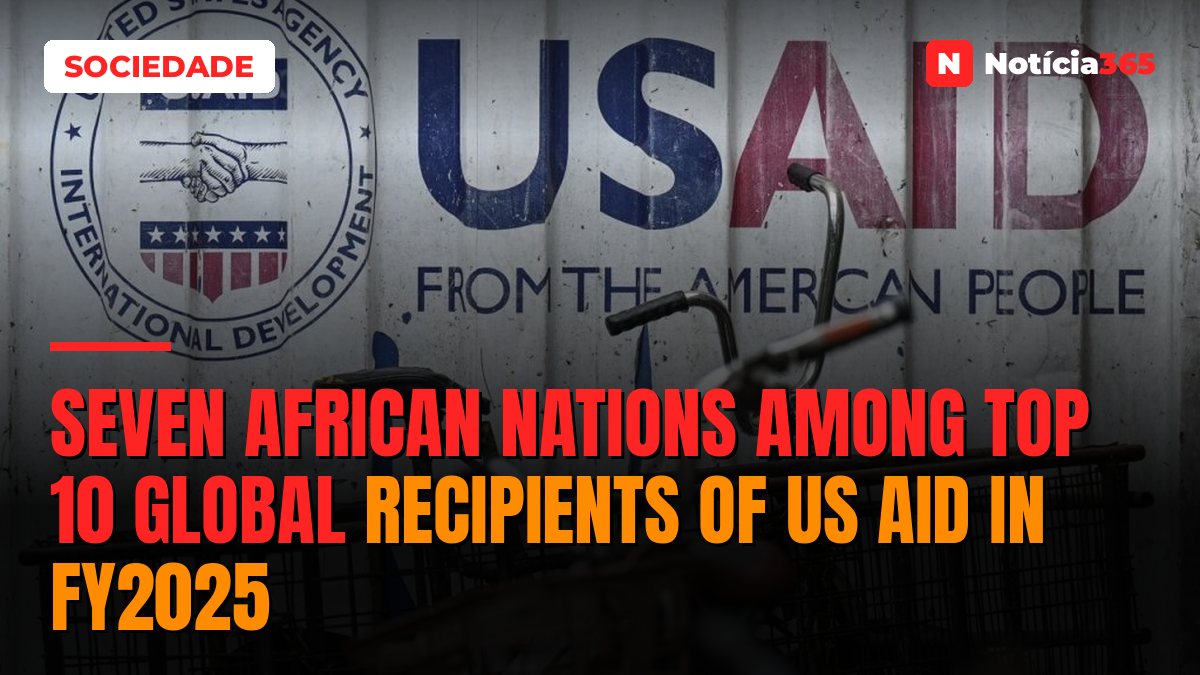

Africa was one of the primary destinations for United States foreign assistance in fiscal year 2025, with seven African countries ranking among the ten largest beneficiaries worldwide.
Ethiopia received the largest volume of US assistance among African nations, followed by the Democratic Republic of Congo (DRC), Nigeria and Sudan. The figures refer to assistance actually disbursed during fiscal year 2025, and not to new financing approved during that period, according to data cited by Visual Capitalist.
Russia's invasion of Ukraine in 2022 prompted a significant increase in US support for that European country, encompassing weapons supplies, intelligence sharing, economic assistance and humanitarian aid.
Ethiopia — $920 million
Ethiopia was the largest African beneficiary of US foreign assistance in fiscal year 2025, receiving approximately $920 million, placing it fourth globally. According to ForeignAssistance.gov data, virtually all assistance directed to the country was classified as non-military.
The volume of support reflects Ethiopia's humanitarian and development needs, including food insecurity, population displacement and challenges in the health sector. Globally, the country ranked behind only Ukraine, Israel and Jordan.
Democratic Republic of Congo — $750 million
The DRC received approximately $750 million in US foreign assistance in 2025, making it the second-largest African beneficiary and fifth globally. Around 99% of the funding was classified as non-military assistance.
US support has focused primarily on humanitarian and development needs in a context marked by prolonged conflict, population displacement and food insecurity. The country's eastern region continues to face persistent insecurity involving armed groups, compounding humanitarian requirements.
Nigeria — $730 million
Nigeria received approximately $730 million in US foreign assistance in fiscal year 2025, placing it third among African countries and sixth globally.
US assistance has supported health, development and humanitarian aid programmes, alongside smaller amounts directed at security. Nigeria's population size and its role as one of Africa's largest economies make it an important partner for the United States.
Sudan — $709 million
Sudan received approximately $709 million in US foreign assistance in 2025, becoming the fourth-largest African beneficiary and seventh globally.
The country's position is directly linked to the severe humanitarian crisis it is experiencing. Fighting that broke out in 2023 has displaced millions of people and deepened needs for food, healthcare and shelter. For this reason, US assistance has been directed primarily towards humanitarian support rather than military financing.
Kenya — $655 million
Kenya received approximately $655 million in US foreign assistance during fiscal year 2025, placing it fifth among African beneficiaries and eighth globally. Around 96% of the funding was classified as non-military, while approximately $27 million was allocated to military assistance, according to the Pew Research Center.
Kenya has long been an important US partner in East Africa, with cooperation spanning health, development, security and humanitarian assistance. The country also plays a significant regional role in responding to crises affecting neighbouring states. Its relatively stronger economic standing compared to many countries in the region means that US assistance also covers long-term development programmes and institutional capacity building, beyond emergency response.
Mozambique — $584 million
Mozambique received approximately $584 million in US foreign assistance in fiscal year 2025, placing it sixth among African countries and ninth globally. Virtually all of the funding was classified as non-military, accounting for around $575 million.
US assistance to Mozambique comes in a context marked by significant humanitarian and development challenges. The country faces conflict and population displacement in the northern province of Cabo Delgado, as well as persistent poverty, food insecurity and the effects of natural disasters. A small portion of the funding was classified as military assistance.
Uganda — $513 million
Uganda received approximately $513 million in US foreign assistance in 2025, becoming the seventh-largest African beneficiary and tenth globally. Approximately 98% of the funding was classified as non-military assistance.
Traditionally, US support to Uganda covers areas such as health, humanitarian assistance and development. The country also hosts a large number of refugees from conflicts in neighbouring states, which increases its humanitarian assistance requirements.
South Sudan — $507 million
South Sudan received approximately $507 million in US foreign assistance in fiscal year 2025, placing it eighth among African beneficiaries and eleventh globally.
The country faces some of the highest humanitarian needs on the continent as a result of years of conflict, population displacement and food insecurity. US assistance is concentrated primarily on humanitarian and development needs. Millions of people depend on international support for food, healthcare and other basic services.
Somalia — $498 million
Somalia received approximately $498 million in US foreign assistance in 2025, placing it ninth among African beneficiaries and twelfth globally.
The country has for decades faced political instability, conflict, humanitarian emergencies and food insecurity — factors that keep demand for international assistance high. Somalia also continues to grapple with threats from armed groups, population displacement and the impacts of adverse weather events.
Tanzania — $480 million
Tanzania received approximately $480 million in US foreign assistance in fiscal year 2025, placing it tenth among African countries and fifteenth globally. According to ForeignAssistance.gov data, it was the last African country to feature on the list of the top 15 global beneficiaries.
US assistance to Tanzania has supported development and humanitarian aid programmes, including health-related initiatives. The country's population size and its role in East Africa also make it an important US partner in the areas of development and regional cooperation.
Source: Diário Económico
Original article: https://www.diarioeconomico.co.mz/?p=552793